


Golf communities aren't just for retirees anymore. Whether you are looking at Cobb's Glen in Anderson or a Clemson-adjacent community, the segment has evolved. Across the Upstate, golf communities have evolved into some of the more amenity-rich residential options in the region, and the buyer pool has broadened well beyond the traditional retirement demographic. If you're weighing golf-community life or trying to understand what these communities actually offer, here's how to think about the segment.
What Golf Communities Actually Are
A golf community is a planned residential development built around a golf course, usually with amenities beyond just the course. The specifics vary meaningfully across communities.
Common categories buyers should understand:
- Country club communities. Golf course plus a private club with membership requirements. Members pay initiation fees and monthly dues. Non-members can live in the community but can't use the course.
- Semi-private golf communities. Golf course open to community residents and often to outside players for fees. No formal club membership required.
- Public course-adjacent communities. Homes near a public golf course but not part of a formal golf community structure. No fees, no membership, no shared amenities.
- Age-restricted golf communities. Combines the golf community model with 55+ age requirements. Different amenity focus, different daily rhythm.
The category matters because it changes what you get, what you pay, and who your neighbors are.
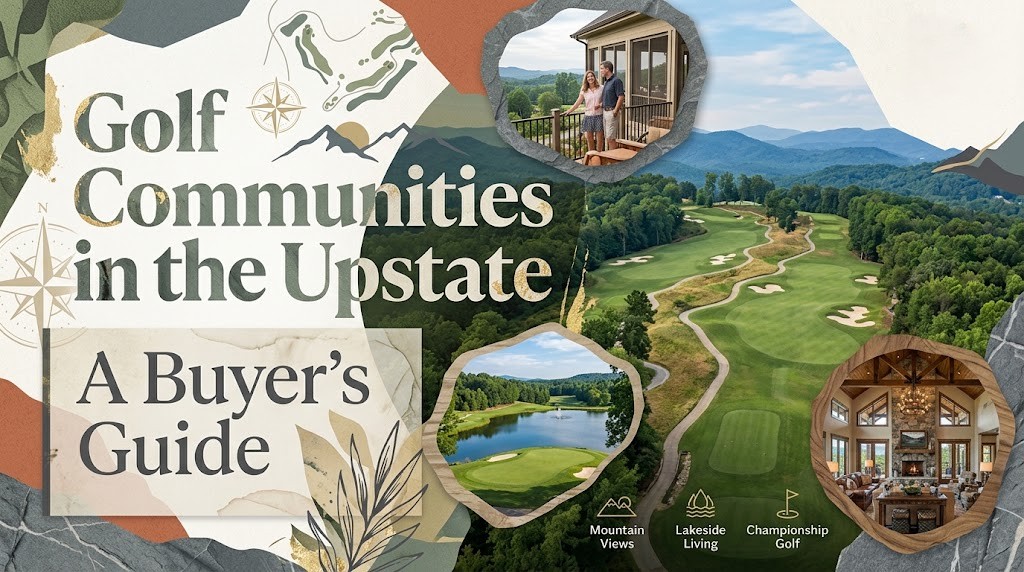
Where Golf Community Inventory Sits Across the Upstate
Different Upstate markets support different golf community characters.
- Anderson golf homes covers several established golf communities across the county, including some of the more prominent Lake Hartwell-adjacent options
- Greenville golf course homes includes higher-end golf community options concentrated in specific Greenville suburbs
- Spartanburg golf course homes covers established Spartanburg County golf communities, including some of the older prestigious country clubs
- Boiling Springs golf homes covers the Spartanburg-adjacent golf community inventory
- Inman golf homes covers northern Spartanburg County golf inventory including lake-adjacent options
What Golf Community Living Actually Costs
Golf community ownership involves costs beyond the mortgage that buyers need to understand up front:
- HOA dues covering common area maintenance, amenities, and community operations
- Club membership fees if the community includes a private country club — initiation costs plus ongoing dues
- Golf-specific fees for cart storage, bag storage, and range access at some clubs
- Assessments periodically for major capital projects — clubhouse renovations, course improvements, amenity replacements
- Insurance considerations for homes on the course itself, particularly for windows and property damage from errant golf balls
These costs vary widely across communities. Some run modest total monthly commitments. Others reach several thousand a month in combined fees. Ask specific questions before committing.
Who's Actually Buying Golf Communities Now
The buyer pool has diversified over the past decade:
- Traditional golf enthusiasts who want daily course access
- Retirees and empty nesters looking for amenity-rich community living
- Working professionals who play golf on weekends and want the amenity package during the week
- Families with older children who value the pool, tennis, and social amenities as much as the golf
- Out-of-state relocators from higher-cost golf markets who find Upstate golf communities deliver more home per dollar
- Second-home buyers using the community as a lifestyle destination rather than primary residence
What to Check Before You Buy
Golf community due diligence has some specific considerations:
- Club financial health. Some clubs are financially strong with healthy membership and reserves. Others are struggling. A financially troubled club can face special assessments, service cuts, or in the worst case, closure.
- Membership requirements. Understand whether membership is optional or required, what initiation costs look like, and what happens to membership if you sell.
- Course quality and maintenance. Tour the course. Talk to golfers who play there regularly. A poorly maintained course drags down community values.
- Amenity depth beyond golf. Pools, tennis, fitness, event spaces, restaurants. What you actually get for your fees.
- Non-golfer experience. Not everyone in the household plays golf. Understand whether the community works well for non-golfing residents.
- HOA vs. club structure. Some communities separate HOA operations from club operations. Understand who governs what.
- Resale patterns. Golf community homes sometimes sell to a narrower buyer pool than standard homes. Understand resale expectations.
The Course-Adjacent Question
Living directly on a golf course sounds appealing — and Summerfield Plantation is one of the established Anderson examples where it works well — and often is, but it has specific trade-offs. Windows and siding face regular impact from stray golf balls. Course maintenance schedules affect early-morning noise. Some course-adjacent homes have great views; others face fairway pin placements that create constant traffic.
The premium for direct course frontage varies by community and lot position. Some are worth it. Some aren't. Walk the specific lot at different times to understand what you're actually buying.
Where Golf Communities Fit for Different Buyers
Match the community to how you'll actually use it:
- Serious golfers should prioritize course quality and club culture over amenity breadth
- Amenity-focused buyers should look at communities with broader recreation packages beyond just golf
- Retirees should evaluate the age demographics and social programming
- Families should assess the pool, tennis, and other kid-friendly amenities
- Second-home buyers should think about property management and community feel when the property sits empty
The Broader Upstate Golf Market
Golf communities across the Upstate range from high-end prestige clubs to more accessible price points. Anderson luxury homes golf community options tend to run more accessible than equivalent Greenville communities. Clemson-area communities like Patrick Square and higher-end Greenville golf communities lean premium. Spartanburg County golf inventory covers both ends of the range.
For long-term value, well-established golf communities with healthy club finances and consistent buyer demand tend to hold values better than newer or financially challenged ones.
Key Takeaways
- Match the community to how you'll actually use it rather than assumptions about how often you'll play
- Club financial health matters as much as course quality — troubled clubs create special assessments and service issues
- HOA and club structures often function separately; understand who governs what before you commit
- Non-golfer household members should like the community too, since not everyone will play
- Resale liquidity varies — established communities with healthy finances hold value better than newer or struggling ones