


Homeowners insurance surprises a lot of buyers. You put in your offer. Your lender asks for proof of insurance. You call around, get a few quotes, and realize the numbers vary by hundreds — sometimes thousands — of dollars a year for the same house. Here's what actually drives your premium in South Carolina and how to plan for it.
Why Insurance Costs Vary So Much
Two identical homes on the same street can have very different insurance costs. That's not a mistake in the quote. That's the reality of how insurers price risk.
The insurance company looks at the property, your history, and their own exposure. Small changes in any of those inputs can move the premium meaningfully.
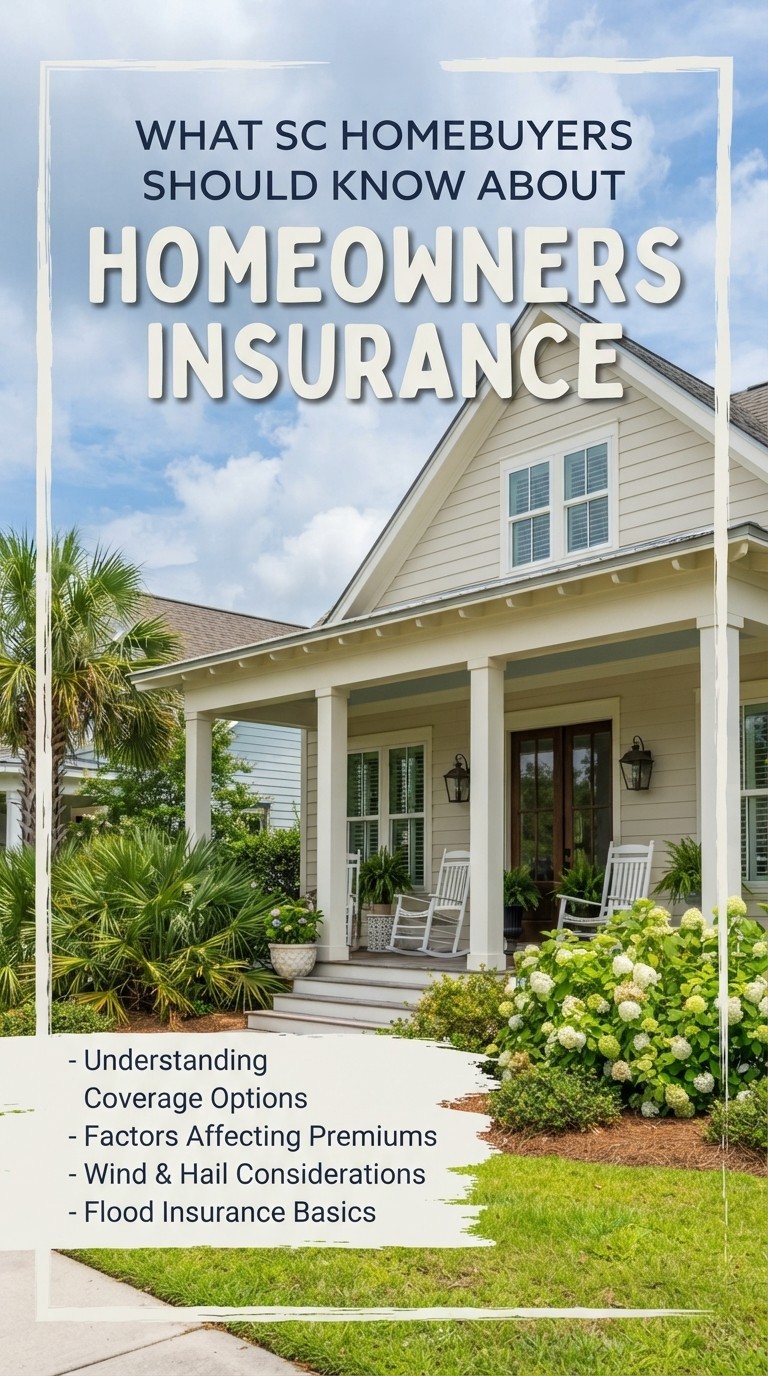 What Drives Your Premium
The Home Itself
Age of the home matters. Older homes have older systems, older wiring, and older plumbing. Insurers see more claim risk.
Roof age matters a lot. A roof at year 18 of a 20-year expected life is a bigger insurance risk than a roof at year 5. Some insurers will refuse to write policies on older roofs at all.
Construction type matters. Brick homes rate differently than wood-frame homes. Modular construction rates differently than site-built.
Square footage and rebuild cost matter. Bigger homes cost more to rebuild if destroyed. That drives premiums up.
The Location
Distance to the nearest fire station and hydrant matters. Rural properties on wells, without close hydrants, cost more to insure.
Flood zone status matters. Homes in FEMA-designated flood zones need separate flood insurance, which is not cheap.
Wildfire and hail risk in the Upstate is lower than in many parts of the country but still factors in.
Neighborhood claim history affects rates. Some neighborhoods have higher claim frequencies for specific issues — theft, water damage, tree damage — that push local rates up.
Your Profile
Credit score affects insurance rates in South Carolina. Buyers with strong credit generally pay less.
Prior claims history matters. Multiple claims in the past few years can push premiums up meaningfully, even if the claims were minor.
Insurance history — whether you've been continuously insured — matters. Gaps in coverage look worse than continuous history.
What Coverage You Actually Need
South Carolina doesn't legally require homeowners insurance. Your lender does. Your loan will require enough coverage to protect their interest in the property.
Basic coverage includes:
- Dwelling coverage (the structure itself)
- Personal property coverage (your belongings)
- Liability coverage (if someone gets hurt on your property)
- Additional living expenses (if you can't live in the home after a covered loss)
Optional coverage often worth considering:
- Flood insurance (required in flood zones, optional but sometimes wise elsewhere)
- Water backup coverage (protects against sewer or drain backups)
- Extended replacement cost (covers rebuild costs above the standard policy limit)
- Umbrella liability (extra liability coverage above the home policy)
The Estimation Game
Standard homeowners insurance in the Upstate for a typical single-family home usually runs $1,200 to $2,500 per year. Higher-end homes, older homes, waterfront homes, and rural homes on wells run more.
Get real quotes early in your buying process. Some buyers wait until they're days from closing and discover the insurance is much higher than they estimated. That kind of surprise affects your monthly payment and sometimes your loan approval.
How to Shop Insurance
Get quotes from at least three carriers. Independent agents can shop multiple carriers on your behalf, which saves time.
Ask about bundling with auto insurance. Multi-policy discounts are usually meaningful.
Ask about deductible options. Higher deductibles mean lower premiums, but you pay more out of pocket if something happens. Match the deductible to what you can actually afford.
Compare coverage details, not just premiums. A cheaper policy with less coverage isn't actually cheaper if something goes wrong.
For markets like Greenville real estate, Spartanburg real estate, and Anderson real estate, local independent agents know the specific carriers that write competitive rates in each area.
Frequently Asked Questions
When do I need to have insurance in place?
Before closing. Your lender needs proof of coverage as a condition of funding your loan. Line up a policy at least a week before closing so the paperwork isn't rushed.
Do I need flood insurance in the Upstate?
Only if your property is in a FEMA-designated flood zone or your lender requires it. Most Upstate properties aren't. Some near creeks, rivers, or low-lying areas are. Check the flood zone before assuming.
What if my premium is much higher than I expected?
Shop more carriers. Ask what specifically is driving the rate (older roof, prior claims, location). Sometimes small changes to the property or your coverage choices can lower the number meaningfully.
Can I change carriers after closing?
Yes. You can switch anytime. Most people wait a year or two to see how the initial policy performs before shopping, but there's no requirement to stay.
Are there any SC-specific insurance issues to know about?
Wind and hail coverage matters more than in many states because of hurricane exposure across South Carolina. In coastal areas, wind is often a separate policy. In the Upstate, wind is usually included in standard policies but check the specifics.
About Greg Harrelson
CENTURY 21 Blackwell is proudly part of the Century 21 Harrelson Group family of offices led by Greg Harrelson, a powerhouse organization with more than 30 years of success across South Carolina. This partnership strengthens our reach while preserving what built our reputation: exceptional service, best-in-class marketing, and highly trained agents focused on protecting our clients' most important investments.
Greg Harrelson is a seasoned Realtor with more than 30 years of experience serving the Myrtle Beach and Grand Strand markets branching into North Carolina more recently. As the founder of Century 21 The Harrelson Group, Greg has built his career helping buyers, sellers, and investors achieve success in every corner of the coastal Carolina real estate market. His expertise spans residential homes, investment properties, land development, and coastal condos. Known for his deep local knowledge, innovative marketing strategies, and commitment to personal service, Greg consistently helps clients reach their real estate goals while navigating the ever-changing market with confidence and precision.