


New construction across the Upstate has shifted in specific ways over the past few years. Builders are building different homes than they were building five years ago. Buyer preferences have shifted. Community amenities have evolved. Pricing dynamics have changed. If you're shopping new construction anywhere in the Upstate, understanding the current trends helps you evaluate what you're actually seeing.
Here's what I see across the market from working with buyers touring new communities.
Floor Plans Have Opened Up
The traditional floor plan with formal living, formal dining, and separate rooms for everything is becoming rare in new construction. Buyers want open kitchens flowing into family rooms. Kitchen islands have grown. Walk-in pantries have become standard.
Home offices have become a required feature, not an optional one. Since 2020, buyers expect at least one dedicated workspace. Two if both spouses work from home. Builders have responded by adding flex rooms and dedicated office spaces to standard floor plans.
Primary bedroom suites have grown. Larger closets. Larger bathrooms. Sitting areas in higher-end plans. The primary suite has become a serious selling point.
Outdoor Living Spaces Matter More
Covered patios, screened porches, and outdoor kitchens have moved from luxury features to expected features in mid-tier and higher new construction.
Upstate weather supports outdoor living most of the year. Builders responded by making outdoor spaces a bigger part of the floor plan rather than an afterthought.
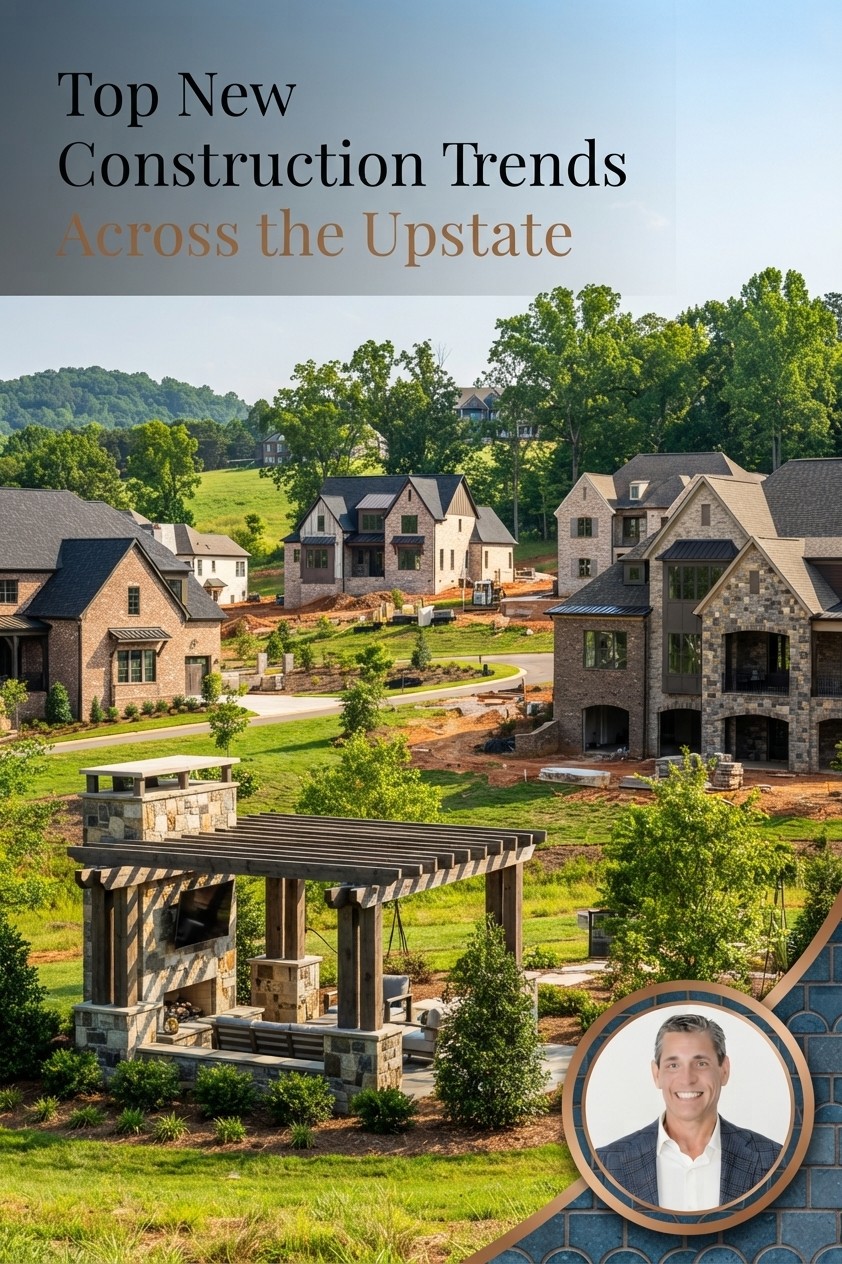
Firepits, pergolas, and integrated outdoor entertainment areas show up in more community amenity packages too.
Smart Home Features Have Become Baseline
Smart thermostats, video doorbells, smart locks, and mesh-ready wiring are now standard in most new construction. Buyers expect them.
Higher-end builders integrate more comprehensive smart home packages including lighting, security, and audio-video. Standard builds cover the basics without extras.
Some builders have added dedicated network closets and structured wiring that supports whatever smart home platform the buyer chooses later.
Amenity Packages Have Grown
Community amenities have expanded significantly in mid-tier and higher new construction. Pools, clubhouses, trails, fitness centers, event lawns, dog parks, and pickleball courts all show up more consistently than they did five years ago.
Buyers relocating from bigger metros expect amenity packages. Builders responded by making amenities part of the sales pitch, not a possible upgrade.
The trade-off is HOA fees. Communities with substantial amenities charge more. Match what you're paying for to what you'll actually use.
Energy Efficiency Is Real
New construction today is meaningfully more energy efficient than construction from 15 or 20 years ago. Better insulation, better windows, better HVAC systems, and better air sealing all combine to lower utility bills.
Some builders promote specific energy performance ratings. Others don't but still deliver improved efficiency compared to older homes. Ask about actual utility costs from similar existing homes in the community.
Townhome Segments Have Expanded
Townhome new construction has grown across the Upstate as builders respond to first-time buyer, downsizer, and lifestyle-oriented demand.
Modern townhome communities offer more architectural variety than earlier townhome development. End units. Multiple floor plan choices. Amenity access. Better exterior materials.
Pricing typically runs from the mid $200s into the low $400s depending on community and size.
55+ Communities Are Growing
Active adult and 55+ communities have proliferated as retiree migration into the Upstate has grown. Builders responded by designing communities specifically for the demographic.
Single-level floor plans. Low-maintenance landscaping. Amenity packages focused on the active adult lifestyle. Community programming designed for the age group.
These communities appeal to buyers who want to stay in the Upstate but want to downsize and simplify.
Builder Incentives Have Evolved
Rate buy-downs have become the most common builder incentive since interest rates moved. Rather than reducing price, builders offer to buy down the buyer's rate for a fixed period or permanently.
Closing cost credits continue as a standard incentive on many communities.
Standing inventory discounts show up when builders need to move specific finished homes. Timing your search can help you catch these opportunities.
Where the Trends Show Up Strongest
Greenville new homes reflect most of these trends across price points. Master-planned communities in and around Greenville showcase amenity expansion and floor plan modernization.
Boiling Springs new homes show the trends with a family-focused emphasis. Communities emphasize school proximity, family amenities, and floor plans that work for growing families.
Simpsonville new construction covers the range from starter townhomes to premium single-family. Amenity investment has been particularly strong in this market.
What Buyers Should Focus On
Standard versus upgrade features. Ask specifically what's standard and what's upgrade. Base prices often assume basic finishes; the home you actually want can cost significantly more after upgrades.
Warranty terms and builder reputation. Not all builders are equal. Talk to homeowners in existing communities about their post-closing experience.
HOA financials. Ask about reserves, planned assessments, and long-term amenity maintenance funding. HOAs that underfund can create nasty surprises.
Lot premiums. Understand what you're paying for lot position, view, or privacy.
Phase pricing. Earlier phases in most communities sold at lower prices than later phases. Understand where the community sits in its build-out.
The Long View
New construction across the Upstate is likely to keep evolving. Buyer preferences will continue shifting. Amenity expectations will grow. Floor plans will continue adapting to how families actually live.
For buyers shopping new construction now, the current trends give you a solid framework for evaluating what you see. Ask how each community delivers on these trends and where they fall short.
If you want to walk multiple communities, compare floor plans across builders, or understand what incentives are currently available in your target price range, reach out and we can put together a tour that fits what you're evaluating.