If you're searching Boiling Springs on Zillow, you'll see the big production builder communities first. Those aren't the whole market. Some of the best neighborhoods here are older, quieter, and don't show up in the sponsored listings. Local buyers know about them. Out-of-state relocators usually don't — until someone points them out.
Here's what I mean by hidden and where to look if you want the parts of Boiling Springs that don't fit the standard suburb picture.
What Makes a Neighborhood "Hidden"
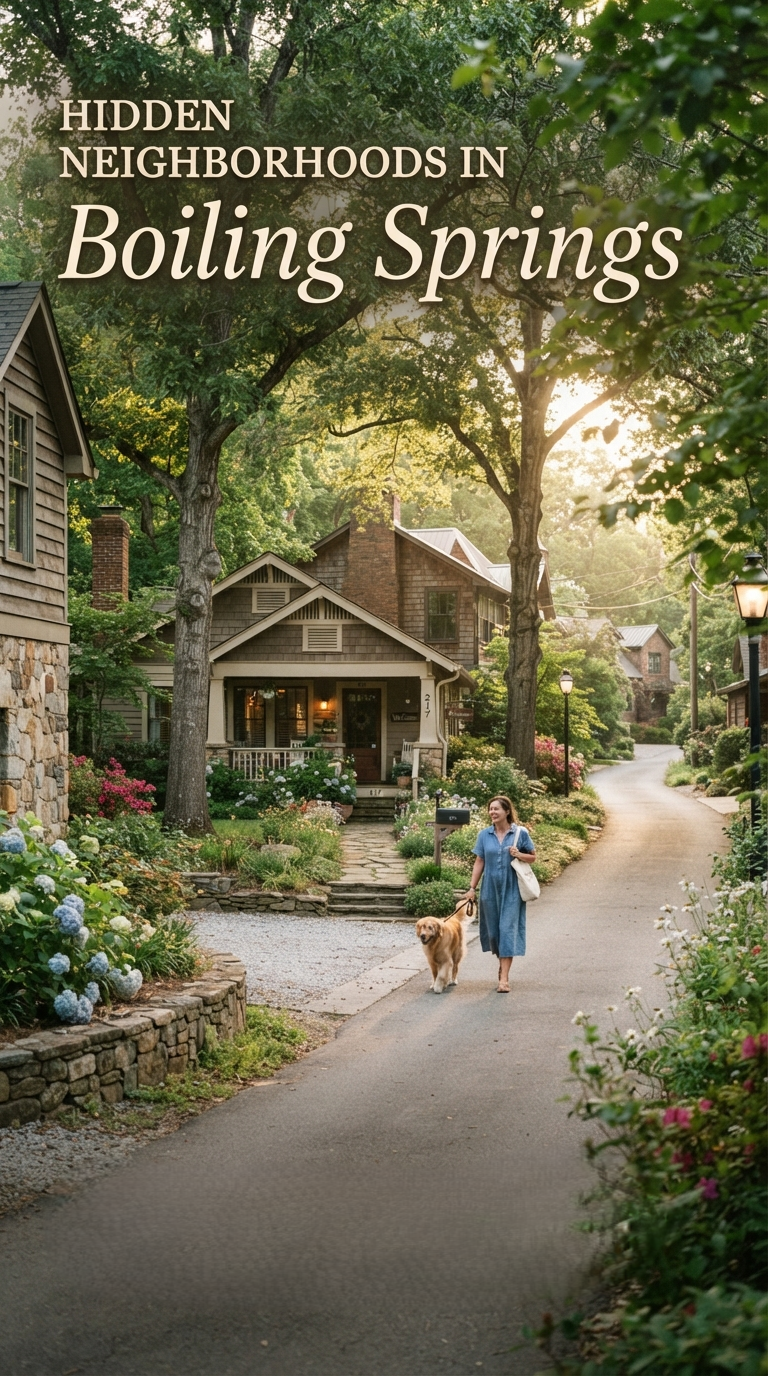
Established neighborhoods that predate the recent growth wave. Smaller developments that didn't get built out into major master-planned communities. Streets with mature trees and character that took decades to develop. Neighborhoods where the residents mostly know each other because turnover has been low.
These places don't dominate the listing feeds because they don't have massive inventory volume. When homes come up, they turn over to buyers already looking specifically for that area.
Cobbs Creek
Cobbs Creek is one of the more established Boiling Springs communities. Mature landscaping, larger lots, and a settled residential feel. Homes here have appreciated meaningfully over the past decade, and inventory turns over slowly.
For buyers who value character over the latest finishes, Cobbs Creek delivers. For families, the school zoning tends to work well, and the neighborhood offers the community feel that newer subdivisions haven't developed yet.
Candlewood
Candlewood sits in the middle range of Boiling Springs communities — not brand-new, not truly historic, but established enough to have the tree cover and neighborhood dynamics that newer communities lack.
Pricing here tends to be reasonable relative to newer construction, and the homes offer the traditional floor plans that many families prefer.
Hazelwood
Hazelwood is another Boiling Springs community that flies under the radar for most out-of-state buyers. Mid-tier pricing, family-oriented, and established enough to feel settled without being ancient.
Buyers who look here often find the value math works better than in the flashier newer communities.
What to Look for in an Established Boiling Springs Neighborhood
The homes in these communities were mostly built in the 1990s and 2000s. That means:
- Larger lot sizes than most current new construction
- Mature landscaping and tree cover
- Traditional floor plans with formal living and dining rooms
- Brick exteriors common
- Older systems (roofs, HVAC, water heaters) may need attention
For buyers who value the trade-offs, these communities deliver character and value. For buyers who want open floor plans and everything brand new, look at newer construction instead.
Why Local Buyers Prefer Them
Local buyers know these communities exist and often prefer them for a few reasons.
Community stability. Neighbors have been there for years. That creates the community feel that takes decades to build.
Better lot sizes. Newer subdivisions have shrunk lot sizes to fit more homes on the land. Older communities give you room to breathe.
Mature landscaping. Ten to twenty years of tree growth changes how a neighborhood feels. Newer communities won't have that for a decade or more.
School zone stability. Established neighborhoods tend to sit in stable school zones. Newer areas sometimes see zone changes as districts rebalance.
Better resale reputation. Buyers looking specifically for these communities create consistent resale demand.
What to Check When Touring
Look carefully at older homes in established neighborhoods.
Age of major systems matters. Roofs, HVAC, water heaters, and hot water tanks in 90s and 2000s homes may need updates soon. Budget accordingly.
Foundation and structural condition. Older homes have had time to settle. Inspect thoroughly.
Updated versus original interior. Some homes in these communities have been fully renovated. Others haven't been touched in 20 years. Both can work but the math is very different.
HOA structure. Established communities have HOAs with different rules than newer master-planned developments. Understand what you're buying into.
How These Compare to Newer Boiling Springs Communities
Newer Boiling Springs construction offers modern floor plans, energy efficiency, and lower immediate maintenance. It also comes with smaller lots, newer HOA rules, and less community character.
Boiling Springs real estate across both older and newer segments gives you the range to compare. For many families, the right answer is a well-selected older home with room to update rather than a newer home with less character.
Who Should Look at These Neighborhoods
Buyers who value character and mature landscaping over the newest finishes. Buyers who want larger lots without paying premium prices. Families looking for stable school zoning. Downsizers from bigger custom homes who want established neighborhoods without downtown pricing. Long-term buyers planning to stay a decade or more.
Buyers who want everything brand new, open floor plans, and low immediate maintenance will be happier in newer construction.
The Long View
Established Boiling Springs neighborhoods have appreciated steadily and are likely to continue holding value. The community character is not something that can be replicated by new construction. As the newer developments age, they'll eventually catch up in that respect, but the established communities have a decade or two head start.
For buyers who want the parts of Boiling Springs that most out-of-state searches miss, walking a few of these older communities is worth an afternoon. Reach out and we can put together a tour.