You're under contract on a home. The inspector shows up tomorrow. You want to know what he's actually going to check, what matters most, and what could kill the deal. Here's the real answer, from someone who's watched hundreds of these play out across the Upstate.
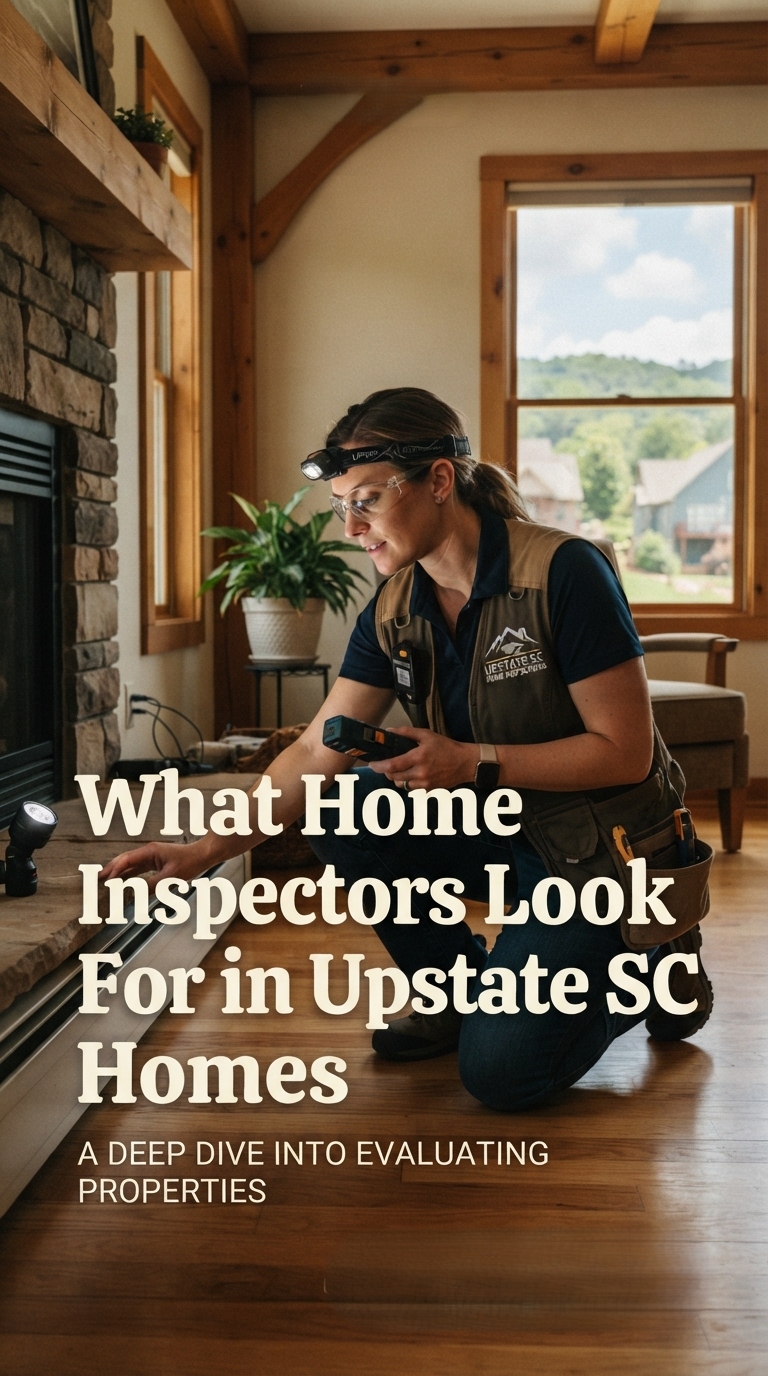
Home inspections in the Upstate follow a standard playbook. The inspector walks the house, climbs on the roof, crawls under the crawlspace, tests the systems, and writes it up. What varies is what actually matters at the end — the stuff that makes buyers renegotiate or walk away versus the stuff you can ignore.
Foundation and Structure
This is the first thing that matters. Inspectors check the foundation for cracks, shifting, and water intrusion. They look at the crawlspace or basement for moisture, mold, and any sign the house is settling in ways it shouldn't.
The Upstate has specific concerns here. Clay soils shift more than sandy soils. Older brick foundations can crack. Newer poured foundations are usually solid but can still show issues if drainage was poor during the build.
If the inspector flags a foundation issue, don't panic yet. Some cracks are cosmetic. Some are a big deal. Get a structural engineer to weigh in before you walk. It's a few hundred dollars and it tells you what you're actually dealing with.
Roof, Attic, and Gutters
Roofs in the Upstate take a beating from sun and summer storms. Inspectors check the shingles, flashing, and any visible wear. They walk the attic to check the framing, insulation, and any sign of leaks.
The big question is age. A 20-year architectural shingle roof at year 18 is going to need replacing soon. Ask the inspector how much life they think it has left. Then use that number when you're negotiating.
Gutters matter more than people think. Blocked gutters push water back against the fascia, then into the wall. Inspectors flag this because the damage is expensive to fix.
HVAC
Heating and cooling in the Upstate has to handle real summer heat and real winter cold. Inspectors test the system, look at the age of the unit, and check for maintenance history.
Systems typically last 12 to 18 years. If you're buying a house with a 15-year-old HVAC system, plan for replacement in the next few years. Budget accordingly.
Ductwork matters too. Some Upstate homes have leaky ductwork that's driving up energy bills. Inspectors will flag visible leaks. A full energy audit is a separate service.
Electrical
Older Upstate homes sometimes still have knob-and-tube wiring, aluminum wiring, or panels from the 60s and 70s that don't meet modern code. Inspectors flag any of this. Insurance companies care too.
If you're buying an older home, expect some electrical updates. Sometimes they're minor. Sometimes the whole panel needs to be replaced. Get quotes before closing so you know what you're walking into.
Plumbing
Inspectors run every faucet, flush every toilet, and check under every sink. They look at the water heater, the main line coming in, and any visible plumbing.
Common Upstate issues include galvanized pipes in older homes (they corrode from the inside), polybutylene (banned decades ago but still in some 80s-era homes), and cast iron drain lines (they fail over time). If any of these show up, plan for replacement work.
Wells and Septic
Many Upstate homes outside city limits run on wells and septic. If your property does, the inspection gets more involved.
Anderson rural areas, Chesnee properties, and much of the surrounding Spartanburg county land use one or both. Get the well tested for flow rate, bacteria, and contaminants. Get the septic pumped and inspected — not just visually checked. These two together can cost you a few hundred extra dollars during the inspection period, and they're worth every penny.
Windows, Doors, and Insulation
Inspectors check for drafts, seals, and single-pane windows that are past their prime. This isn't usually a deal-killer, but it affects energy bills. Older Upstate homes with original single-pane windows can leak enough air to add real money to your monthly utility costs.
Pests and Termites
The Upstate has termites. Every buyer should get a termite inspection separate from the standard home inspection. In South Carolina it's called a CL-100, and most lenders require it. Termites, dry rot, and moisture damage all show up on this report.
Frequently Asked Questions
How long does a home inspection take?
Most inspections in the Upstate take three to four hours for an average-sized home. Larger homes or homes with unusual features can take longer. Plan to be there for at least part of it — following the inspector around teaches you a lot about the home.
Should I attend the inspection?
Yes. You don't have to be there the whole time, but showing up at the end for the walkthrough is critical. The inspector will show you every issue he found and explain what matters most. That conversation is worth more than the written report.
What happens if the inspector finds problems?
You have a few options. Renegotiate the price. Ask the seller to fix the issue before closing. Ask for a credit at closing. Or walk from the deal. Which one makes sense depends on the issue, the size of the problem, and how motivated the seller is.
How much does a home inspection cost in the Upstate?
Standard home inspections in the Upstate run $350 to $600 depending on the size of the home and the inspector. Add-ons like well, septic, pool, and radon testing cost extra. Budget $500 to $1,200 total if the property needs the full workup.
Can I skip the inspection to make my offer stronger?
Some buyers waive inspections in competitive markets. I don't recommend it. The savings are small compared to the risk of finding out about a $20,000 problem after you close. If you need to strengthen your offer, look at shortening the inspection period or improving your terms elsewhere.
About Greg Harrelson
CENTURY 21 Blackwell is proudly part of the Century 21 Harrelson Group family of offices led by Greg Harrelson, a powerhouse organization with more than 30 years of success across South Carolina. This partnership strengthens our reach while preserving what built our reputation: exceptional service, best-in-class marketing, and highly trained agents focused on protecting our clients' most important investments.
Greg Harrelson is a seasoned Realtor with more than 30 years of experience serving the Myrtle Beach and Grand Strand markets branching into North Carolina more recently. As the founder of Century 21 The Harrelson Group, Greg has built his career helping buyers, sellers, and investors achieve success in every corner of the coastal Carolina real estate market. His expertise spans residential homes, investment properties, land development, and coastal condos. Known for his deep local knowledge, innovative marketing strategies, and commitment to personal service, Greg consistently helps clients reach their real estate goals while navigating the ever-changing market with confidence and precision.