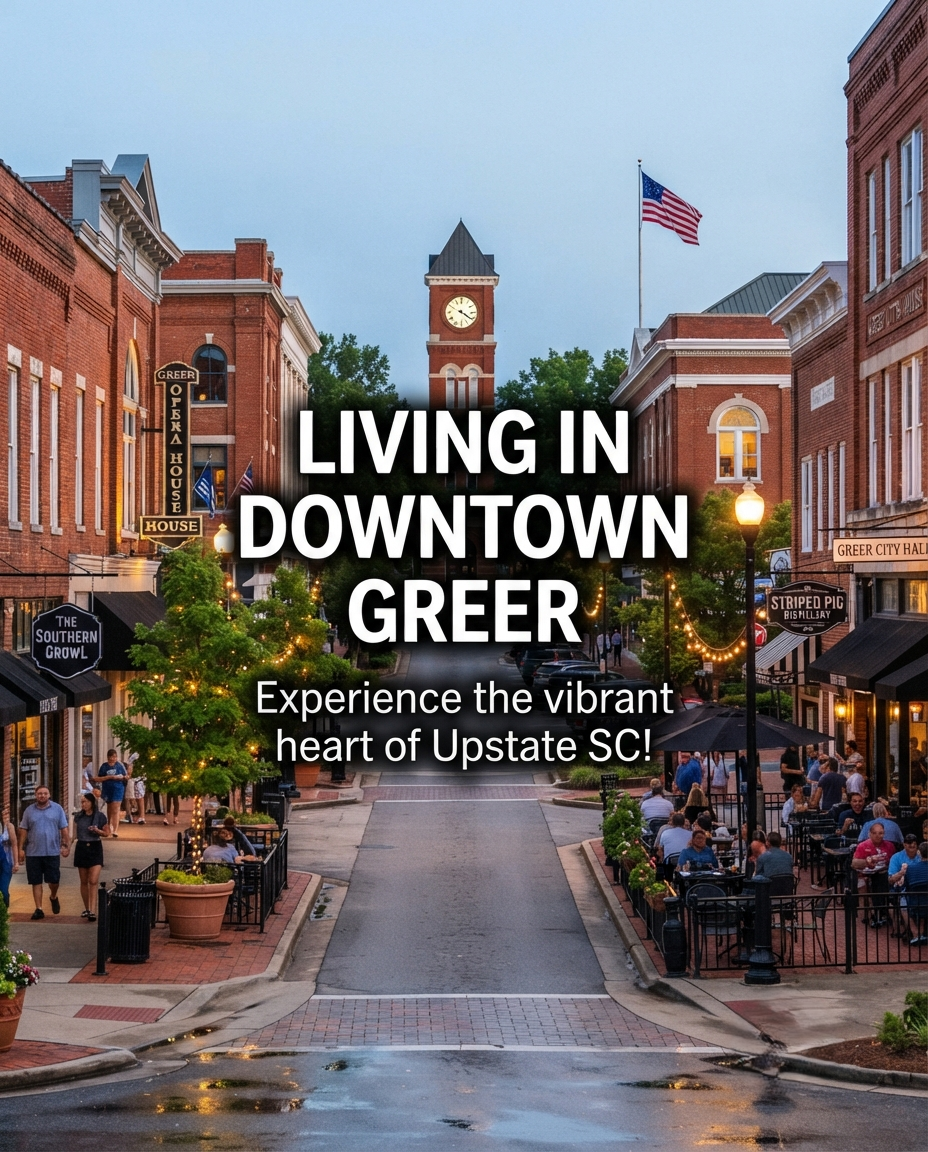
Downtown Greer has become one of the more interesting small downtowns in the Upstate. Trade Street and the surrounding blocks have transformed from a sleepy corridor into a real destination with restaurants, shops, breweries, community events, and a residential scene that has grown alongside the commercial revival. For buyers who want walkable small-town living without paying downtown Greenville prices, downtown Greer offers a compelling option.
Here is what I see as a working agent in this market — what downtown Greer living actually looks like, who is choosing it, and what to think about as you consider it.
What Downtown Greer Has Become
A decade ago, downtown Greer was mostly a commuter pass-through. Trade Street had a few establishments but not much reason to stop unless you lived nearby. That has changed dramatically.
Restaurants have proliferated. Local coffee culture has developed. Craft breweries have opened. The event calendar — farmers markets, festivals, holiday events, weekly gatherings — has grown into something that supports real community life.
The residential scene has responded. Historic homes near downtown have appreciated meaningfully. New townhome and condominium inventory has been built. Existing residents have benefited from the growing amenities without leaving their homes.
For buyers considering the area, Greer real estate covers the broader Greer market including both downtown-adjacent inventory and the surrounding neighborhoods.
Who Is Choosing Downtown Greer
The downtown Greer buyer pool runs across several distinct groups.
Empty nesters downsizing from larger suburban homes elsewhere in Greer or the surrounding areas who want walkable daily life without giving up their broader community connections.
Young professionals working in Greer, at BMW, or in the broader Upstate who value the community feel and walkable amenities that downtown Greer offers at prices significantly below downtown Greenville.
Retirees looking for an active downtown retirement without the pricing or density of Greenville proper.
Second-home buyers from Charlotte, Atlanta, and further north using downtown Greer as a weekend or extended-stay property.
Remote workers who want walkable amenities as part of daily life and value the smaller-scale community that downtown Greer offers.
Families with older children or without school-age kids who value walkability and community events.
The Housing Inventory
Inventory in and immediately around downtown Greer includes several distinct segments.
Historic homes on the streets surrounding downtown. These range from restored properties to homes needing significant investment. Character, mature landscaping, and proximity to Trade Street support pricing.
Newer townhome and condominium developments built in response to the growing downtown demand. These offer modern floor plans, low immediate maintenance, and walkable proximity to downtown amenities.
Mid-century homes on streets a few blocks off the core downtown area. These offer good bones, reasonable square footage, and neighborhood character at accessible pricing.
Custom or renovated homes on premium lots within walking distance of downtown. These represent the higher end of the immediate downtown market.
What Makes Downtown Greer Work
A few factors combine to make downtown Greer function as a real residential option.
Genuine Walkability
Trade Street and the surrounding blocks support real walkable daily life. Dinner, drinks, coffee, weekend errands — all within short walks of the surrounding residential streets. Sidewalks are consistent, crossings are manageable, and the neighborhood scale supports walking.
Community Events
The event calendar has become substantial. Weekly farmers markets, seasonal festivals, holiday events, and regular downtown activities support the sense of community life. Residents actually attend these events and know their neighbors.
Retail Mix
Local restaurants, boutiques, coffee shops, and specialty retail have grown alongside the residential demand. The mix is not just chains — local businesses give downtown Greer its specific character.
Cost Advantage Over Downtown Greenville
Pricing in downtown Greer runs meaningfully below downtown Greenville for equivalent walkable amenities. Buyers who want the downtown lifestyle without paying Greenville pricing find real value.
Access to the Broader Upstate
Downtown Greer sits within reasonable driving distance of both Greenville and Spartanburg. Residents can access downtown Greer for daily life and drive to the bigger cities for specific amenities.
What to Think Through
Downtown Greer living has its own considerations worth understanding.
- The scale is smaller than downtown Greenville. If you want big-city downtown density, downtown Greer will feel too small. If you want walkable small-town life, it may feel exactly right.
- Restaurant and retail options are growing but not as extensive as Greenville’s. For buyers who want maximum variety, that is a real difference.
- Event traffic and parking on busy weekends can affect residential streets. Test the neighborhood during a busy event weekend before committing.
- Historic homes require historic-home considerations — older systems, foundation questions, insurance realities. Inspect carefully.
- School zoning for downtown Greer addresses varies. Verify current zoning for any specific address.
- Investment activity has increased. Some short-term rental use has grown in the downtown-adjacent area, which affects neighborhood dynamics.
How Downtown Greer Fits Regionally
For buyers weighing downtown Greer against other options in the Upstate:
Downtown Greenville offers more amenities, more density, and more cultural options at meaningfully higher pricing.
Spartanburg real estate includes downtown Spartanburg options with its own scale and character, at generally comparable or slightly different pricing.
Downtown Travelers Rest offers a similar scale to downtown Greer with its own character shaped by the Swamp Rabbit Trail and the surrounding foothills.
Downtown Simpsonville and downtown Fountain Inn offer smaller-scale walkable options at generally more accessible pricing.
Downtown Greer sits in a specific sweet spot — scale beyond the smaller Upstate downtowns, pricing below Greenville, community character genuinely developed, and ongoing investment supporting continued growth.
Practical Considerations
A few practical points I share with buyers evaluating downtown Greer.
Visit at multiple times. Weekend evening feels different from Tuesday morning. Get the full picture.
Walk the actual routes. Grocery store distance, restaurants you would use regularly, and community amenities all matter for daily life. Test the walks.
Consider parking realistically. If you have multiple cars or frequent guests, parking in the immediate downtown blocks may complicate life.
Understand the specific property. Historic homes near downtown range widely in condition and updates. Newer townhomes vary in HOA structure and amenity offerings. Match the property to your priorities.
Talk to current residents. Ask about the community feel, event dynamics, and what daily life actually looks like.
The Long View
Downtown Greer is likely to continue growing in the same direction. More residential inventory, more retail and restaurant options, and continued community investment support the trajectory.
For buyers thinking about a long-term home in downtown Greer, the fundamentals are positive. Pricing has appreciated meaningfully but the fundamentals still support the values. The community feel is real. The trajectory continues.
If you want to walk downtown Greer, tour specific properties, and think through whether the lifestyle actually matches how you want to live, that is exactly the kind of conversation worth having with someone who works this market. Reach out and we will put together a tour that fits what you are considering.