Downtown Greenville has become one of the most talked-about small city centers in the Southeast, and for good reason. The revitalization over the past two decades has produced a downtown that supports real residential life — restaurants, parks, walkability, events, and a density of activity that most cities its size cannot match. For a growing number of buyers, downtown Greenville is not just a place to visit but a place to live.
If you are considering downtown living, here is what I see as a working agent in this market. The pros are real. The cons are also real. Both matter for the decision.
What Downtown Greenville Living Actually Looks Like
The downtown residential experience varies more than newcomers expect. Some downtown residents live in high-rise condos with elevator access to Main Street. Some live in historic homes a few blocks off the core. Some live in newer townhome developments within walking distance of Falls Park. Each of these represents a different flavor of downtown living, and the daily experience differs accordingly.
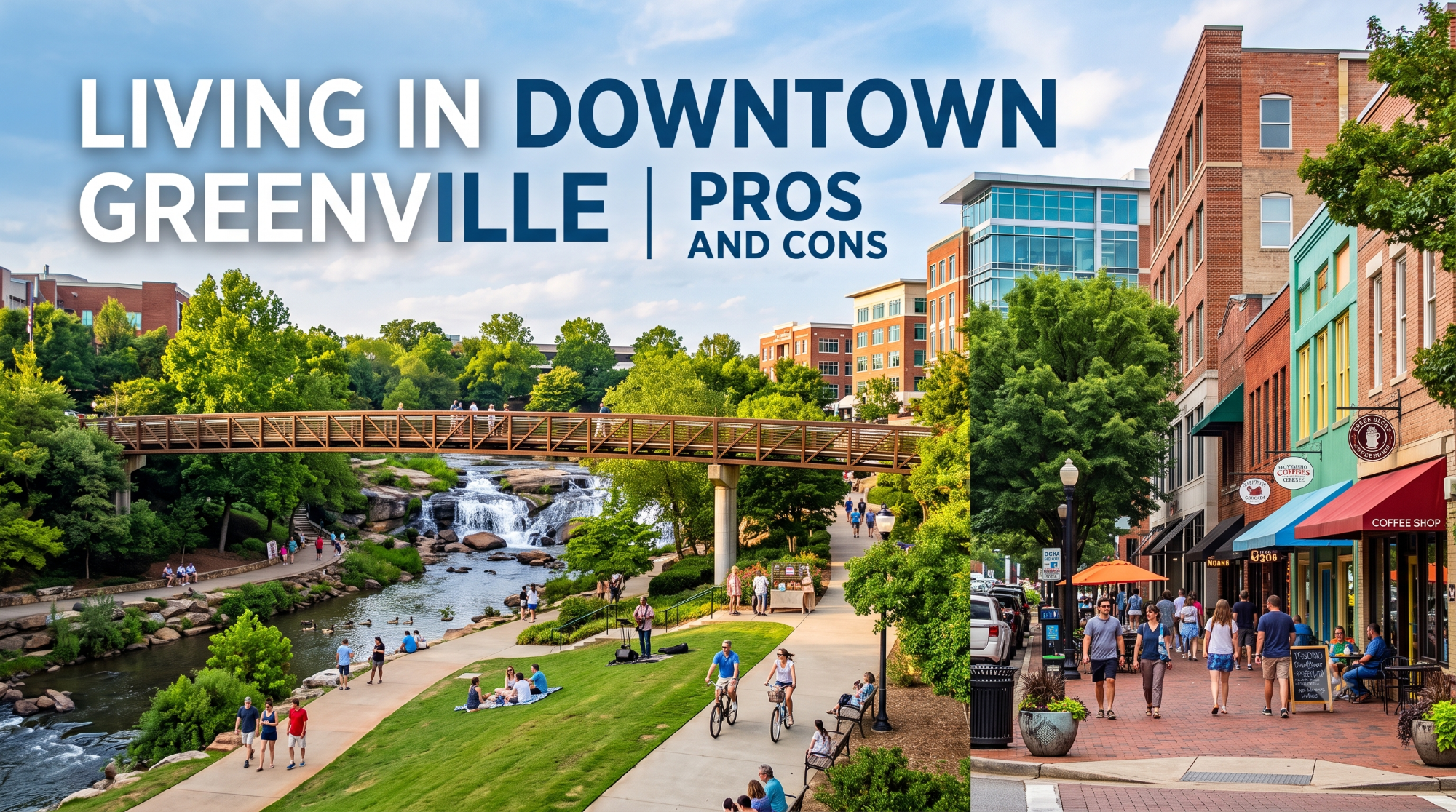
The core downtown area — the blocks immediately around Main Street, Falls Park, and the Peace Center — delivers the most concentrated urban experience. Restaurants, shops, coffee, events, and the Reedy River corridor are all within short walks.
The residential neighborhoods a few blocks further out — North Main, West End, Overbrook, and similar — deliver more of a residential feel with meaningful walkability still intact. These blend downtown access with quieter streets, yards, and more space per dollar.
The Pros
Downtown Greenville offers real advantages that keep drawing new residents.
Walkable Daily Life
The most-cited reason buyers choose downtown Greenville is walkability. Dinner out without driving. Coffee in the morning without leaving your block. Weekend events at Falls Park or NOMA Square that require no parking hassle. For buyers who value car-optional living, downtown delivers what most of the Southeast simply does not offer.
Real Community and Activity
Downtown Greenville is not a ghost town after five p.m. Restaurants stay busy, events happen year-round, and the community feel is genuinely present. Buyers who moved from Atlanta, Charlotte, or larger metros often note that downtown Greenville feels more alive than the downtowns they left.
Cultural and Entertainment Access
The Peace Center, TD Convention Center, Bon Secours Wellness Arena, and multiple smaller venues bring music, theater, sports, and events downtown regularly. Residents walk to shows they would drive an hour to see in most cities.
Access to Parks and the Swamp Rabbit Trail
Falls Park sits at the heart of downtown, and the Reedy River corridor and Swamp Rabbit Trail extend outdoor access well beyond what most urban environments offer. Downtown residents can walk into the park, follow the river, and connect to the broader trail system without ever getting in a car.
Investment Support
Downtown Greenville property values have appreciated meaningfully over the past decade. The residential inventory is limited, demand keeps growing, and the trajectory supports long-term value. For buyers thinking about a long-term home or investment, downtown offers strong fundamentals.
For a look at active inventory, Greenville condos for sale covers the downtown residential condo market, and Greenville real estate shows the broader downtown-adjacent inventory.
The Cons
Downtown living is not for everyone. A few realities matter for the decision.
Price
Downtown Greenville commands the highest per-square-foot pricing in the region. Buyers coming from Atlanta or Charlotte may find it reasonable; buyers coming from more affordable markets sometimes feel priced out. The lifestyle is worth it for those who can afford it, but the math matters.
Space Constraints
Downtown condos generally offer less square footage than equivalent suburban homes. Storage is limited. Second bedrooms or home offices are smaller. Buyers relocating from larger homes need to think about what they will keep, what they will part with, and how the day-to-day space math works.
Limited Grocery Access
Even the walkable downtown Greenville does not deliver walkable grocery for most residents. A car remains part of the equation for weekly shopping. Buyers expecting European-style walking-only groceries need to recalibrate.
Noise and Activity
Downtown is a busy place, particularly on weekends. Live music, events, restaurant patios, and weekend crowds create noise that suits some residents and grates on others. Test a downtown property at multiple times of day and week before committing.
Parking
Downtown parking is workable for residents with dedicated spaces but limited for guests. Family visits, deliveries, and service calls all involve figuring out parking that suburban life takes for granted.
Family Life Considerations
Downtown Greenville is less family-oriented than the surrounding suburbs. Schools zoned to downtown addresses are mixed. Space for kids to play, yards, and typical suburban family amenities are limited. Some families make downtown work; most families end up in suburbs like Simpsonville, Mauldin, or Taylors instead.
Who Downtown Greenville Works For
The downtown buyer pool has become broader over the past decade, but a few profiles consistently choose downtown.
Empty nesters downsizing from larger suburban homes who want walkable daily life, cultural access, and lower ongoing maintenance.
Young professionals working downtown or nearby who value walkability and the community feel that downtown offers.
Second-home buyers from Charlotte, Atlanta, or further north who use their downtown property as a weekend or extended-stay place.
Retirees who specifically want an urban retirement rather than a suburban or lake-oriented one.
Remote workers with flexibility who value the lifestyle amenities that downtown delivers.
What Downtown Greenville Does Not Work For
Downtown does not suit every buyer. A few buyer profiles typically end up elsewhere in the region.
Families with school-age children usually find better fit in suburbs with better school zoning and more family-oriented amenities.
Buyers wanting substantial yards, gardens, or outdoor space beyond what downtown offers.
Buyers on tight budgets who cannot absorb the downtown pricing premium without meaningful compromises elsewhere.
Buyers who value quiet daily life and low activity levels around their home.
Comparing Downtown Against Nearby Options
For buyers weighing downtown Greenville against alternatives, several nearby options offer versions of walkable or amenity-rich living at different price points.
Greenville luxury homes outside the immediate downtown core often offer larger homes, larger lots, and specific amenity packages at lower per-square-foot pricing than downtown condos and townhomes.
The North Main and Augusta Road neighborhoods deliver walkable residential character with more space and often at slightly more accessible pricing.
Hollingsworth Park delivers an intentionally walkable community feel in a different location with different daily rhythm.
Downtown Greer, Simpsonville, Travelers Rest, and other Upstate downtowns offer smaller-scale downtown living at meaningfully lower pricing.
Practical Considerations Before Buying
A few things worth thinking through before committing to downtown living.
- Visit downtown at multiple times of day and week. The Tuesday morning experience differs from the Saturday night experience.
- Test the actual walk to the places you would go regularly. Google Maps distance is not the same as the walk itself.
- Understand your HOA structure if buying a condo. Fees, reserves, rental restrictions, and amenity funding all matter.
- Consider parking realistically. If you have multiple cars or expect frequent guests, downtown parking may complicate life.
- Think about long-term flexibility. If your life changes — new relationship, children, retirement priorities — how does downtown living adapt?
The Long View
Downtown Greenville is likely to continue evolving in the same direction. More residential inventory, more amenities, more cultural investment. The trajectory supports long-term value for buyers choosing the downtown lifestyle.
The lifestyle is real, the community is genuine, and the trajectory is positive. But the cost is meaningful and the trade-offs are specific. Buyers who fit downtown living tend to love it. Buyers who do not fit tend to be miserable within a year or two.
If you want to walk downtown Greenville together, tour a few different downtown property types, and think through whether the lifestyle actually matches how you want to live, that is exactly the kind of conversation worth having with someone who works this market. Reach out and we can put together a tour that fits what you are weighing.