


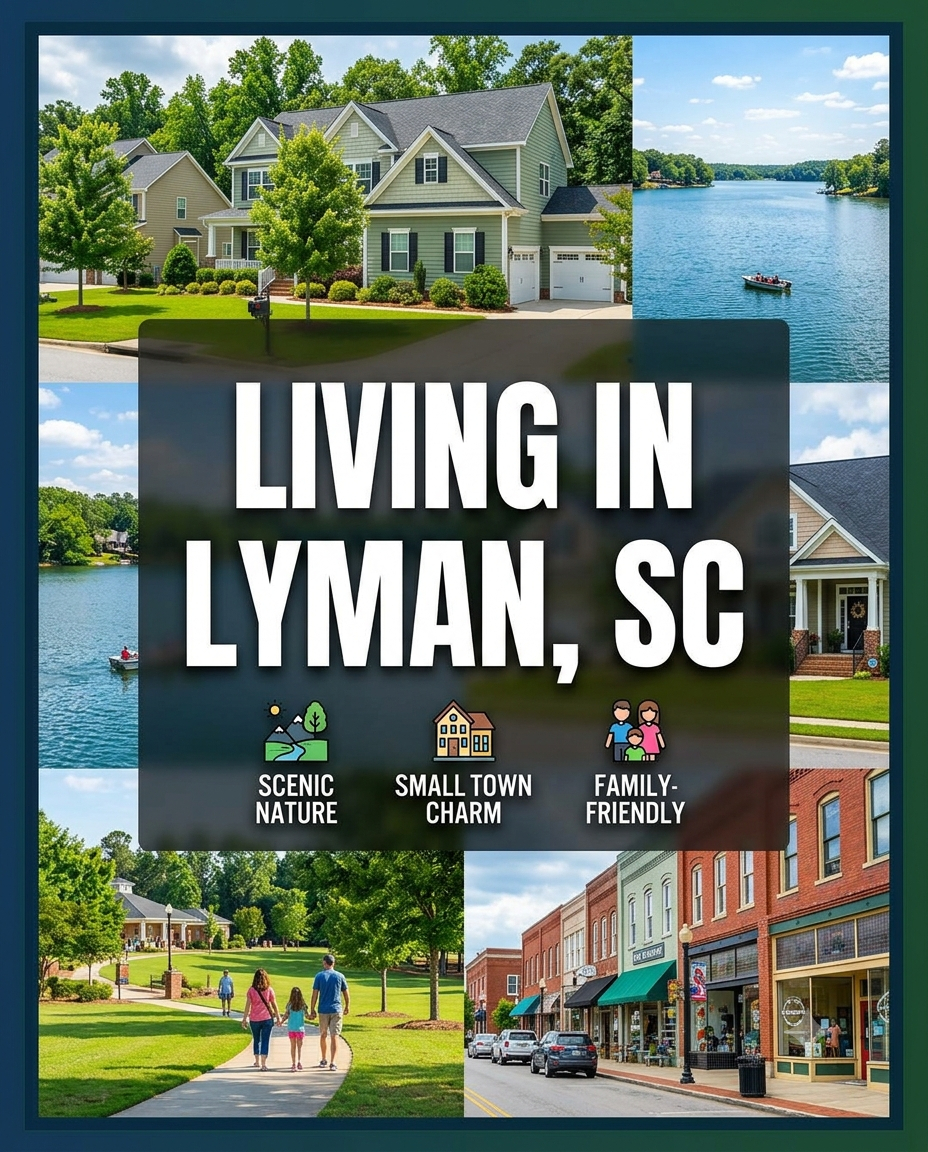
Lyman sits in a stretch of Spartanburg County that has changed dramatically over the last decade. Once a quiet mill town, Lyman has become part of the broader I-85 growth corridor between Greenville and Spartanburg. New residents are moving in, builders are building, and the local market has shifted from quiet to active in a way that has caught some people off guard.
If you are considering Lyman as a place to live, here is what life here actually looks like, who is moving in, and what to think about as you tour.
What Lyman Is
Lyman is a small town with deep mill-town roots. Pacolet Mills operated here for over a century before the textile industry left, and the legacy of that era still shapes parts of the town’s character — small bungalows, historic mill housing, and a downtown that has been finding its second wind.
The population is around 3,400 inside town limits, but the broader Lyman zip code includes a much larger surrounding area where most new construction is happening. The town sits on Highway 290, with quick access to I-85, putting it within a reasonable drive of BMW, the Inland Port, and the larger Greenville and Spartanburg job markets.
For buyers used to bigger cities, Lyman takes a beat to read. It is small. The pace is slower. The downtown is still developing. And that is precisely the appeal for many of the people moving here.
Why Buyers Are Moving to Lyman
A few patterns I see consistently.
Affordability is the single biggest driver. Lyman remains one of the more affordable parts of the I-85 corridor between Greenville and Spartanburg. Families and first-time buyers find more square footage and larger lots here than in comparable markets closer to either city.
BMW and the Inland Port pull workers into the area. Lyman sits within an easy commute of both, and many of the families landing here are tied to one of those anchor employers.
Schools are competitive. Spartanburg County schools serve Lyman, and the specific zoned schools draw families looking for that combination of school quality and reasonable home prices.
Commuter access works. I-85 is close, and the commute to Greenville or Spartanburg is manageable from most Lyman addresses. For families where one parent works on each side, splitting the difference geographically often makes Lyman the right answer.
Growth is bringing new amenities. Restaurants, services, and retail have started to follow the housing growth. The Lyman of five years ago is not the same as the Lyman of today.
The Housing Market
Inventory in Lyman runs across a wider range than most outsiders expect.
Historic mill homes and older bungalows offer entry-level price points and character that newer construction cannot replicate. These homes often need updating but reward buyers who want to put work into them.
Resale homes from the 1990s and 2000s in established neighborhoods offer family-friendly floor plans and yards at reasonable prices. Many of these homes were built during earlier growth waves and continue to turn over with steady demand.
New construction has accelerated significantly. Production builders have moved into the area with townhome, single-family, and larger custom inventory. Boiling Springs homes for sale is a useful comparison point because much of the new construction in this corridor follows similar patterns and price expectations.
Acreage and rural properties are still available in the surrounding county areas, though they are getting harder to find as development pushes outward.
Who Is Choosing Lyman
The Lyman buyer profile has shifted significantly as the area has grown.
Working families tied to BMW, the Inland Port, or other Spartanburg County employers continue to be the largest segment. The combination of schools and affordable family-sized homes works for this group.
First-time buyers stretching to get into single-family homes find Lyman more accessible than markets closer to Greenville. The price-per-square-foot math still works here.
Move-up buyers leaving smaller homes in older Spartanburg County neighborhoods or in Greenville for more space and larger yards are a consistent presence.
Out-of-state relocators looking for affordable Upstate options on the I-85 corridor have started to discover Lyman over the past several years. Many compare it against Duncan, Greer, and Spartanburg real estate before landing here.
Investors targeting single-family rentals near major employers have shown up in measured numbers. Rental demand is healthy without being overheated.
Practical Considerations
A few things specific to Lyman worth thinking through.
Older homes carry older systems. Many of the bungalows and historic homes have wiring, plumbing, and HVAC dating to decades back. Plan thorough inspections and budget for potential updates.
Lot conditions vary. Some properties run on private wells or have septic systems even within the town’s broader area. Verify utilities for any specific home.
Growth comes with traffic. Highway 290 and the local connectors have absorbed significant new traffic. Drive your potential commute at actual rush hour rather than off-peak.
School zone lines can shift as growth continues. Verify current zoning for any specific address rather than relying on a builder’s marketing.
Insurance considerations matter for older homes. Distance to fire stations, age of construction, and outbuildings all factor in. Get a real quote during the inspection period.
Where Lyman Fits in the Broader Upstate
If you are comparing Lyman against nearby markets, a few useful contrasts emerge.
Duncan and the broader I-85 corridor offer similar growth dynamics with slightly higher price points and more new construction concentration. Greer real estate further west offers stronger schools and more amenities at higher price points. Boiling Springs north offers a more established residential character with slightly higher pricing. Spartanburg east offers a real downtown and historic neighborhoods at varying price points depending on the area.
Lyman wins for buyers prioritizing affordability and a small-town feel while still being inside the I-85 employment corridor. It loses for buyers who want urban density, walkable amenities, or established luxury inventory.
The Long View
Lyman is in the middle of a real growth cycle. The fundamentals — affordability, employers, schools, location — all point to continued demand. The next several years will likely keep bringing new construction, new residents, and continued upward pressure on values. Buyers entering now are paying more than they would have five years ago, but the underlying picture supports the prices.
If you want to walk specific properties or compare Lyman to other Upstate options, that is the kind of conversation worth having with someone who knows the local market. Reach out and we can put together a tour that fits how you actually want to live here.