


Smart home features have gone from a luxury add-on to a baseline expectation for a lot of Upstate buyers, especially the ones moving here from larger metros. I get the question constantly during showings — what is this thermostat, does the front door lock from a phone, what happens if the power goes out. Some buyers care about every feature. Others care about exactly one or two and ignore the rest. Either way, the smart home conversation now shows up in almost every offer I write.
Here is what I am seeing in the Upstate market — which features matter, which are oversold, and what to look for if you are buying a home and plan to upgrade or replace any of it.
The Features Buyers Ask About First
A few categories come up almost every week in showings.
Smart Thermostats
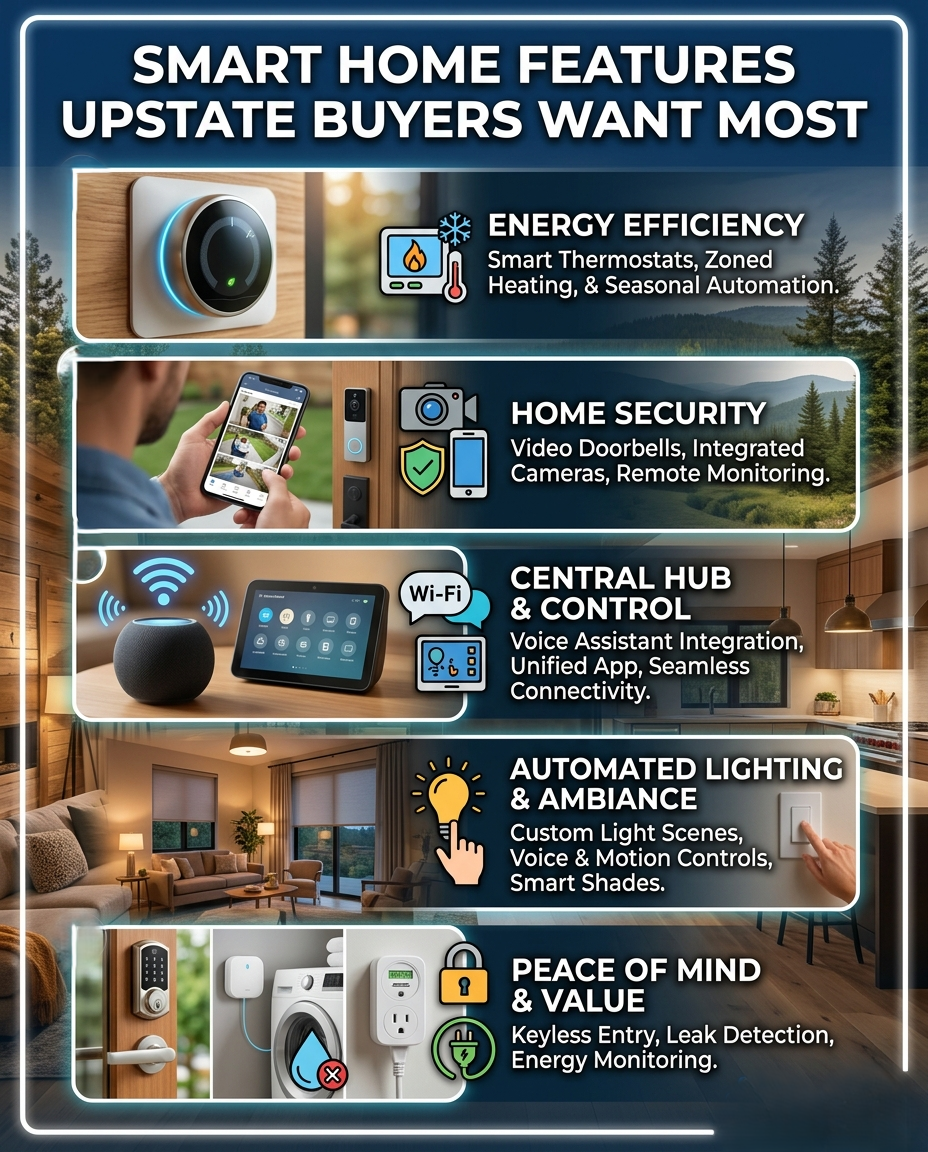
Nest, Ecobee, and the builder-installed equivalents are the most common request, and for good reason. The Upstate has real summer heat and meaningful winter cold. A smart thermostat that actually learns your schedule can cut a monthly electric bill noticeably. Most resale homes I list either already have one installed or have wiring set up for it. If you are buying a home built in the last five years, expect one as a baseline.
Smart Locks and Video Doorbells
For buyers coming from Atlanta, Charlotte, or further north, this is often a non-negotiable. Ring, Nest, August, and the integrated builder packages are all common. Video doorbells in particular have become almost standard on new construction. Worth checking who owns the cloud subscription on a resale — sometimes the previous owner’s account is still tied to the camera and needs to be released before transfer.
Smart Garage Doors and Openers
Quietly one of the most-used features in the homes I sell. MyQ and the Chamberlain-style smart openers integrate with phones and home routines, and for buyers with kids coming home from school or contractors who need access, it ends up being one of the things they use every day.
Built-In Wi-Fi and Mesh-Ready Networks
This is the feature that has changed the most over the last few years. Builders are now pre-wiring homes for mesh networks, and a number of luxury builds include enterprise-grade equipment as standard. Greenville new homes are leading the way on this — more new construction here is shipping with structured wiring, multiple wired access points, and dedicated network closets than I saw even three years ago.
Smart Lighting and Switches
Lutron Caséta is the most common request from buyers who care about lighting specifically. Whole-house systems are still mostly a luxury feature, but smart switches in key rooms — kitchen, primary suite, living areas — show up across price points. Worth checking the existing brand if you plan to expand the system later; not everything is cross-compatible.
The Features That Are Oversold
A few things get marketed as smart home features that buyers should look at with a clear eye.
Whole-House Audio
Beautiful in theory. In practice, most buyers I work with disconnect or stop using the in-ceiling speakers within a year, especially if they prefer their own Sonos or HomePod setup. If a home has it, fine. If it does not, do not pay extra for it.
Smart Refrigerators
The touchscreen-on-the-fridge trend has cooled. The screens get outdated quickly, repairs are expensive, and most of what people thought they wanted from a smart fridge ended up being something they did from their phone instead. If a smart fridge is included in the sale, look up the model and check whether the software is still being supported.
Voice Assistants Built Into the Walls
Built-in Alexa or Google Assistant speakers in the walls or ceiling looked great in builder showrooms a few years ago. Many of those systems are now outdated, and the resale value is essentially zero. Retail smart speakers do the same thing better and can be replaced for under a hundred dollars when they age out.
What to Check During Inspection
If smart home features are part of why you wanted a particular home, the inspection is the right time to verify the basics.
- Confirm every smart device is actually working, not just installed. Ask for a demonstration on each one.
- Verify the prior owner removes their accounts before closing. Cameras, locks, thermostats, and security panels all need to be released from their phones.
- Check the age of the equipment. A smart thermostat from 2014 is essentially obsolete. A smart lock from 2017 may not get firmware updates much longer.
- Look at the network gear. Older routers and access points can bottleneck the rest of the system. If the home has a structured wiring panel, look inside it.
- Ask about security systems specifically. Some are tied to monitoring contracts that need to be cancelled or transferred. Others are owned outright and can stay as-is.
Where Smart Home Demand Is Strongest in the Upstate
New construction in Boiling Springs new homes consistently includes a smart home package — typically a thermostat, video doorbell, and smart lock at minimum, with optional upgrade packages from there. Production builders have made these features part of their base offering, which has changed buyer expectations across the board.
Spartanburg real estate runs a bit more split. Newer construction in the suburbs matches the rest of the Upstate, but older neighborhoods inside the city limits and historic areas often need substantial upgrades to support the same features. That is not a deal-killer — it just changes the budget picture.
Luxury homes across the region are where you see the most ambitious systems — whole-home automation, integrated audio-video, security, lighting, and climate all on one platform. These are also the systems most likely to be obsolete within five to ten years, so the long-term thinking matters.
What I Tell Buyers
Smart home features add real value when they match how you actually live. Buy a thermostat and a smart lock first. Layer in lighting if you care about lighting. Add cameras if you care about security. Skip the integrated whole-house systems unless you have someone in the family who is going to actually maintain them.
If you are touring homes and want to know what is built in, what is bolted on, and what is going to need to be replaced in the next few years, that is part of what a good agent should be helping you sort through. Reach out and we will walk through it on whatever home you are considering.