


The Upstate has its big-name markets — Greenville, Spartanburg, Anderson — and most buyers from out of state land on those first. The smaller towns get less coverage, but for a meaningful share of buyers, that is where the right answer lives. Quieter, more affordable, often with stronger character and a slower pace, the Upstate’s small towns each have their own draw.
If you are weighing where to land in the Upstate and bigger cities are not your priority, here is a working agent’s take on the small towns worth a serious look — what each one offers, who tends to choose it, and how the housing market actually behaves there.
Travelers Rest
Travelers Rest sits at the upper end of the Swamp Rabbit Trail, just north of Greenville. The downtown stretch along Main Street has come into its own with restaurants, breweries, and a walkable community feel that makes the town feel larger than its population.
Who chooses Travelers Rest. Active retirees, remote workers, second-home buyers from Charlotte and Atlanta, and outdoor enthusiasts drawn to the foothills.
The housing market. Travelers Rest homes for sale spans older bungalows in the historic core, mid-century homes a few streets out, and a steady supply of newer construction in the surrounding areas.
Trade-offs. Inventory is tighter than the bigger Upstate markets. Pricing has appreciated meaningfully. The trail and the downtown bring weekend traffic.
Fountain Inn
Fountain Inn sits at the southern edge of Greenville County, with a downtown that has been steadily revitalizing. The town has absorbed significant new construction over the past several years while keeping a real small-town feel.
Who chooses Fountain Inn. Families relocating from out of state, first-time buyers stretching into single-family homes, and downsizers looking for new construction in active-adult communities.
The housing market. Fountain Inn homes for sale covers a broad mix from older homes in the historic core to large production-builder communities further out. The new construction segment is particularly active.
Trade-offs. Distance from downtown Greenville is real — most amenities still require a drive. The town has grown quickly, which has put pressure on schools and infrastructure.
Inman
Inman sits in northern Spartanburg County, with Lake Bowen forming part of its identity. The town has grown steadily as buyers discover the combination of lake access, schools, and accessible price points.
Who chooses Inman. Working families tied to Spartanburg County employers, retirees drawn to Lake Bowen, second-home buyers from Charlotte and Atlanta, and out-of-state relocators looking for affordable Upstate options.
The housing market. Inman real estate runs across lakefront properties, lake-adjacent new construction, and inland communities at various price points. Lake Bowen homes carry a premium; inland inventory is more accessible.
Trade-offs. Limited downtown amenities. Most everyday services require driving to Boiling Springs or Spartanburg.
Chesnee
Chesnee sits in the rural northern edge of Spartanburg County, near Lake Blalock and within reasonable distance of Spartanburg and Boiling Springs. The town itself is small — under a thousand people — with a slower pace and a more rural character than the other Upstate small towns.
Who chooses Chesnee. Buyers prioritizing rural living, retirees from out of state, families looking for acreage at reasonable prices, and lake-oriented buyers focused on Lake Blalock or Lake Bowen.
The housing market. Chesnee homes for sale includes a mix of older rural homes, newer single-family construction in the surrounding county areas, and acreage parcels with varied housing on them.
Trade-offs. Very limited local services. Internet quality and infrastructure can be inconsistent. Most amenities require a drive to Boiling Springs or Spartanburg.
Landrum
Landrum sits in the northern corner of Spartanburg County, where South Carolina meets the North Carolina foothills. The downtown is tight and walkable, and the surrounding area is shaped by equestrian culture and proximity to the Tryon equestrian scene.
Who chooses Landrum. Equestrian buyers, retirees looking for a quiet foothills lifestyle, second-home buyers from larger metros, and remote workers wanting significant privacy.
The housing market. The Landrum market emphasizes equestrian estates, mountain-view homes, historic downtown properties, and custom homes on larger parcels. Pricing has appreciated meaningfully over the past several years.
Trade-offs. Limited local services. The market is small enough that finding the right property can take patience. Internet quality varies.
Easley
Easley sits west of Greenville in Pickens County, with a more residential feel and closer access to the foothills and Lake Hartwell. The town has grown steadily and offers a balance between small-town feel and reasonable proximity to Greenville amenities.
Who chooses Easley. Families looking for affordability without leaving the Greenville commute zone, retirees, Clemson-adjacent buyers, and outdoor enthusiasts who want easy access to the foothills.
The housing market. Easley inventory ranges from established suburban neighborhoods to newer construction further out, with meaningful new construction activity in the past several years.
Trade-offs. Downtown amenities are modest. Most cultural and dining options require a drive to Greenville or to nearby Clemson.
Lyman
Lyman sits along the I-85 corridor between Greenville and Spartanburg. The town has a mill-town history and has grown significantly as part of the broader corridor expansion.
Who chooses Lyman. Working families tied to BMW or the Inland Port, first-time buyers, and move-up buyers leaving smaller Spartanburg County homes.
The housing market. Older mill homes, established neighborhoods, and new construction at relatively accessible price points.
Trade-offs. The town is in the middle of a real growth phase. Traffic and infrastructure are catching up. Local amenities are still developing.
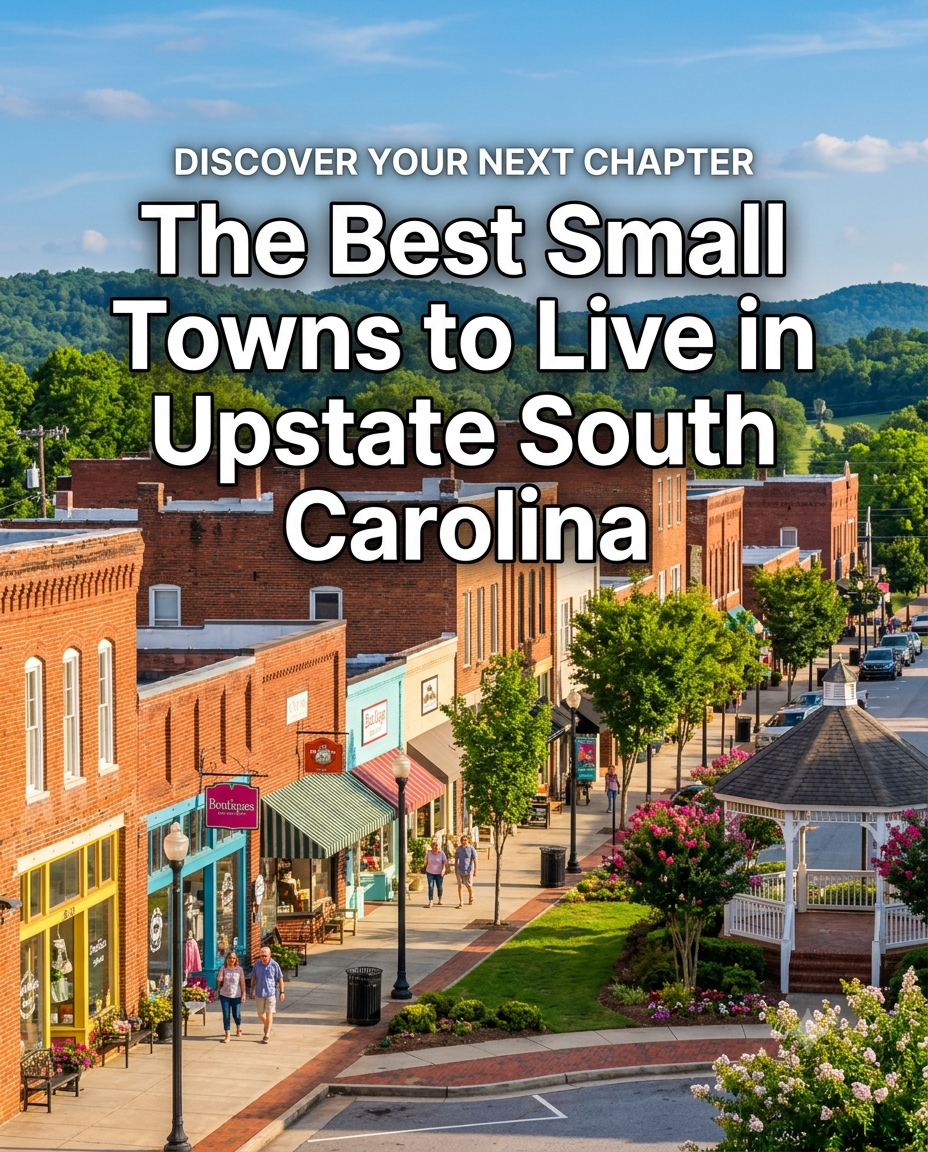
How to Choose
If you are weighing these small towns against each other, the right starting questions are these.
What does daily life actually look like? Different small towns suit different rhythms. Travelers Rest is outdoor-active with downtown energy. Landrum is quiet, equestrian, foothills-oriented. Chesnee is rural and slow. Inman is family-and-lake oriented. Each has its own personality.
What is the commute? Travelers Rest, Easley, and Fountain Inn are within reasonable commute distance of Greenville. Inman, Chesnee, and Lyman are within reasonable distance of Spartanburg. Landrum is its own ecosystem with limited commuting back to either city.
What are the schools? If schools matter, the specific zoning for any given address matters more than the general district reputation. Verify before you fall in love with a house.
What is the long-term picture? Some of these towns are in active growth cycles; others are likely to stay similar for the next several decades. That trajectory matters for both lifestyle and resale.
The Bottom Line
The Upstate has more good small-town options than most out-of-state buyers realize. Each town has its own character, its own buyer profile, and its own housing market dynamics. The right answer depends on how you actually want to live.
If you want to compare two or three of these directly, walking the downtowns and driving the surrounding neighborhoods on the same day usually gives you a clearer answer than reading about them. Reach out when you want to start exploring, and we will put together a route that fits what you are weighing.