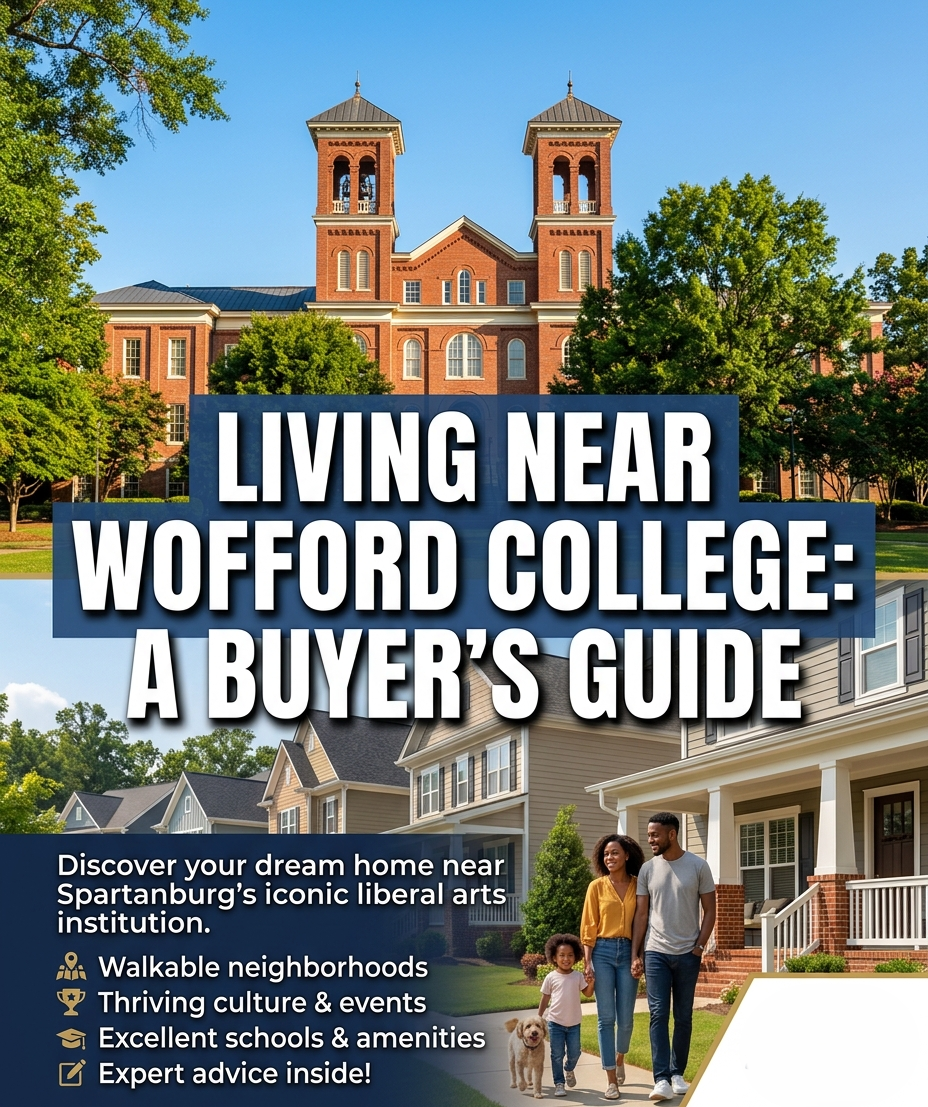
Wofford College has shaped the housing market around it for over a century. The neighborhoods within walking distance of campus carry a specific character — historic, walkable, college-adjacent — and the buyer pool that focuses on this area is more specific than the broader Spartanburg market. If you are considering buying a home near Wofford, the questions are different from what you would ask buying somewhere else in the city.
Here is what I see as a working agent in this market and what to think about as you start looking.
Who Buys Near Wofford
The buyer pool for homes within easy reach of Wofford breaks into a few distinct groups.
College faculty and administrators who want to walk or bike to campus and value the historic character of the surrounding neighborhoods.
Parents buying property for student housing during their child’s time at Wofford, with plans to use it as a rental or sell it after graduation.
Alumni who fell in love with Spartanburg during their college years and have come back to settle, often into one of the historic neighborhoods near campus.
Downtown Spartanburg professionals who like the proximity to Wofford’s academic events, athletics, and the cultural life that comes with a residential college.
Empty nesters and downsizers from the surrounding Spartanburg suburbs who want to be close to downtown amenities and the lifestyle that comes with living near a college campus.
Each of these buyer profiles values the area for slightly different reasons, but they share a preference for the walkable, historic feel of the neighborhoods around the college.
The Neighborhoods Within Walking Distance
The areas surrounding Wofford include some of Spartanburg’s most distinctive historic neighborhoods.
The blocks immediately adjacent to campus along Church Street and Magnolia Street include some of the oldest housing stock in the city. These homes range from well-preserved Victorian and craftsman bungalows to homes that need significant updating but offer character that is hard to find elsewhere.
Converse Heights sits a short distance from Wofford and is one of the most established historic neighborhoods in Spartanburg. The homes are larger on average, the lots are mature, and the architecture leans more toward early-20th-century styles. Demand here is consistent because the supply is truly limited.
Hampton Heights to the south of downtown carries a similar historic character at slightly different price points and has seen meaningful investment over the past decade.
Drayton Mills and the renovated mill loft buildings offer a different option — modernized industrial space, often appealing to younger faculty, alumni, and downtown professionals who want walkable urban living with historic bones.
Price Points
Pricing in the Wofford-adjacent neighborhoods varies more widely than buyers often expect.
Entry-level homes in the immediate blocks around campus — typically older, smaller, and needing updates — can be among the most affordable single-family options inside the city. These attract first-time buyers, parents buying for student housing, and investors.
Mid-range homes in good condition in the historic neighborhoods generally run higher than equivalent square footage in newer Spartanburg subdivisions, reflecting the location and character premium.
Larger historic homes in Converse Heights and the most desirable blocks command meaningful premiums and tend to draw out-of-state buyers, returning alumni, and longer-term Spartanburg families looking to upgrade.
Renovated mill lofts and downtown condos sit in their own pricing tier, generally appealing to a different buyer profile than the historic single-family inventory. Spartanburg condos for sale shows what the active downtown and adjacent condo market looks like.
What to Look for When Touring
Buying near Wofford has its own specific considerations.
- Age of major systems. Many of the historic homes have electrical, plumbing, and HVAC that has been updated at different times. Verify what has been replaced when, and budget for upcoming work.
- Foundation and structural integrity. Older homes shift, and historic homes carry more variation in foundation condition than newer construction. A thorough inspection is non-negotiable.
- Parking realities. Many of the streets near Wofford are tight, and parking can be a daily consideration. Look at whether the property has off-street parking, a driveway, or a garage.
- Game-day and event traffic. Football weekends and major college events bring noise, traffic, and parking pressure to the surrounding neighborhoods. Visit during a typical game weekend if you can.
- Rental potential. If you are buying for student housing or considering rental income, understand the city’s rental rules, any HOA restrictions, and the realistic rental market for the specific property.
- Flood and drainage. Some older properties have drainage issues. Walk the lot in a recent rain if possible.
- Historic district restrictions. Some areas have historic district designations that affect what you can change on the exterior. Know what you are buying into.
The Rental Income Angle
For parents buying property during their child’s time at Wofford, the rental income angle is worth understanding clearly.
Wofford is a residential college with a relatively small enrollment, so the off-campus rental market is more limited than at a major state university. Demand exists, but it is not as deep as at larger schools. Pricing depends heavily on proximity to campus and the quality of the property.
A few practical considerations:
- Roommate dynamics affect both rental viability and resale appeal
- Insurance for student rentals runs differently than owner-occupied insurance
- Property management is worth considering if you are not local
- Long-term value depends as much on the location and condition as on the student rental potential
Where Wofford Fits in the Broader Spartanburg Market
If you are weighing Wofford-adjacent homes against the broader Spartanburg real estate market, a few clear observations.
The Wofford-adjacent neighborhoods carry a location premium that other historic Spartanburg neighborhoods do not always match. Resale tends to hold up well because supply is truly limited and demand from the buyer pool I described is consistent.
The trade-off is that homes here are usually older, often require ongoing maintenance, and have less flexibility on layout than newer construction further out. Buyers who want updated finishes, open floor plans, and lower maintenance often end up looking elsewhere in Spartanburg or further out into the suburbs.
The Long View
The neighborhoods around Wofford have appreciated steadily over the long term because the fundamentals are stable. The college is not going anywhere. The supply of historic homes within walking distance is essentially fixed. Demand from the specific buyer groups I described tends to be consistent regardless of broader market conditions.
For long-term holders, this area tends to reward patience. For shorter-term investors, the specifics of the property matter enormously.
If you want to walk specific homes in the Wofford-adjacent neighborhoods or compare options across the historic Spartanburg market, that is the kind of search where local knowledge matters. Reach out and we can put together a tour focused on the lifestyle and the financial picture that fits your situation.