Welcome to your Upstate SC Real Estate Resource!

This blog will offer a mix of our newest listings to come onto the market as well as some client testimonials. Here you will also find some useful resources on buying and selling a home in the Upstate of South Carolina and Western North Carolina. 

If you see a home that looks interesting or if you have any questions regarding all aspects of the Real Estate market please feel free to contact us! - Peggy


July 15, 2026

Greenville’s New Construction Communities to Watch

Greenville’s new construction market has evolved a lot over the past decade. What used to be a handful of production builder subdivisions on the edges of town has grown into a real inventory segment with variety, quality, and specific communities that stand out. If you are considering new construction in Greenville, knowing which communities are worth serious attention makes the search easier and the decisions better.

Here is what I see as a working agent tracking this market — what to look at, why specific communities matter, and how to think about new construction in Greenville today.

How New Construction Fits Into the Greenville Market

New construction in Greenville sits alongside a robust resale market that includes historic homes, mid-century inventory, and established suburban neighborhoods. Buyers who prioritize new construction usually do so for specific reasons: modern floor plans, low immediate maintenance, builder warranties, amenity packages, and the ability to customize during the build process.

The trade-offs are also specific: newer construction typically runs higher per-square-foot than equivalent resale, lots tend to be smaller in production communities, and community character takes years to develop compared to established neighborhoods.

For a broader view of what is on the market, Greenville new homes covers the active builder inventory across multiple communities and price points.

Master-Planned Communities Worth Watching

Hartness is one of the most-discussed master-planned developments in the region. Trails, parks, a village center, and a design philosophy focused on community life have attracted families, downsizers, and out-of-state relocators willing to pay for the intentional planning.

What makes Hartness worth attention is not just the homes but the broader master plan. The community continues to add amenities, refine common areas, and grow in ways that support long-term value. Buyers who prioritize community amenities over lot size often find Hartness delivers what they were looking for.

Hollingsworth Park represents another strong example of intentionally designed community. New-urbanist principles, walkable design, sidewalks throughout, and a village center have made Hollingsworth Park a benchmark for family-oriented planned communities in Greenville.

Pricing in both communities reflects the intentional planning and the amenity packages. These are not entry-level options; they are premium communities that deliver on what they advertise.

Production Builder Communities

Several national and regional production builders have been active in Greenville, with communities scattered across the eastern and southern suburbs. These typically offer:

  • Broad floor plan selections at multiple price points
  • Amenity packages that vary by community — some include pools and clubhouses, others do not
  • Move-in-ready inventory alongside build-to-order options
  • Builder incentives that shift regularly — rate buy-downs, closing cost credits, standing inventory discounts

The key differentiators between production communities usually come down to location, school zoning, HOA structure, and specific amenity offerings. Two similar-looking communities can carry meaningful differences in daily life quality.

Luxury and Custom Communities

The luxury segment of Greenville new construction has grown alongside the broader luxury market. Communities offering larger lots, custom or semi-custom builds, and premium finishes serve buyers who want new construction without the production-builder aesthetic.

Greenville luxury homes includes several new construction options at higher price points, with distinct architectural approaches, amenity offerings, and community characters.

For buyers considering custom construction on individual lots rather than in master-planned communities, the process involves more time and more decisions but produces homes designed specifically for the buyer’s priorities.
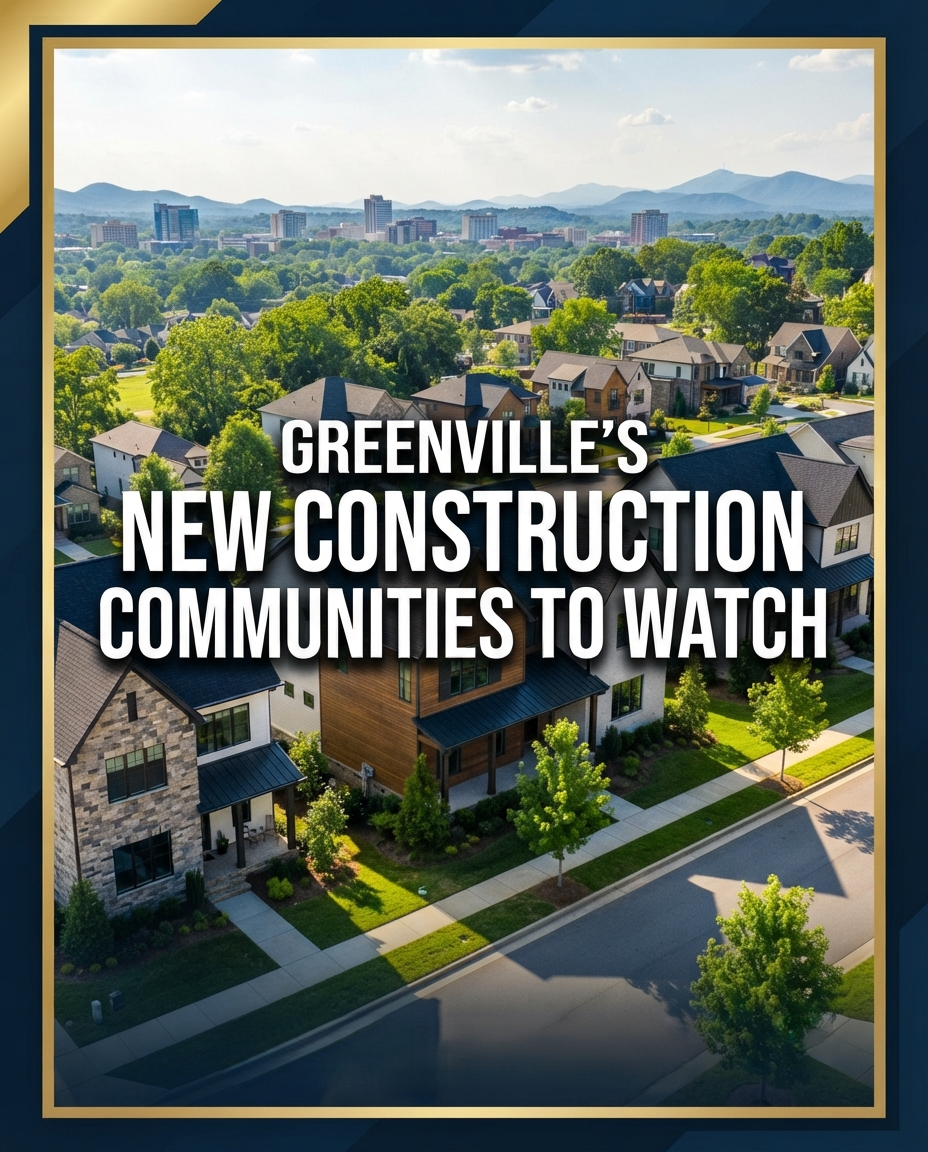
Greenville’s New Construction Communities to Watch

Townhome and Lower-Maintenance Communities

Townhome new construction has been one of the fastest-growing segments in Greenville. Communities designed for downsizers, first-time buyers, and lifestyle-oriented buyers have proliferated across the eastern suburbs and along the major corridors.

Pricing typically runs from the mid $200s into the low $500s depending on community, size, and finish level. The trade-off versus single-family new construction is smaller footprints and shared walls, in exchange for lower maintenance and often better locations.

Where to Focus Your Search

The right new construction search depends on your priorities.

If community amenities matter, focus on master-planned communities like Hartness or Hollingsworth Park where amenities are part of the intentional design.

If price is the primary driver, focus on production builder communities in the eastern and southern suburbs where per-square-foot pricing tends to be more accessible.

If you want the most flexibility on floor plan and finishes, focus on communities where build-to-order is available and inventory has not run through the current phase.

If low maintenance is the primary driver, focus on townhome communities where shared walls, smaller lots, and HOA-covered exterior maintenance simplify daily life.

What to Watch When Touring

A few things specific to Greenville new construction.

  • HOA structures vary significantly. Some communities have minimal amenities and low dues; others charge more for pool, clubhouse, and trail access. Match what you are paying for to what you will use.
  • Lot premiums are real. Two homes in the same community can carry very different lot prices based on privacy, view, or cul-de-sac position.
  • Builder incentives shift regularly. Rate buy-downs, closing cost credits, and standing-inventory discounts vary by builder and season. Compare current offerings.
  • Phase pricing affects value. Earlier phases in many communities sold at meaningfully lower prices than later phases. Understand where the community sits in its build-out.
  • Warranty coverage is not the same across builders. Read what is covered, for how long, and how the builder responds post-closing.
  • Long-term amenity maintenance depends on the HOA structure. Communities with strong reserves and clear amenity plans tend to hold value better than communities where the amenities age faster than the funding.

Where Greenville Fits Regionally

If you are comparing Greenville new construction against nearby markets, the trade-offs are worth understanding.

Simpsonville new construction often offers larger master-planned communities at slightly lower per-square-foot pricing, with the trade-off being longer drives to downtown Greenville.

Greer, Mauldin, and the surrounding suburbs each offer their own new construction inventory with different school zoning, different price points, and different community characters.

Fountain Inn offers the most accessible pricing among these markets with the trade-off being the newest infrastructure catching up to growth.

Greenville proper typically wins for buyers prioritizing proximity to downtown amenities and the specific communities that have set the standard for master-planned family living in the region.

The Long View

Greenville new construction is likely to remain an active segment for years to come. Land in the immediate Greenville area is limited, which supports pricing on the communities that already exist. Builder activity in the surrounding suburbs will continue to expand inventory options for buyers who are flexible on exact location.

For buyers thinking about a long-term home in Greenville, new construction is worth considering alongside resale rather than treating them as separate categories. The right answer for your situation depends on the specific home, the specific community, and how you actually want to live.

If you want to walk specific communities, compare floor plans across builders, or understand what incentives are currently on offer, that is exactly the kind of work an agent saves you time on. Reach out and we will put together a tour that fits what you are after.

Posted in For Buyers
July 14, 2026

Luxury Living in Greer

Greer has developed a real luxury market. It did not always have one. For decades Greer was known as a working-class BMW town where buyers came for the schools, the commute access, and the family-oriented neighborhoods. Over the past decade that has shifted. A luxury segment has emerged, tied partly to executive-level employees at BMW and its suppliers, partly to out-of-state relocators looking for reasonable Upstate luxury pricing, and partly to Greer’s evolution as a destination in its own right.

If you are considering luxury property in Greer, here is what I see as a working agent in this market — what the inventory looks like, who is buying, and what to think about as you tour.

What Luxury Means in Greer

Luxury in Greer looks different from luxury in Charlotte, Atlanta, or even Greenville. Buyers coming from those markets sometimes need to recalibrate their expectations.

The luxury segment here does not concentrate in one specific gated community or one dominant neighborhood. Instead, it spreads across several distinct areas — established country club neighborhoods, newer master-planned communities, custom homes on larger parcels, and select luxury inventory in downtown Greer.

The character of luxury here tends toward substantial land, high-quality construction, meaningful outdoor space, and an emphasis on the family and community elements that Greer is known for. Ostentation is less common; substance is more common. Buyers coming from more urban luxury markets sometimes take a beat to appreciate the difference.

The Established Country Club and Golf Communities

Several established country club communities anchor the Greer luxury market. These communities typically offer:

  • Golf course access with mature courses and long-established club culture
  • Substantial homes on generous lots, often with mature landscaping
  • Established residential communities where many owners have been in place for years or decades
  • Strong resale support because the buyer pool for these communities is consistent and specific

Pricing in these communities has appreciated meaningfully but tends to be less volatile than the broader luxury market. Buyers here often prioritize the specific lifestyle these communities offer over pure appreciation potential.

Newer Master-Planned Luxury Communities

Newer luxury master-planned communities have emerged in Greer over the past decade. These offer amenity packages, modern construction, and design philosophies that appeal to buyers relocating from larger metros.

The trade-offs versus established country club communities are typical: newer construction with modern amenities and design versus older communities with mature landscaping and established character. Pricing depends on the specific community, plan, and lot.

Custom Homes on Larger Parcels

The Greer luxury market includes a meaningful custom home segment. Buyers acquiring larger parcels — often several acres or more — and working with builders to design homes specific to the site.

These properties typically emphasize privacy, land, and specific architectural preferences. They tend to be less liquid than production luxury inventory because the market for each specific custom home is smaller.

For buyers considering the custom path, the process involves more time, more decisions, and more complexity than choosing from existing luxury inventory. The upside is a home specifically designed for your priorities.

Where to Start

If you are searching specifically in Greer, Greer real estate covers the full inventory including the luxury segment. The variety is wider than most out-of-state buyers expect.

For comparison, Greenville luxury homes shows what the higher end of the broader Greenville market looks like — generally at different price points and with different lifestyle characteristics than Greer. Comparing across both markets helps clarify what you actually want.

Boiling Springs luxury homes represents the higher end of another nearby market and offers a different point of reference for pricing and inventory comparison.

Who Is Buying Luxury in Greer

The Greer luxury buyer pool is more varied than people expect.

BMW executive-level employees and their families make up a meaningful share. Compensation packages that support luxury housing combined with a preference for staying close to work create consistent demand.

Executives and professionals working across the Upstate — healthcare, manufacturing, professional services — who chose Greer for schools, commute, and lifestyle balance.

Out-of-state relocators from higher-cost metros. Buyers coming from Charlotte, Atlanta, the Northeast, and California often find that Greer luxury delivers more home and more land per dollar than they were paying in their previous markets.

Successful business owners who have built their operations in the Upstate and want a home that matches the scale of their success without leaving the community they built.

Retirees looking for a lower-key luxury lifestyle. Greer’s combination of quiet neighborhoods, access to healthcare, and reasonable proximity to Greenville amenities works for a specific retiree demographic.

Luxury Living in Greer

What to Watch When Touring

Luxury buying in Greer has its own considerations.

Land quality matters. Substantial lots vary widely in usability. Slope, drainage, tree cover, and privacy all affect the daily experience of ownership. Walk the land carefully.

Custom home condition varies widely. Not all custom homes are equal. Some were built with careful attention to quality; others were built quickly during boom periods. Deep inspections matter.

HOA and community structures matter for community living. Country club dues, initiation fees, amenity access rules, and long-term community financial health all affect ownership.

Resale liquidity depends on the specific property. Generic production luxury tends to be more liquid; unique custom homes trade in narrower buyer pools and may take longer to sell.

Insurance and property taxes for higher-end properties involve their own math. Get real quotes during your inspection period.

Where Greer Luxury Fits Regionally

Comparing Greer luxury against the broader Upstate:

Greenville luxury runs at higher price points on average, with more urban and downtown-adjacent options, and typically emphasizes newer construction or renovated historic inventory.

Spartanburg luxury offers strong historic inventory in specific neighborhoods at generally more accessible price points than Greenville, with different lifestyle characteristics.

Landrum luxury emphasizes equestrian estates, mountain views, and foothills lifestyle, targeting a specific buyer pool.

Anderson and Lake Hartwell luxury emphasizes waterfront and lake lifestyle.

Greer luxury sits in a middle ground — suburban rather than urban, family-oriented rather than adult-oriented, land-and-amenity focused rather than downtown-focused. That combination works for a specific buyer profile.

The Long View

The Greer luxury market has room to continue growing. BMW is not going anywhere, the executive workforce continues to expand, and the city’s desirability keeps drawing out-of-state buyers with luxury budgets.

Long-term value support for well-selected Greer luxury property should be strong. The market is unlikely to see explosive appreciation, but it is also unlikely to see meaningful softening in the fundamentals.

For buyers thinking about a long-term luxury home in Greer, that trajectory supports the decision. For sellers, the segment offers strong demand for well-prepared properties priced honestly.

If you want to walk specific luxury properties in Greer or compare Greer luxury against options in neighboring markets, that is exactly the kind of search where local knowledge matters. Reach out and we can put together a tour that fits what you are after.

July 13, 2026

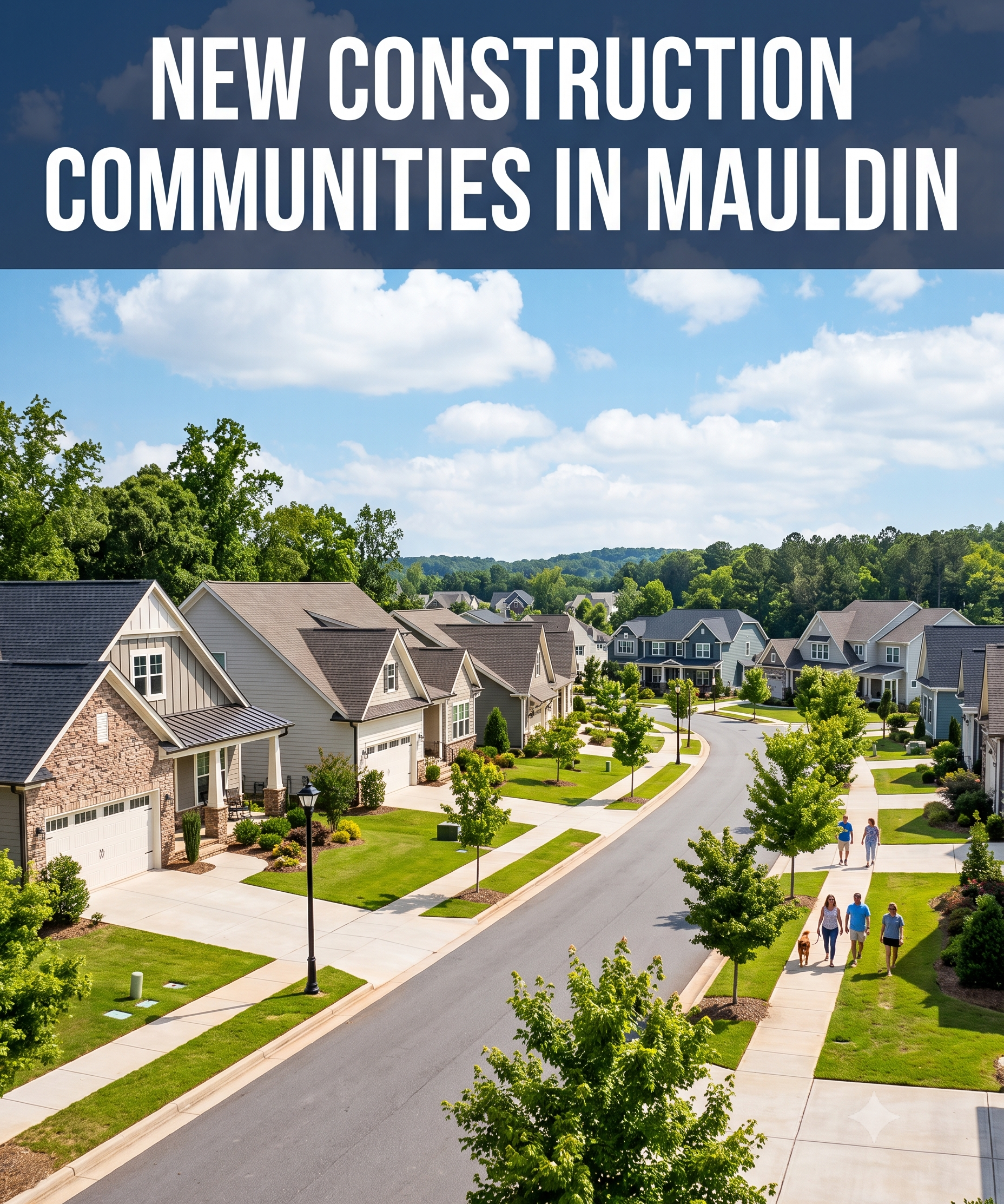
New Construction Communities in Mauldin

Mauldin has become one of the more interesting new construction markets in the Greenville-adjacent suburbs. Between BridgeWay Station reshaping the retail and residential landscape, production builders moving into infill parcels, and townhome and single-family communities filling in around the city, new construction in Mauldin is a real category worth understanding for buyers.

Here is what I see as a working agent in this market — what builders are offering, what the communities actually look like, and what to think about as you tour.

Why Builders Are Active in Mauldin

A few factors have made Mauldin attractive for new construction.

Location is the foundational reason. Mauldin sits directly between Greenville and Simpsonville along the I-385 corridor, with quick access to both cities. For buyers who want reasonable Greenville access without downtown Greenville pricing, Mauldin has always been a natural fit.

BridgeWay Station changed the trajectory. The mixed-use development brought new energy to Mauldin, attracted attention from national retail and residential developers, and elevated the city’s profile as a destination rather than just a commuter suburb.

Land availability existed for infill development. Mauldin had underutilized parcels, older commercial properties, and pockets of undeveloped land that builders could acquire and redevelop as new communities.

Buyer demand supported the pricing. Out-of-state relocators, downsizers from Greenville’s more expensive neighborhoods, and first-time buyers stretching into single-family homes all found Mauldin worth considering.

The Types of New Construction You Will See

Mauldin new construction breaks into several distinct categories.

Townhome communities have been a major growth segment. Production builders responding to first-time buyer, downsizer, and lifestyle-oriented demand have built out townhome inventory at price points that fit meaningful buyer pools. Pricing typically runs from the mid $200s into the low $400s depending on community and finish level.

Single-family production builder communities are the other major segment. Master-planned neighborhoods with amenity packages, broad floor plan selections, and modern finishes. Pricing typically anchors from the low $400s into the low $600s depending on plan and lot.

Mixed-use residential associated with BridgeWay Station and similar developments offers a different flavor — walkable, urban-style living integrated with retail and dining. These properties trade in their own micro-market with pricing reflecting the lifestyle premium.

Custom and semi-custom new construction on select infill parcels exists but is less common than in more rural corners of the Upstate. These are typically premium builds with specific lot advantages.

Where to Start

If you are searching specifically for Mauldin, Mauldin homes for sale is the starting point and covers both new construction and resale inventory.

For the broader Greenville-area new construction picture, Greenville new homes opens up the active builder inventory across multiple suburbs. Comparing Mauldin communities against equivalent Simpsonville, Greer, or Fountain Inn options helps calibrate what the pricing and amenities are actually worth.

Who Is Buying Mauldin New Construction

The buyer pool is broader than people expect.

Empty nesters and downsizers from Five Forks, the Greenville suburbs, and older Mauldin neighborhoods represent a meaningful share. Lower-maintenance new construction with amenity packages fits this life stage.

Young professionals working in Greenville or Mauldin who want the BridgeWay-adjacent lifestyle without paying downtown Greenville prices.

Out-of-state relocators, particularly those from areas with mixed-use developments they already understand, gravitate toward the Mauldin communities that emphasize walkability and community amenities.

Families with school-age children who want Mauldin schools and family-oriented neighborhoods at price points that beat many Greenville options.

First-time buyers stretching from apartments or condos into single-family or townhome ownership find Mauldin more accessible than Greenville-proper alternatives.

What to Watch When Touring

A few things specific to Mauldin new construction.

  • HOA structure varies significantly. Some communities have minimal amenities and low dues; others include pools, clubhouses, and amenity-rich packages at higher fees. Match what you are paying for to what you will use.
  • Lot premiums are real. Two homes in the same community can carry very different lot prices based on privacy, view, or proximity to amenities.
  • Builder incentives shift regularly. Rate buy-downs, closing cost credits, and standing-inventory discounts vary by builder and season. Compare current offerings across multiple builders.
  • Traffic patterns matter. BridgeWay Station has changed local traffic flow. Drive the area at rush hour and on weekends to see what your daily reality will look like.
  • Phase pricing affects value. Earlier phases in many communities sold at lower prices than later phases. Understand where the community sits in its build-out.
  • Warranty coverage varies. Read what the builder actually covers, for how long, and talk to current homeowners about their post-closing experience.

New Construction Communities in Mauldin

The BridgeWay Station Effect

New construction communities within reasonable proximity to BridgeWay Station carry a specific premium. The walkable urbanism, the retail and dining amenities, and the events calendar all support pricing in ways that resale sellers a few years ago did not fully anticipate.

For buyers looking at Mauldin new construction, the distance-to-BridgeWay question is worth thinking through. Communities closer to the development trade at higher prices; communities further out offer better value but require driving to access the BridgeWay amenities.

Comparing Mauldin Against Nearby New Construction Markets

Simpsonville new construction further south offers larger master-planned communities at similar or slightly lower price points, with the trade-off being longer drives to Greenville amenities.

Greer and the eastern Greenville suburbs offer newer construction with BMW proximity and different school zoning, at similar or slightly different price points depending on the community.

Fountain Inn new construction offers the most accessible pricing among these markets, with the trade-off being the longest drives to Greenville amenities and the newest infrastructure catching up to growth.

Mauldin wins for buyers prioritizing proximity to Greenville and to BridgeWay Station. It loses when buyers want the largest master-planned amenity communities or the most accessible pricing.

The Long View

Mauldin new construction is likely to remain an active segment for the foreseeable future. BridgeWay Station is still expanding. Production builders continue to acquire infill parcels. Buyer demand from multiple segments supports continued absorption.

For buyers thinking about a long-term home or a long-term investment in Mauldin, the fundamentals are positive. The city’s trajectory, its proximity to major employment centers, and the ongoing BridgeWay dynamic all point to continued value support.

If you want to walk specific new construction communities, compare floor plans across builders, or understand what incentives are currently on offer, that is exactly the kind of work an agent saves you time on. Reach out and we will put together a tour that fits what you are after.
Posted in For Buyers
July 10, 2026

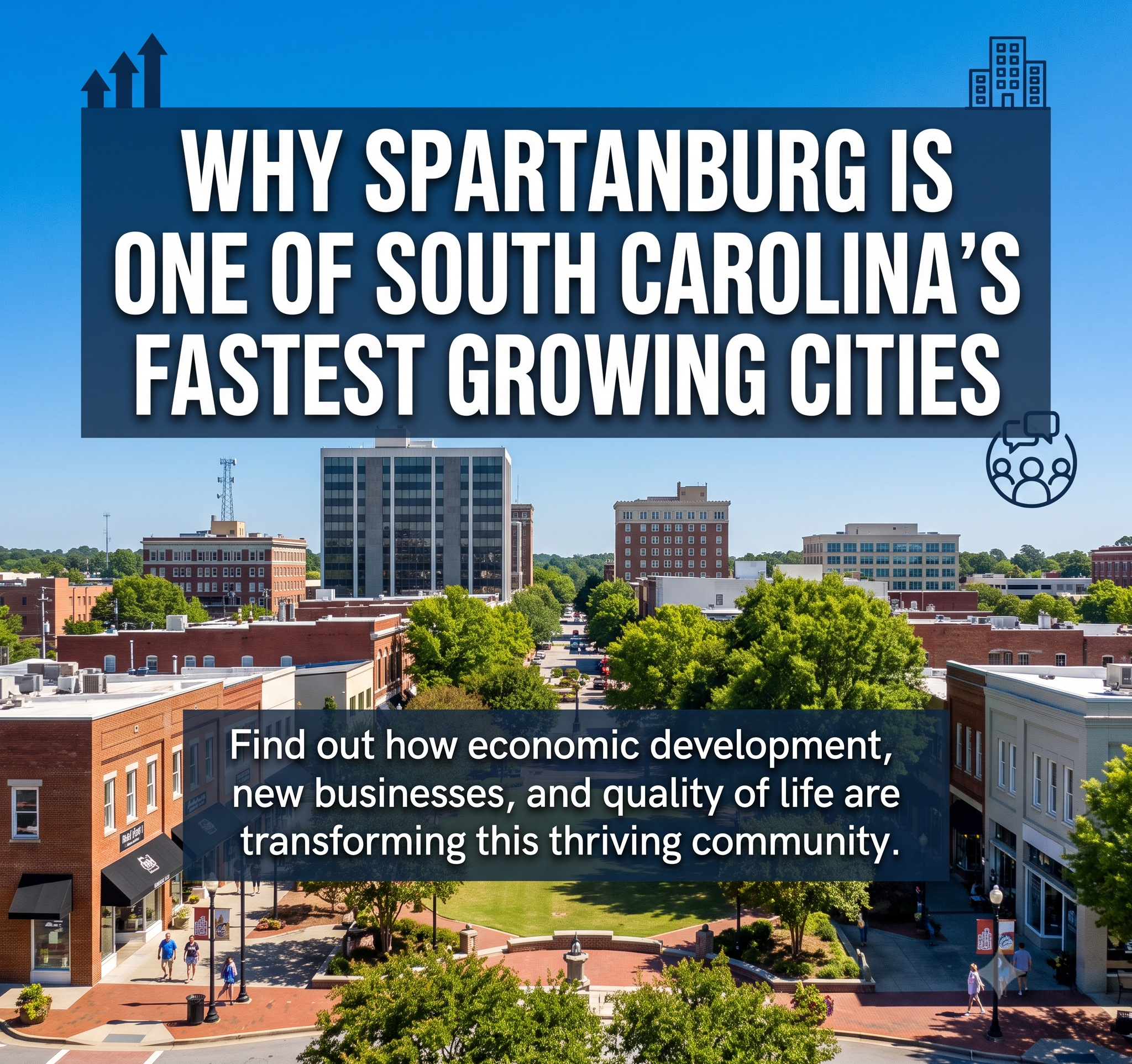
Why Spartanburg Is One of South Carolina’s Fastest Growing Cities

Spartanburg does not get the national attention that Greenville gets, but the growth numbers tell their own story. Over the past decade, Spartanburg has quietly become one of the fastest-growing cities in South Carolina. New residents, new employers, new construction, and a downtown that has reinvented itself have combined to shift what Spartanburg is and where it is headed.

If you are considering Spartanburg — as a buyer, an investor, or a seller trying to understand the market you are selling into — here is what I see as a working agent, and why the growth story matters for real estate decisions.

The Employer Base Has Diversified

BMW is the headline. Plant Spartanburg in Greer is the largest BMW production facility in the world by volume, and it continues to expand. The direct employment and the ripple effect through the supplier network drive a real share of Spartanburg County’s economic activity.

The Inland Port has been the second wave. South Carolina Ports built out the Inland Port to connect the Upstate to the Port of Charleston by rail, and that infrastructure pulled distribution centers, logistics operators, and warehousing employers across Spartanburg County.

Healthcare has grown as a major employer. The Spartanburg Regional Healthcare System and its expansion into new facilities and specialty services has added thousands of jobs across a range of skill levels.

Higher education anchors part of the local economy. Wofford College, Converse University, USC Upstate, and Spartanburg Community College collectively employ significant numbers of faculty and staff and bring in a steady flow of students and their families.

Advanced manufacturing beyond BMW has grown quietly. Multiple mid-sized manufacturers have chosen Spartanburg County for expansion, drawn by the workforce, the logistics infrastructure, and the cost of doing business.

The Downtown Has Reinvented Itself

Ten years ago, downtown Spartanburg was quiet after five p.m. That has changed. Restaurants, breweries, event venues, live music, and residential lofts have transformed downtown into a real destination.

The residential piece matters. New downtown apartments and lofts have brought residents into the city center, which changes the daily rhythm of the downtown economy. Downtown residents support restaurants at lunch and dinner, they walk in the evening, and they attend the events that make downtown feel like a real neighborhood.

Historic neighborhoods around downtown have benefited. Converse Heights and the surrounding historic districts have seen investment, restoration, and renewed buyer interest. Values in these neighborhoods have appreciated meaningfully.

The Cost of Living Story

Spartanburg has stayed more affordable than Greenville. For families relocating from higher-cost markets, that gap matters. Home prices per square foot, property taxes, insurance, and daily cost of living all run more accessible in Spartanburg than in comparable Greenville neighborhoods.

Spartanburg real estate shows the range — from historic downtown-adjacent inventory to established suburban neighborhoods to newer construction in the surrounding areas. The variety is wider than most out-of-state buyers expect.

Why Spartanburg Is One of South Carolina’s Fastest Growing Cities

Who Is Moving Here

The Spartanburg buyer pool has diversified alongside the employer base.

Working families tied to BMW, the Inland Port, and the broader Spartanburg County employer network continue to be the largest segment. Schools, commute access, and cost of living all support this buyer profile.

Out-of-state relocators looking for Upstate affordability with a real city offering land in Spartanburg often, particularly after comparing Greenville and finding the price gap meaningful.

Retirees from higher-cost markets, particularly the Northeast, have become a growing share. Spartanburg’s cost of living, healthcare access, and quieter pace all appeal to this demographic.

Downtown professionals, remote workers, and empty nesters drawn to the downtown lifestyle. This segment was minimal a decade ago and has grown substantially.

College-related buyers — parents buying property during their child’s time at Wofford or Converse, alumni returning to the area, faculty and staff — make up a steady share of specific neighborhoods.

Investors targeting single-family rentals in the more accessible price ranges have shown up in growing numbers. Rental demand from the BMW and Inland Port workforce supports this activity.

The Housing Market Response

Growth has driven meaningful changes in the local housing market.

New construction has accelerated across multiple corridors. Production builders have moved into the county in large numbers, particularly along the Highway 290, Reidville Road, and Highway 9 corridors.

Resale inventory has stayed tight. Existing homes turn over quickly when priced correctly. Sellers who prepare well and price realistically continue to see strong activity.

Prices have appreciated steadily. The pace is more measured than in some overheated national markets, which has kept the overall market healthy rather than volatile.

Rental demand has grown, supporting investor activity and pushing rents up alongside home values.

For a snapshot of what current listings look like, Spartanburg just listed inventory shows what is coming into the market at any given time.

What the Growth Means for Different Market Participants

For buyers, the growth story means acting decisively when the right home appears. The market does not reward indecision. Well-priced inventory moves quickly.

For sellers, the growth story supports strong pricing but does not eliminate the need for preparation. A well-prepared home in a growing market sells fast and near ask; a poorly prepared home in the same market can still sit.

For investors, the growth story supports both single-family rental and specific segments of the multifamily market. Cap rates have compressed as prices have risen, but the underlying demand fundamentals remain healthy.

For long-term holders, the growth trajectory supports continued appreciation. Spartanburg is not likely to slow down in the next several years, and the compound effect of steady growth adds up over time.

The Risks to Watch

Growth stories are not immune to reversals, and Spartanburg has its own risks worth understanding.

Concentration in specific employers matters. BMW is enormous for Spartanburg County; a meaningful slowdown at BMW would affect the local economy. That risk is real, though the auto industry’s long-term commitment to South Carolina appears strong.

Infrastructure has to keep pace with growth. Traffic, schools, and utilities all face pressure as populations rise. How the region responds affects both quality of life and property values.

Interest rate cycles affect affordability. Even in a strong growth market, rate spikes can compress buyer pools and slow the pace of appreciation.

None of these are reasons to bet against Spartanburg; they are factors worth watching as you make specific real estate decisions.

The Long View

Spartanburg’s growth story is likely to continue for the foreseeable future. The employer diversification, the downtown reinvention, the cost-of-living advantage over Greenville, and the demographic tailwind from out-of-state relocation all point to continued demand.

For real estate participants, that means treating Spartanburg as a market with meaningful long-term upside. Specific decisions still require specific analysis, but the underlying story is positive.

If you want to look at what the growth means for a specific property, a specific neighborhood, or a specific buyer or seller situation, that is the kind of conversation worth having with someone who works this market. Reach out and we can dig into the specifics.

July 9, 2026

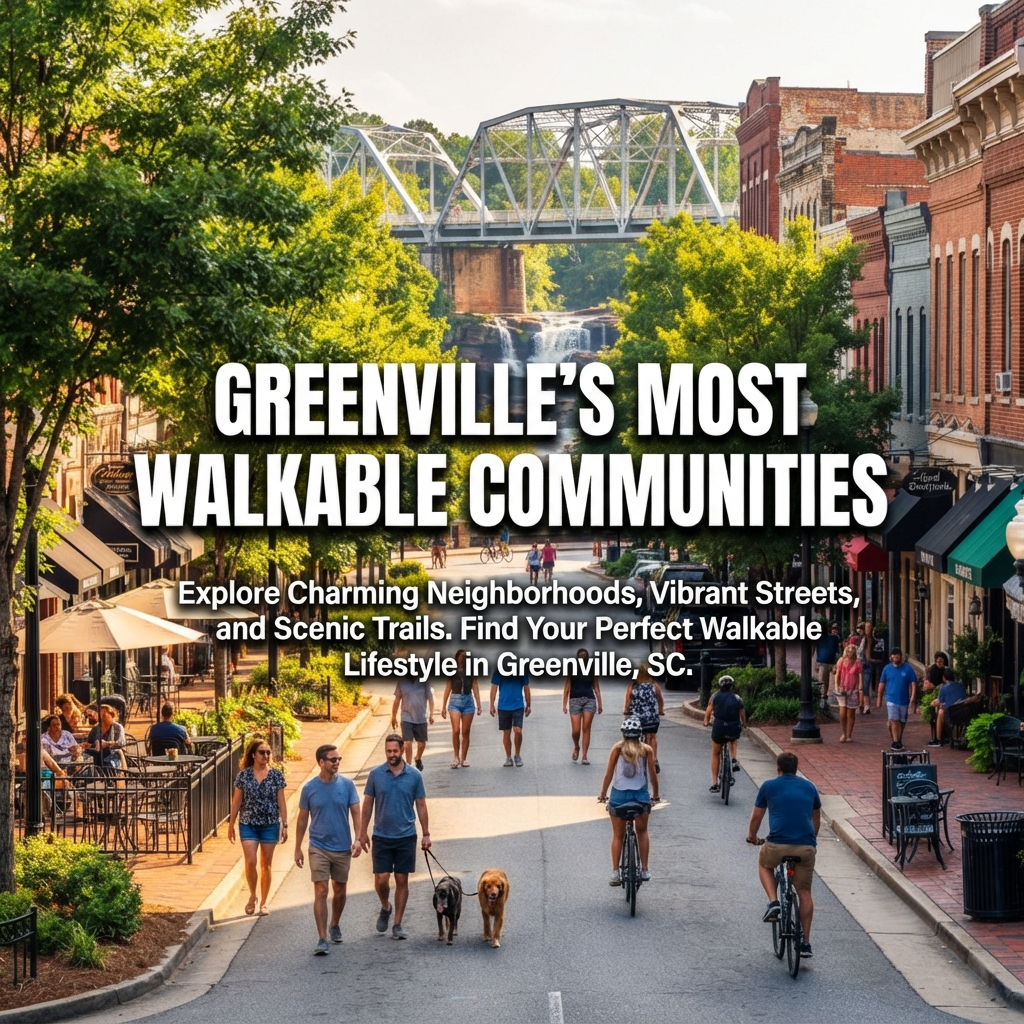
Greenville’s Most Walkable Communities

Walkability has become one of the most-requested features I hear from buyers moving to Greenville. Some of it is generational — younger buyers grew up expecting to walk more, drive less. Some of it is out-of-state buyers coming from cities where walking was part of daily life. And some of it is simply that Greenville has become a walkable city in a way it was not a decade ago, and buyers have noticed.

If you are looking for a walkable community in Greenville, here is what the market actually offers, which neighborhoods deliver on walkability in practice, and what to think about as you tour.

What Walkable Actually Means in Greenville

Buyers use the word walkable to mean different things. Some mean walk-to-restaurants. Some mean walk-to-work. Some mean walk-with-the-dog-on-real-sidewalks. Some mean walk-to-parks-and-schools.

Greenville has neighborhoods that deliver on each of those. But no neighborhood delivers on all of them at once, so the first step in the search is figuring out which kind of walkability actually matters to you.

A walkable neighborhood downtown gives you restaurants, coffee, events, and the Reedy River corridor within a short walk. A walkable neighborhood in North Main gives you a real residential feel with sidewalks and access to Cleveland Park. A walkable neighborhood in Hollingsworth Park gives you an intentional master-planned community with amenities designed for daily walking. Each of these is walkable, but the daily experience is very different.

Downtown and Immediately Adjacent

Downtown Greenville and the blocks immediately surrounding it deliver the most direct walkability in the region. Falls Park, Main Street, the Peace Center, and the surrounding restaurant and retail corridor are all within easy walking distance. Residents in these neighborhoods routinely leave their cars home for dinner, events, and weekend life.

Inventory here is a mix of restored historic homes, newer townhomes, and downtown condominium buildings. Greenville condos for sale covers a meaningful share of the downtown residential inventory, and downtown condo living has become one of the fastest-appreciating segments in the market.

The trade-off is price. Direct downtown walkability commands the highest per-square-foot pricing in Greenville. It is also the most limited inventory, so buyers who want this often wait for the right listing rather than expecting to choose from many options.

North Main

North Main is one of the most consistently walkable residential neighborhoods in Greenville. Sidewalks connect most of the neighborhood, streets are quiet enough for children and dogs, Cleveland Park is a short walk from many addresses, and the North Main commercial strip provides walkable restaurants and services.

The housing stock is a mix of historic bungalows, mid-century homes, and renovated or rebuilt properties on original lots. Prices have moved up significantly over the past decade as walkability became a bigger buyer priority.

North Main appeals particularly to families who value walkability with real yards, small business owners who want to live near their businesses, and downsizers from larger suburbs who want to reduce driving.

Augusta Road

The Augusta Road corridor south of downtown carries a similar residential feel to North Main with its own commercial strip and access to parks. Sidewalks are strong, the neighborhood commercial life is real, and daily walking is practical for many households.

Housing here includes historic homes, mid-century inventory, and select newer construction. Pricing has appreciated meaningfully, reflecting the neighborhood’s desirability.

Augusta Road works well for families who want walkability plus strong school zoning and access to the southern side of Greenville, including quick drives to Cleveland Park, downtown, and the Prisma Health system.

Hollingsworth Park

Hollingsworth Park is one of the more intentional walkable communities in Greenville. New-urbanist principles shaped the design — sidewalks throughout, community amenities within walking distance, a village center with retail and restaurants, and homes designed with front porches and neighborhood interaction in mind.

For buyers who want walkability without the older-home maintenance that comes with in-town historic neighborhoods, Hollingsworth Park offers a compelling alternative. Newer construction, master-planned amenities, and a design philosophy that prioritizes daily walking.

Pricing reflects the intentional design. Hollingsworth Park is not a budget option; it is a premium community that delivers what it advertises.

Greenville’s Most Walkable Communities

Hartness

Hartness on the eastern side of Greenville is a newer master-planned community that has become one of the most-discussed walkable developments in the region. Trails, parks, a village center, and a master plan that prioritizes community interaction have drawn families and downsizers who want a walkable lifestyle without living downtown.

The distance from downtown Greenville is real — Hartness is a suburban location, not a downtown one — but the internal walkability of the community is strong. Residents walk to the village center, to the parks, and to community amenities as part of daily life.

The Swamp Rabbit Trail Corridor

The Swamp Rabbit Trail has become part of Greenville’s walkability infrastructure. Neighborhoods along the trail — from downtown north toward Travelers Rest — benefit from direct trail access that supports walking, biking, and commuting.

Homes within a short walk of trail access points command real premiums. The trail extends walkability well beyond what the local street grid alone would provide.

Practical Considerations

Walkable living in Greenville has its own realities.

  • Sidewalk quality varies significantly by neighborhood. Older neighborhoods sometimes have gaps, cracks, or missing stretches. Walk the neighborhood before assuming daily walking is practical.
  • Weather matters. Greenville summers are hot; humidity is real. Walking that felt easy in April can feel harder in July.
  • Nighttime walking is different from daytime walking. Consider lighting, activity levels, and neighborhood feel after dark.
  • Grocery walking is limited. Even the most walkable Greenville neighborhoods often require driving to grocery stores. Downtown residents get the closest to walkable grocery access.
  • Family walking depends on ages. Walking with a toddler is different from walking with a teenager. Think about the phase of family life the neighborhood will support.

Where Walkability Fits in the Broader Market

If walkability is one of several priorities rather than the top priority, the broader Greenville real estate market offers many neighborhoods that provide partial walkability alongside other benefits — larger yards, lower prices, or specific school zoning.

The right balance depends on what daily life actually looks like. Some buyers value walkability so much that they will pay significant premiums for it; others realize during the search that walkability was more important in the abstract than in practice.

The Long View

Walkability has become one of the more durable value drivers in Greenville real estate. Neighborhoods that deliver on real walkability — sidewalks, mixed use, community amenities within walking distance — have appreciated more consistently than neighborhoods that lack these features.

That trend is likely to continue. As Greenville continues to grow, walkable inventory stays relatively fixed in supply, and demand keeps pushing against it. For buyers prioritizing walkability, that dynamic supports long-term value.

If you want to walk a few walkable neighborhoods together on the same day to feel the difference, that is often the fastest way to sort out which flavor of walkability actually matches your life. Reach out and we can put together a tour that fits what you are after.
July 8, 2026

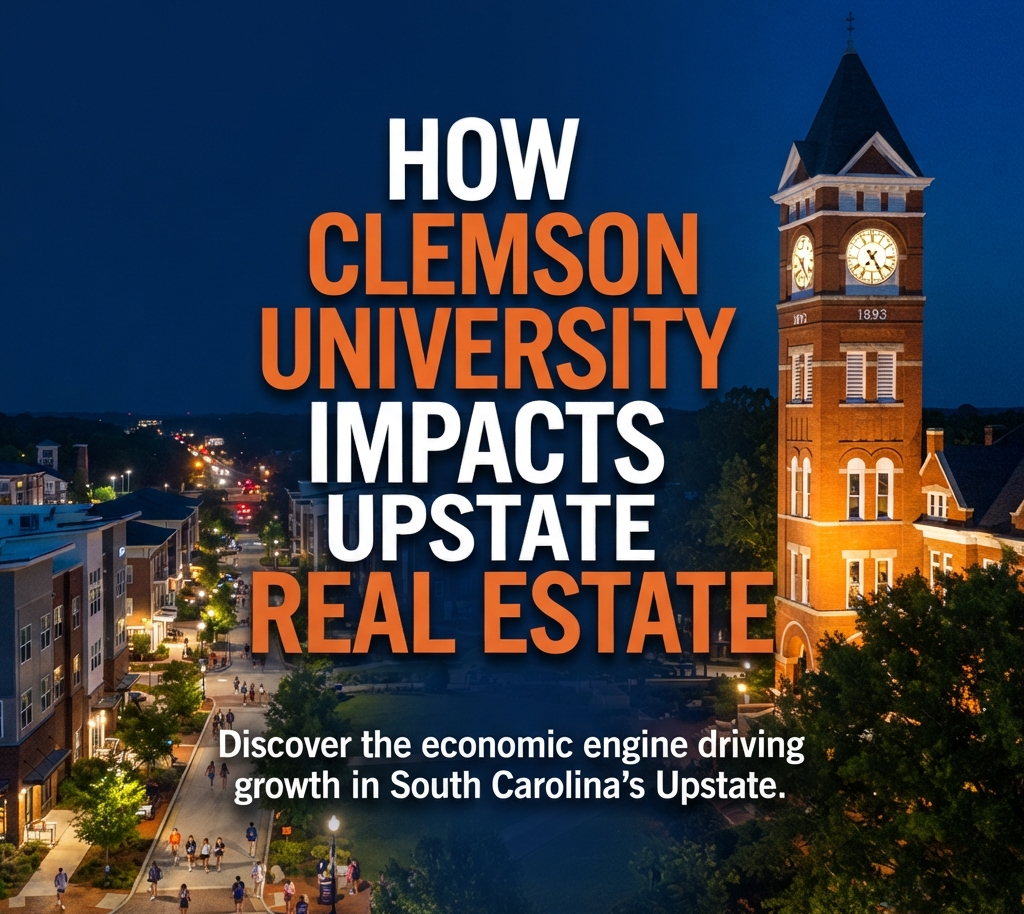
How Clemson University Impacts Upstate Real Estate

Clemson University does not just shape its own town. The university has measurable impact on real estate values across a meaningful slice of the Upstate — Pickens County, parts of Anderson County, and even down into Oconee County and up toward Easley. If you are buying or selling in any of these markets, understanding the Clemson effect helps explain why prices move the way they do.

Here is what I see as a working agent in markets where Clemson’s gravity is part of the real estate picture.

The Football Weekend Effect

The most visible impact is what happens on home football weekends. Tens of thousands of fans descend on Clemson, and the housing market responds in specific ways.

Short-term rental activity spikes for the seven home games each fall. Properties within reasonable distance of campus see real revenue from football weekends — sometimes a meaningful share of annual rental income concentrated into a few weekends. For investors and second-home buyers, this affects underwriting.

Traffic on weekends near campus is significant, and for residents who are not Clemson fans, it can be a real consideration. Buyers touring on a quiet weekday often miss the game-day reality.

Hotels in nearby Greenville fill up. Restaurant pricing in the Clemson and surrounding area shifts. Even buyers looking at homes a half hour from Clemson see ripple effects on game weekends.

The Faculty and Staff Buyer Pool

Clemson employs thousands of faculty, administrators, researchers, and staff. That buyer pool drives consistent demand in specific neighborhoods.

Clemson real estate sits at the center of this dynamic. Inventory inside Clemson and the immediately surrounding areas often turns over to incoming faculty, sabbatical-year visitors, and retiring long-term faculty. The market is unusually well-informed because the buyer pool tends to be highly educated and detail-oriented.

Patrick Square has become one of the more notable planned developments serving this buyer pool. Patrick Square homes offer a more village-style residential experience with walkable design that has appealed to faculty buyers, retirees, and downsizers.

The Parent and Alumni Effect

Parents buying property during their child’s time at Clemson have become a meaningful share of certain segments. Some buy condos for their student, plan to rent or sell after graduation, and sometimes end up keeping the property longer than originally planned.

Alumni returning to settle in the area after retirement or as second-home buyers represent another steady demand source. Many Clemson alumni feel a strong pull back to the area and shop the market accordingly.

This combined buyer pool tends to be less seasonal than the broader market. Decisions get made during football weekends, graduation visits, and family events tied to the academic calendar rather than tied to the local school year.

The Ripple Into Surrounding Markets

The Clemson effect extends well beyond the Clemson city limits.

Easley real estate sees consistent demand from Clemson-related buyers who want more affordability or more residential options outside the immediate university area. The commute from Easley to Clemson is reasonable, and the Easley market offers different inventory.

Anderson real estate picks up demand from Clemson-related buyers who want lower price points, Lake Hartwell access, or a different lifestyle. The drive from Anderson to Clemson is longer but workable for many buyers.

Lake-oriented buyers near Lake Keowee, Lake Hartwell, and the surrounding waters often have Clemson ties. The lake market and the Clemson market overlap meaningfully in their buyer profiles and demand patterns.

How Clemson University Impacts Upstate Real Estate

What Property Values Reflect

A few patterns I see in markets touched by Clemson’s gravity.

Inventory in walkable distance to campus commands meaningful premiums and rarely sits long when priced correctly.

Properties suitable for student rentals — appropriate layout, parking, and rental-friendly HOA rules — trade in their own micro-market with rental income driving valuation as much as comparable sales.

Properties with views, water access, or specific Clemson-area lifestyle features (golf course, lake, mountain) draw alumni and second-home buyers willing to pay premiums for the specific lifestyle.

Properties further from campus are less directly affected, but the broader regional demand created by Clemson’s presence supports values across the surrounding markets.

The Investor and Second-Home Math

For investors and second-home buyers, the Clemson area presents specific opportunities and complications.

Short-term rental revenue from football weekends can be substantial but is concentrated. Underwriting needs to be honest about the full year, not just the peak weekends.

Long-term student rentals require understanding the academic calendar, the off-campus housing market, and the specific HOA or local rental rules. Some HOAs explicitly restrict student rentals.

Second-home use during football season, graduation weekends, and family events justifies the carrying cost for some buyers but not all. Run the numbers honestly.

Westview Condos and similar condo inventory tend to attract the parent-buyer and investor segments, with different math than detached single-family homes.

Where the Effect Is Less Pronounced

A few miles in any direction from Clemson, the university effect fades. Markets in the Greenville-proper area, the further reaches of Anderson County, or the eastern parts of Pickens County operate more like standard Upstate markets, with the Clemson effect being part of the regional picture but not the dominant driver.

The Long View

Clemson is not going anywhere. The university continues to expand, attract more students and faculty, and pull more economic activity into the surrounding area. For real estate in markets touched by the Clemson effect, that means continued demand support and continued upward pressure on values.

For buyers and sellers in these markets, the practical lesson is to understand the Clemson dynamic as part of the broader real estate picture. It is one factor among several, but it is a meaningful one.

If you are buying or selling in a Clemson-influenced market and want to understand the specific dynamics affecting your property, that is the kind of conversation worth having with someone who works these markets regularly. Reach out and we can dig into the specifics.

July 7, 2026

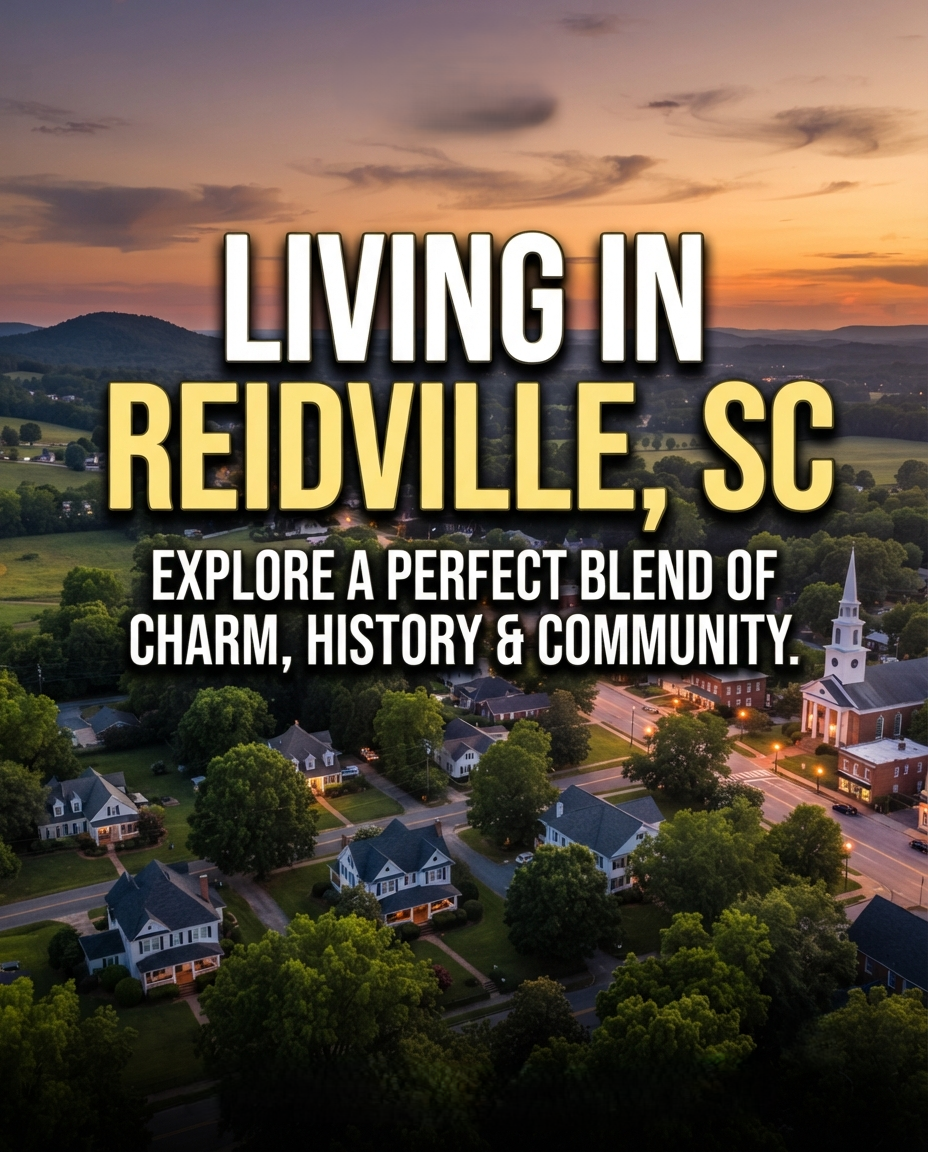
Living in Reidville, SC

Reidville is one of those Upstate names that buyers from out of state usually have not heard of. It sits between Greenville and Spartanburg in a stretch of Spartanburg County that has grown dramatically over the past decade. Reidville Road has become one of the most active growth corridors in the Upstate, and the surrounding area has shifted from quiet farmland to a real residential market.

If you are considering Reidville as a place to live, here is what life here actually looks like, who is moving in, and what to think about as you tour.

What Reidville Is

Reidville itself is a small unincorporated community, but the broader Reidville area covers a substantial stretch of southwestern Spartanburg County. Most of the growth has happened along Reidville Road and the connecting corridors, with newer subdivisions filling in land that was rural even ten years ago.

The location matters. Reidville sits within reasonable commute distance of both Greenville and Spartanburg, with quick access to I-85, I-26, and the local connectors. For families where one parent works in each direction, splitting the difference geographically often makes Reidville the right answer.

The character is suburban, family-oriented, and growing. Buyers looking for walkable urban living should look elsewhere. Buyers looking for newer single-family homes, larger lots, family-friendly neighborhoods, and reasonable proximity to both major Upstate cities will find Reidville checks a lot of boxes.

Why Buyers Are Moving to Reidville

A few patterns I see consistently.

Schools draw families. Spartanburg County schools serve the Reidville area, and the specific zoned schools have been part of why families pick this corridor.

New construction is abundant. Production builders have been particularly active along Reidville Road and the surrounding corridors, with broad floor plan selections and a range of price points.

Cost of living math works. Reidville generally runs more affordable than equivalent inventory in Greer or in Greenville’s more established suburbs, while offering newer construction and modern floor plans.

Commute access matters. The combination of I-85 access toward Greenville and proximity to Spartanburg makes Reidville workable for a wide range of work locations.

Out-of-state relocators discover Reidville often after starting their search in Greenville or Spartanburg and realizing they get more home for the money along this corridor.

The Housing Market

Inventory in Reidville runs across a few clear categories.

New construction in production-builder communities is the largest share. Master-planned neighborhoods with amenity packages, broad floor plan selections, and modern finishes. Pricing typically anchors in the high $200s to mid $400s depending on plan and community.

Resale homes from the 2000s and 2010s in established neighborhoods offer family-friendly floor plans and yards at reasonable prices. Many of these homes were built during earlier growth waves and continue to turn over with steady demand.

Custom and semi-custom homes on larger acreage parcels exist but are less common than in some other Upstate corridors. These tend to require patient searches.

Older homes on rural parcels in the broader area offer entry-level price points and acreage, often with character that newer construction does not match.

For buyers exploring the broader Spartanburg County market, Spartanburg real estate offers the full picture across the city, the suburbs, and the rural areas.

Living in Reidville, SC

Who Is Choosing Reidville

The Reidville buyer pool is broader than people sometimes expect.

Working families tied to BMW, the Inland Port, or other Spartanburg County employers find Reidville within reasonable commute distance at family-budget price points.

Greenville commuters who want newer construction or larger lots while staying within reasonable distance of downtown Greenville often land here. The commute is meaningful but workable.

Out-of-state relocators looking for family-oriented neighborhoods with strong schools and accessible price points make up a steady share of recent buyers.

First-time buyers stretching to get into single-family homes find Reidville more accessible than markets closer to Greenville.

Investors targeting single-family rentals near major Upstate employers show up consistently, particularly in the more affordable Reidville segments.

Practical Considerations

A few things specific to Reidville worth thinking through.

Growth pace has been real. Traffic on Reidville Road and the connecting corridors has increased significantly. Drive your potential commute at actual rush hour to understand what your daily reality will look like.

School zone lines have shifted as growth has continued. Verify current zoning for any specific address rather than relying on a builder’s site map.

Infrastructure is catching up to growth. Some areas have seen new schools, new commercial development, and new infrastructure in recent years; some have not. Talk to current residents about what is being planned.

Utility connections vary. Some new construction is on municipal water and sewer; some properties are on well and septic. Understand which one applies.

HOA structures vary across communities. Some have strong covenants, pool and clubhouse amenities, and corresponding fees; others are minimal. Match what you are paying for to what you will use.

Where Reidville Fits Against Nearby Markets

Comparing Reidville to nearby options helps frame the trade-offs.

Boiling Springs real estate north offers a more established residential character with similar or slightly higher pricing and a different school zoning picture.

Greer real estate further west offers a real downtown, BMW proximity, and slightly different schools at comparable or slightly higher price points.

The Duncan corridor along I-85 offers similar growth dynamics with different school zoning and slightly different pricing.

Reidville wins for buyers prioritizing newer construction, family-oriented neighborhoods, and a balance between Greenville and Spartanburg commute access. It loses for buyers who want urban density, walkable amenities, or established luxury inventory.

The Long View

Reidville is in the middle of a real growth cycle. The fundamentals — schools, employers, location, price points — all point to continued demand. The next several years will likely keep bringing new construction, new residents, and continued upward pressure on values. Buyers entering now are paying more than they would have five years ago, but the underlying picture supports the prices.

If you want to walk specific neighborhoods or compare Reidville to other Upstate corridor options, that is the kind of conversation worth having with someone who knows the local market. Reach out and we can put together a tour that fits how you actually want to live here.

July 6, 2026

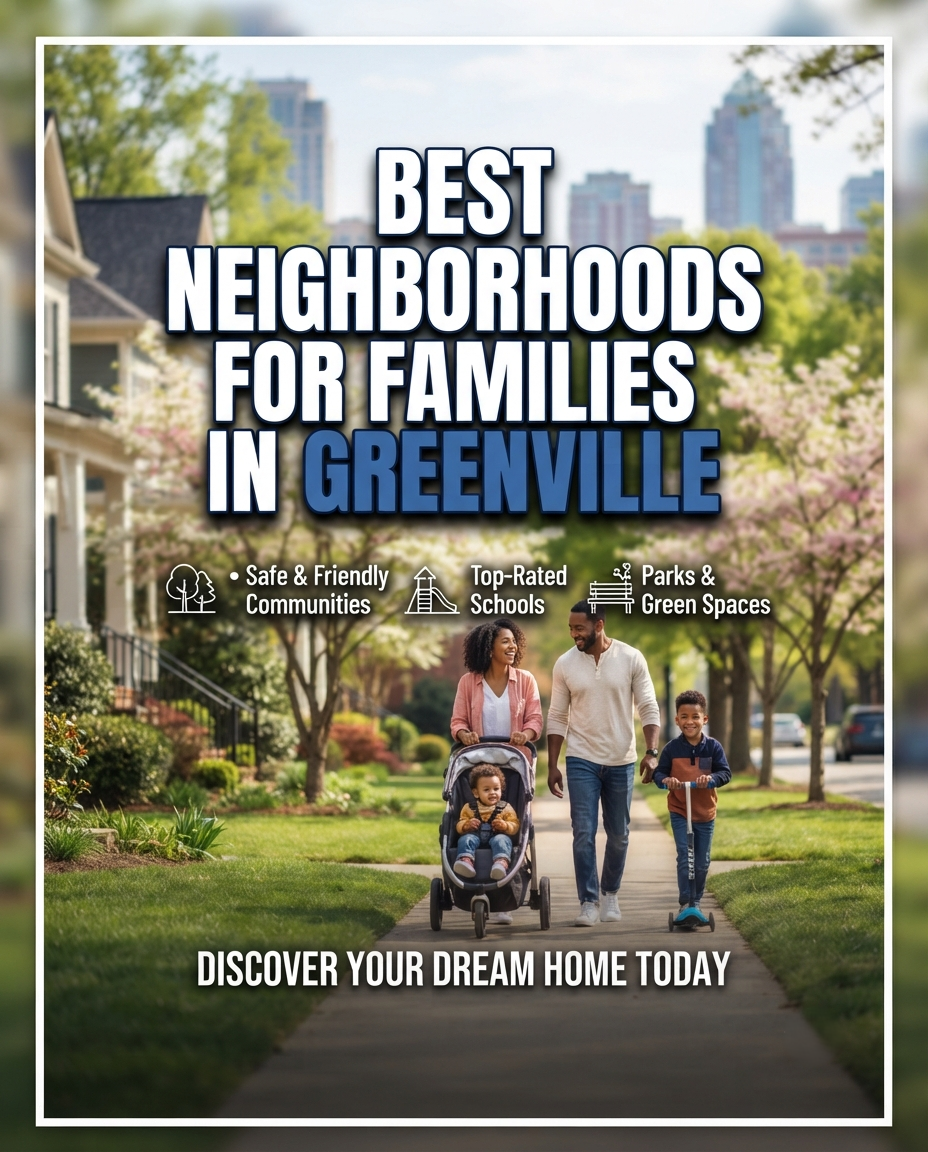
Best Neighborhoods for Families in Greenville

Families relocating to Greenville almost always start with the same question: which neighborhoods are best for raising kids here? It is the right question, but the answer is more nuanced than a simple list of names. Greenville has a wide variety of neighborhoods that work well for families, each with its own character, price point, school zoning, and lifestyle fit.

Here is what I see as a working agent in this market and how to think about choosing among the strongest family neighborhoods in Greenville.

What Makes a Greenville Neighborhood Work for Families

A few factors I see families weighing consistently.

School zoning is usually the lead criterion. Greenville County Schools cover the city and surrounding areas, with significant variation across specific schools. Families typically have one or two non-negotiable school zones and weigh other factors within that constraint.

Walkability and community feel matter for some families and not others. Some want sidewalks, neighborhood parks, and other kids in the streets. Others prioritize larger lots and privacy.

Commute access affects daily life. Greenville is not a long-commute city by national standards, but the difference between a fifteen-minute and a forty-minute commute adds up over years.

Lifestyle amenities matter — proximity to parks, the Swamp Rabbit Trail, community pools, dining, and family activities all factor in.

Price point sets the realistic universe. Greenville has neighborhoods that work for families across a wide range of budgets, but each price range surfaces different options.

The Walkable Established Neighborhoods

Greenville has a handful of established neighborhoods inside or near the city limits that work especially well for families wanting walkable, community-feel environments.

Hollingsworth Park is one of the best examples of intentionally designed family-oriented community in Greenville. New-urbanist principles, sidewalks, parks, community amenities, and a master plan that prioritized family life. Prices reflect the desirability.

North Main and the neighborhoods around it offer historic charm, walkable streets, and access to Cleveland Park and downtown. Family inventory here ranges from older bungalows that need updating to renovated homes commanding meaningful premiums.

Augusta Road and the surrounding neighborhoods carry similar historic character with strong family demographics and excellent access to the southern side of downtown.

These neighborhoods tend to attract families who specifically value walkability and the established neighborhood character. They are not the cheapest option, but the lifestyle math works for many buyers.

Best Neighborhoods for Families in Greenville

The Premium Master-Planned Communities

Greenville has a few master-planned communities that have set the standard for family-oriented living at higher price points.

Hartness sits on the eastern side of Greenville and represents one of the most carefully planned family-oriented developments in the area. Trails, parks, a village center, and a master plan that prioritizes community life have made Hartness a draw for families who can afford the price point.

Other master-planned communities further out from downtown offer similar amenity packages at different price points and locations. The trade-off is typically newer construction at higher prices versus older established neighborhoods with character and walkability.

The Suburban Family Neighborhoods

Many families end up in Greenville’s suburban neighborhoods, which offer larger lots, newer construction, and more affordable price points than the in-town options.

The Eastside neighborhoods toward Pelham Road and the surrounding areas offer strong family appeal — established neighborhoods, good schools, and reasonable commute access.

Five Forks and the broader southern Greenville suburbs offer family-oriented neighborhoods with newer construction options and amenity-rich communities.

The Wade Hampton corridor and the eastern Greenville suburbs offer a mix of established and newer neighborhoods with strong family demographics.

Greenville new homes opens up the active builder inventory across multiple suburbs at various price points. Families looking specifically at new construction often find more options than they expected.

What to Check When Touring

A few things families should pay attention to in Greenville.

  • School zoning. Verify the current zoning for the specific address. Do not assume based on neighborhood name or listing description.
  • Walk the neighborhood. Visit at school drop-off, after school, and on a weekend evening. Different times of day give different pictures.
  • Drive the commute. Real rush hour, not Saturday afternoon. The drive from a specific home to a specific workplace at the actual commute time matters.
  • Look at the neighbors. Who lives there now? Are they likely to be there in five years? Long-term stability matters for kids forming friendships.
  • Check HOA structures. Some neighborhoods have HOAs that affect what you can change about your home; others do not. Understand the rules.
  • Visit nearby parks, community centers, and after-school activity locations. Daily family life happens at these places, not just at home.

Where Greenville Fits Against the Suburbs

For families weighing Greenville proper against the surrounding suburbs, Greenville real estate offers the breadth of in-town and immediate-suburb inventory. Families wanting walkable downtown access usually choose Greenville. Families prioritizing more space and lower price points often end up in Simpsonville, Mauldin, Greer, Taylors, or other surrounding markets.

The right answer depends on how the specific family wants to live. There is no universal best.

The Long View

Greenville’s family neighborhoods have appreciated steadily because the fundamentals work. Schools draw families, families drive demand, and demand supports values. As long as those factors hold, Greenville’s strongest family neighborhoods should continue to be steady performers.

For families weighing where to land, the right next step is to spend some real time in two or three neighborhoods that seem promising. Walk the streets, eat at the neighborhood restaurants, drive the school routes, and pay attention to which one feels like home. That feel is usually right.

Reach out when you want to start touring. Family searches benefit from a careful look at school zoning, neighborhood culture, and the small details that matter for daily life with kids.

July 3, 2026

School Districts in Moore, SC

Moore is a small unincorporated community in western Spartanburg County, sitting between Spartanburg and the Reidville corridor. For families considering Moore, the school district picture is one of the most common questions, and for good reason — much of why people pick Moore comes down to the schools.

Here is what I see as a working agent in this market when families ask about schools, what the actual school landscape looks like, and what to think about as you tour.

Where Moore Sits in the School District Picture

Moore is served primarily by Spartanburg County School District Six. The district covers a substantial area of western Spartanburg County, including parts of the broader Moore area, parts of Reidville, and several other surrounding communities.

The district has invested in facilities over the past decade, expanded programs, and grown alongside the population. Test scores, programs offered, and overall reputation in the local market have all moved in the same direction.

For families relocating from out of state, the district name itself is less important than the specific schools zoned to a specific address. Two homes a mile apart in the Moore area can be zoned to different schools, and the resale value and family fit can vary accordingly.

The Specific School Question

When families ask me about Moore schools, my answer is always the same: verify the actual current zoning for the specific address you are considering. Boundary lines shift as the population grows. School building projects change the picture. A neighbor’s address from five years ago may not match the current zoning.

The district maintains a school zone lookup, and the county GIS resources let you confirm zoning for any specific address. Use these resources rather than relying on listing descriptions or builder marketing materials.

Why Schools Are the Lead Question Here

Moore has grown precisely because of the schools. The district reputation drew families, families drove demand, demand drove new construction, and new construction drew more families. The loop continues.

That dynamic affects pricing. Homes in highly desirable school zones command real premiums. Homes a few streets away in slightly less desirable zones can carry meaningful price gaps for similar square footage and condition.

For buyers prioritizing school zoning, that math affects how you should think about touring and pricing. Sometimes the best value is a slightly less updated home in the preferred zone. Sometimes the better play is a beautiful home one zone over at a meaningful discount.

School Districts in Moore, SC

The Housing Market in the Moore School Zones

Inventory in the Moore area runs across a range.

Moore homes for sale covers the active inventory across the broader area, including both newer construction and resale.

New construction in production-builder communities is the largest growth segment. Master-planned neighborhoods with broad floor plan selections target the family demographic specifically. Pricing varies by community and floor plan, with most family-oriented inventory in the mid $300s to low $500s.

Resale homes from the 1990s and 2000s in established neighborhoods offer family-friendly layouts at sometimes more accessible price points, particularly when they need cosmetic updates.

Older homes on larger lots in the surrounding rural areas offer entry points for buyers willing to put work in.

Where Moore Fits Against Other Spartanburg County Schools

Comparing Moore to other Spartanburg County school options helps frame the picture.

Boiling Springs real estate to the north is served by Spartanburg School District Two, with its own family-oriented draw and its own pricing dynamics.

The broader Spartanburg real estate market includes neighborhoods served by multiple districts. Some inside the city of Spartanburg are served by Spartanburg County School District Seven, with its own programs and reputation.

Reidville-area homes overlap with Moore in some neighborhoods and differ in others, depending on the exact address.

Each district has its own strengths, programs, and reputation. The choice rarely comes down to one district being categorically better than another; it comes down to fit, programs your specific child needs, and the specific schools zoned to a specific home.

What to Check When Touring

Buying in Moore with schools as a priority has its own considerations.

  • Verify current school zoning for any specific address. Do not assume based on neighborhood name or listing description.
  • Visit the schools if possible. Most schools welcome prospective family visits, and seeing the facility helps families decide.
  • Talk to current parents at the school. Online reviews and rankings tell part of the story; conversations with current families fill in the rest.
  • Look at the elementary, middle, and high school combination zoned to the specific address. A home zoned to an excellent elementary but a less-desired middle or high school may not match family needs over a longer time horizon.
  • Understand any program lotteries or magnet options. Some districts offer programs that students can apply to from anywhere in the district, which changes the calculus.
  • Consider transportation. School bus routes, drop-off and pickup logistics, and after-school activity transportation all affect daily life.

The Long View

Moore has appreciated steadily over the long term because the family-oriented school zoning math works. As long as the district continues to invest, the schools continue to perform, and families continue to prioritize education in their home buying decisions, Moore should remain a steady market.

For families weighing Moore, the right starting question is not whether the schools are good (they are) but whether the specific schools zoned to a specific home you are considering are the right fit for your specific child’s needs.

If you want to walk neighborhoods, compare zoning between specific homes, or think through how the school decision affects pricing and timing, that is the kind of conversation worth having with someone who knows both the local schools and the local market. Reach out and we can work through your specific situation.

Posted in For Buyers
July 2, 2026

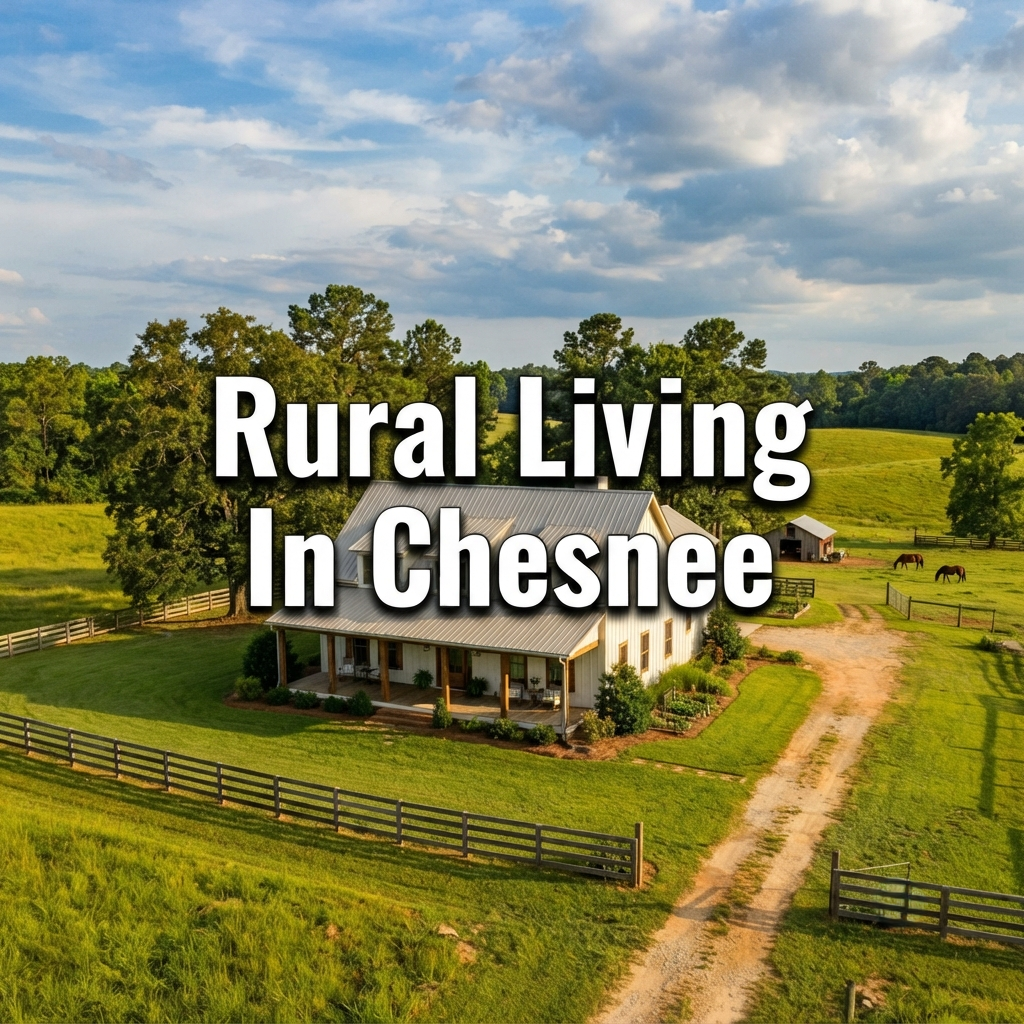
Rural Living in Chesnee

Chesnee is one of the smallest towns in Spartanburg County, and that is precisely the appeal for the buyers who land here. Under a thousand people inside city limits, surrounded by rural Spartanburg County and the foothills creeping up from the south, Chesnee offers a kind of rural living that has gotten harder to find as the Upstate has grown.

If you are considering Chesnee for rural living, here is what life here actually looks like, what the housing market offers, and what to think about as you tour.

What Rural Living in Chesnee Looks Like

Chesnee is small and quiet. The town itself is compact — a few streets of historic homes, a small downtown, and the basic local services. The surrounding rural areas extend into the foothills and toward Lake Blalock and Lake Bowen, and that is where most of the housing inventory actually sits.

Daily life here is slower than in larger Upstate cities. Mornings start earlier for many residents, services are limited, and most everyday shopping involves a drive to Boiling Springs, Spartanburg, or even into Tryon and North Carolina depending on direction.

For the buyers who choose Chesnee, that pace is the point. They are not looking for walkable amenities or busy downtowns. They are looking for acreage, privacy, quiet, and a connection to the rural character of upper Spartanburg County.

Who Lives Rurally Here

The Chesnee buyer pool runs across a few distinct types.

Multi-generational local families who have been in the area for decades or longer, working the land, running small farms, or simply living rurally as their families have always done.

Retirees from out of state — the Northeast, the Midwest, occasionally Florida — looking for a quiet rural property at a fraction of what they would pay in their home markets. Many of these buyers value the foothills proximity and the slower pace.

Remote workers who picked Chesnee specifically for the privacy, the acreage, and the ability to work from a quiet rural property. Internet quality is a real consideration for this group.

Equestrian and small-farm buyers looking for pasture and acreage at more accessible prices than what they would pay closer to Tryon or Landrum.

Lake-oriented buyers near Lake Blalock or Lake Bowen who want water access combined with rural land.

Second-home buyers from Charlotte, Atlanta, and points further north who use Chesnee as a quiet weekend property.

The Housing Market

Inventory in and around Chesnee runs across a wide range.

Historic small-town homes inside the Chesnee town limits offer entry-level price points and small-town character. These often need updating and reward buyers willing to put work into older properties.

Rural single-family homes on one to ten acre parcels in the surrounding county areas. These vary widely in age, condition, and price depending on the specific property.

Larger acreage parcels, often ten acres and up, with farmhouses, small farms, or significant unimproved land. These are increasingly hard to find as land prices have moved up, and they reward patient searches.

Newer construction in the broader Chesnee area, though significantly less concentrated than in Boiling Springs or Inman. Builders have moved into the area selectively.

Chesnee homes for sale is the starting point and covers both in-town and surrounding rural inventory.

Practical Considerations for Rural Property

Rural property has its own specific questions, and Chesnee is no exception.

Water source matters enormously. Many rural properties run on private wells. Have the well tested and the flow rate verified during your inspection period. If a community water connection is available, understand the costs.

Septic systems are standard outside the immediate town limits. Know the age, capacity, condition, and last service date. Ask about percolation and any history of failures.

Acreage rarely comes flat or uniformly usable. Build sites, pasture quality, drainage, and slope all vary. Walk the land with someone who knows what to look for, ideally in different weather conditions.

Internet quality varies dramatically by location. If remote work or streaming entertainment is part of your life, verify actual upload and download speeds at the specific property rather than relying on coverage maps.

Insurance depends on multiple factors. Distance to fire stations, age of home, wood stoves, outbuildings, and farm structures all factor in. Get an actual quote during the inspection period.

Outbuildings need separate consideration. Barns, sheds, equipment storage, and other structures may add value but also add maintenance burden and insurance complexity.

Mineral rights and easements are not always what they appear in a casual listing. Review title and survey carefully.

Rural Living in Chesnee

The Lake Connection

Chesnee sits within easy distance of both Lake Blalock and Lake Bowen, and many buyers in the area treat lake access as part of the lifestyle equation.

Lake Bowen homes carry their own premium and run on a different cycle than rural inland Chesnee inventory. Buyers prioritizing direct lake access usually start there. Buyers who want lake proximity without paying lakefront premiums often find better value in the rural Chesnee surroundings, where a short drive puts them on the water.

Where Chesnee Fits Against Other Rural Upstate Options

Comparing Chesnee against other rural Upstate options:

The Landrum area to the north offers similar foothills proximity at higher price points, with stronger equestrian infrastructure and closer ties to Tryon.

Rural parts of northern Greenville County offer comparable rural character at varying price points depending on distance from Greenville amenities.

Rural Anderson County, particularly toward Lake Hartwell, offers a different rural feel — bigger lakes, more recreational activity, and slightly different land economics.

The broader rural Spartanburg County — toward Cowpens, Pacolet, and the eastern stretches — offers similar inventory at sometimes lower price points but with less foothills proximity.

Chesnee wins for buyers who specifically want northern Spartanburg County, foothills access, and proximity to both Lake Blalock and Lake Bowen. It loses for buyers who need closer access to urban amenities or who want a more developed local services base.

The Broader Spartanburg Market

Even buyers who land on Chesnee as their preferred area often spend some time looking at Spartanburg real estate to make sure the rural decision is right for them. The contrast helps clarify priorities: Chesnee for the quiet, the acreage, and the rural character; Spartanburg for the downtown, the amenities, and the broader services.

The Long View

Rural Chesnee is unlikely to change character dramatically. The zoning, the geography, and the lack of major commercial development all combine to keep the area rural. As more buyers from larger metros discover this part of the Upstate, demand for rural property keeps pushing against a relatively flat supply. Long-term value support is steady, even if appreciation is less dramatic than in the larger Upstate markets.

If you want to walk specific properties or compare rural Chesnee to other rural Upstate options, that is the kind of search that benefits enormously from local knowledge. Reach out when you want to start exploring, and we will put together a tour that fits the lifestyle you are after.