Walkability has become one of the most-requested features I hear from buyers moving to Greenville. Some of it is generational — younger buyers grew up expecting to walk more, drive less. Some of it is out-of-state buyers coming from cities where walking was part of daily life. And some of it is simply that Greenville has become a walkable city in a way it was not a decade ago, and buyers have noticed.
If you are looking for a walkable community in Greenville, here is what the market actually offers, which neighborhoods deliver on walkability in practice, and what to think about as you tour.
What Walkable Actually Means in Greenville
Buyers use the word walkable to mean different things. Some mean walk-to-restaurants. Some mean walk-to-work. Some mean walk-with-the-dog-on-real-sidewalks. Some mean walk-to-parks-and-schools.
Greenville has neighborhoods that deliver on each of those. But no neighborhood delivers on all of them at once, so the first step in the search is figuring out which kind of walkability actually matters to you.
A walkable neighborhood downtown gives you restaurants, coffee, events, and the Reedy River corridor within a short walk. A walkable neighborhood in North Main gives you a real residential feel with sidewalks and access to Cleveland Park. A walkable neighborhood in Hollingsworth Park gives you an intentional master-planned community with amenities designed for daily walking. Each of these is walkable, but the daily experience is very different.
Downtown and Immediately Adjacent
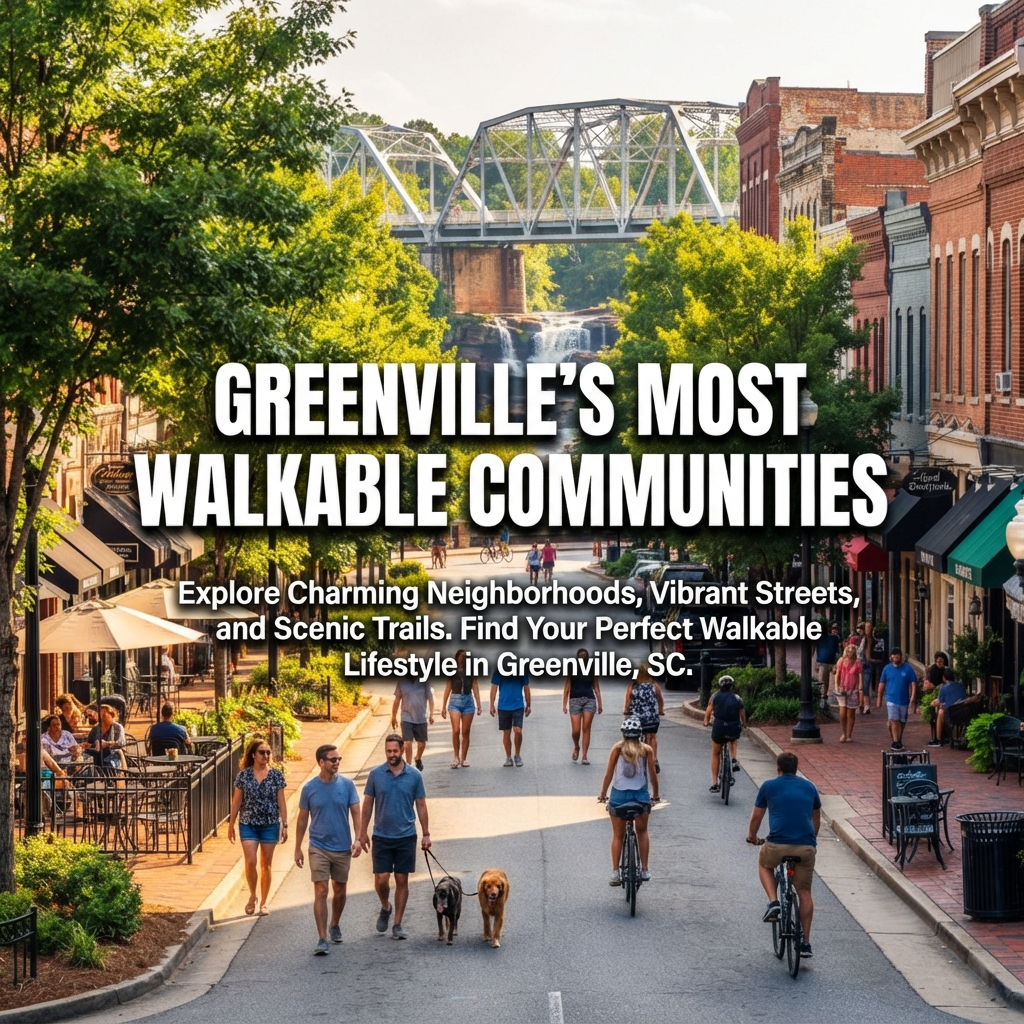
Downtown Greenville and the blocks immediately surrounding it deliver the most direct walkability in the region. Falls Park, Main Street, the Peace Center, and the surrounding restaurant and retail corridor are all within easy walking distance. Residents in these neighborhoods routinely leave their cars home for dinner, events, and weekend life.
Inventory here is a mix of restored historic homes, newer townhomes, and downtown condominium buildings. Greenville condos for sale covers a meaningful share of the downtown residential inventory, and downtown condo living has become one of the fastest-appreciating segments in the market.
The trade-off is price. Direct downtown walkability commands the highest per-square-foot pricing in Greenville. It is also the most limited inventory, so buyers who want this often wait for the right listing rather than expecting to choose from many options.
North Main
North Main is one of the most consistently walkable residential neighborhoods in Greenville. Sidewalks connect most of the neighborhood, streets are quiet enough for children and dogs, Cleveland Park is a short walk from many addresses, and the North Main commercial strip provides walkable restaurants and services.
The housing stock is a mix of historic bungalows, mid-century homes, and renovated or rebuilt properties on original lots. Prices have moved up significantly over the past decade as walkability became a bigger buyer priority.
North Main appeals particularly to families who value walkability with real yards, small business owners who want to live near their businesses, and downsizers from larger suburbs who want to reduce driving.
Augusta Road
The Augusta Road corridor south of downtown carries a similar residential feel to North Main with its own commercial strip and access to parks. Sidewalks are strong, the neighborhood commercial life is real, and daily walking is practical for many households.
Housing here includes historic homes, mid-century inventory, and select newer construction. Pricing has appreciated meaningfully, reflecting the neighborhood’s desirability.
Augusta Road works well for families who want walkability plus strong school zoning and access to the southern side of Greenville, including quick drives to Cleveland Park, downtown, and the Prisma Health system.
Hollingsworth Park
Hollingsworth Park is one of the more intentional walkable communities in Greenville. New-urbanist principles shaped the design — sidewalks throughout, community amenities within walking distance, a village center with retail and restaurants, and homes designed with front porches and neighborhood interaction in mind.
For buyers who want walkability without the older-home maintenance that comes with in-town historic neighborhoods, Hollingsworth Park offers a compelling alternative. Newer construction, master-planned amenities, and a design philosophy that prioritizes daily walking.
Pricing reflects the intentional design. Hollingsworth Park is not a budget option; it is a premium community that delivers what it advertises.
Hartness
Hartness on the eastern side of Greenville is a newer master-planned community that has become one of the most-discussed walkable developments in the region. Trails, parks, a village center, and a master plan that prioritizes community interaction have drawn families and downsizers who want a walkable lifestyle without living downtown.
The distance from downtown Greenville is real — Hartness is a suburban location, not a downtown one — but the internal walkability of the community is strong. Residents walk to the village center, to the parks, and to community amenities as part of daily life.
The Swamp Rabbit Trail Corridor
The Swamp Rabbit Trail has become part of Greenville’s walkability infrastructure. Neighborhoods along the trail — from downtown north toward Travelers Rest — benefit from direct trail access that supports walking, biking, and commuting.
Homes within a short walk of trail access points command real premiums. The trail extends walkability well beyond what the local street grid alone would provide.
Practical Considerations
Walkable living in Greenville has its own realities.
- Sidewalk quality varies significantly by neighborhood. Older neighborhoods sometimes have gaps, cracks, or missing stretches. Walk the neighborhood before assuming daily walking is practical.
- Weather matters. Greenville summers are hot; humidity is real. Walking that felt easy in April can feel harder in July.
- Nighttime walking is different from daytime walking. Consider lighting, activity levels, and neighborhood feel after dark.
- Grocery walking is limited. Even the most walkable Greenville neighborhoods often require driving to grocery stores. Downtown residents get the closest to walkable grocery access.
- Family walking depends on ages. Walking with a toddler is different from walking with a teenager. Think about the phase of family life the neighborhood will support.
Where Walkability Fits in the Broader Market
If walkability is one of several priorities rather than the top priority, the broader Greenville real estate market offers many neighborhoods that provide partial walkability alongside other benefits — larger yards, lower prices, or specific school zoning.
The right balance depends on what daily life actually looks like. Some buyers value walkability so much that they will pay significant premiums for it; others realize during the search that walkability was more important in the abstract than in practice.
The Long View
Walkability has become one of the more durable value drivers in Greenville real estate. Neighborhoods that deliver on real walkability — sidewalks, mixed use, community amenities within walking distance — have appreciated more consistently than neighborhoods that lack these features.
That trend is likely to continue. As Greenville continues to grow, walkable inventory stays relatively fixed in supply, and demand keeps pushing against it. For buyers prioritizing walkability, that dynamic supports long-term value.
If you want to walk a few walkable neighborhoods together on the same day to feel the difference, that is often the fastest way to sort out which flavor of walkability actually matches your life. Reach out and we can put together a tour that fits what you are after.