


The roof is the most expensive thing on a house that most buyers never climb up to look at. That's a problem. It's also why the roof section of a home inspection report gets read twice by almost everyone I work with.
Here's what inspectors actually look at in the Upstate, what the red flags are, and how to use the findings whether you're buying or selling.
Why Roofs Take a Beating in the Piedmont
Our weather is rough on shingles. Hot, humid summers bake the surface. Thunderstorms bring wind and heavy rain. Every so often a hail event rolls through. Add pine needles, oak leaves, and limbs from mature trees, and you've got a roof that works hard year-round.
Shaded, wooded lots add another wrinkle. Roofs under tree cover hold moisture longer, which invites algae, moss, and slow rot at the edges. If you're touring a home on a heavily wooded lot in Anderson or the hills outside Greer, pay attention to what's overhead.
What an Inspector Checks
Roof covering
On most homes here, that means asphalt shingles. The inspector looks for curling, cracking, missing pieces, bare spots where granules have worn off, and signs that the roof has been patched. A few lifted shingles after a storm are a small fix. A roof that's worn across the whole surface is a replacement conversation.
Flashing and penetrations
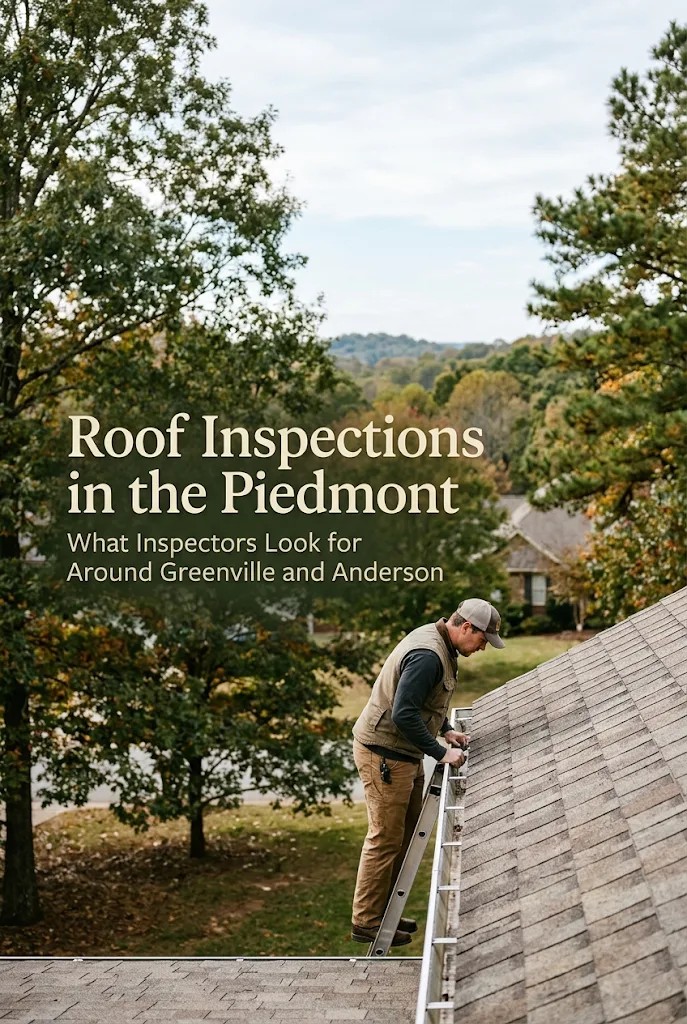
This is where leaks start. Flashing is the metal or sealant around chimneys, vents, skylights, and where roof planes meet. Inspectors check that it's tight, properly lapped, and not rusted or cracked. A lot of "roof leaks" are really flashing failures, which cost far less than a new roof.
 Gutters and drainage
Clogged or sagging gutters push water back under the edge of the roof. Inspectors also look at where downspouts send water. Pooling near the foundation is a separate problem, but it often traces back to the roof's drainage system.
Attic and ceiling clues
The best roof inspections include a look from the inside. Stains on decking, damp insulation, daylight where it shouldn't be, and poor ventilation all tell a story. Ventilation matters more than people think, since trapped heat shortens shingle life and drives up cooling bills.
Red Flags Buyers Often Miss
- Fresh paint on a ceiling in just one spot. Ask why.
- Mismatched shingles in one section, which can point to a past repair.
- Soft or spongy spots when the inspector walks the roof, or from inside the attic.
- A roof that looks fine from the street but has heavy wear on the south-facing slope.
If anything looks questionable, ask the inspector whether a roofing contractor should take a closer look. A written quote gives you real numbers to negotiate with.
Roof Age, Insurance, and Your Loan
Age matters in more than one way. Insurance companies often ask about roof age and condition, and an older roof can mean higher premiums or stricter terms. Some lenders also pay attention when a roof is near the end of its life. Check with your insurance agent and lender early, before the inspection period runs out.
If you're buying in places like Boiling Springs, where many homes were built across different decades, don't assume age from the neighborhood. Ask for the roof's age in writing and request any permits or invoices for past work.
If You're Selling: Get Ahead of the Report
You don't have to replace your roof to sell your home. But you should know what's wrong before a buyer's inspector tells them. Walk the property after a big storm. Clear the gutters. Fix loose flashing and missing shingles. These small jobs can keep a minor note from becoming a major negotiation.
If the roof is near the end of its life, get a contractor's opinion and a quote in hand. Then you can set the price and the conversation instead of reacting to a buyer's number. Keep any receipts, warranty paperwork, and permit records in a folder so you can hand them over quickly.
What About a Separate Roof Inspection?
A general inspector gives a good overview. If the house is older, the roof is steep or complex, or something looks off, a roofing contractor can go deeper. Many offer inspections at low or no cost, though they may have a reason to find work. Use them for information, not as the final word.
Key Takeaways
Don't buy a house without understanding the roof. Don't sell one without knowing what a buyer's inspector will find.
About Greg Harrelson
CENTURY 21 Blackwell is proudly part of the Century 21 Harrelson Group family of offices led by Greg Harrelson, a powerhouse organization with more than 30 years of success across South Carolina. This partnership strengthens our reach while preserving what built our reputation: exceptional service, best-in-class marketing, and highly trained agents focused on protecting our clients' most important investments.
Greg Harrelson is a seasoned Realtor with more than 30 years of experience serving the Myrtle Beach and Grand Strand markets branching into North Carolina more recently. As the founder of Century 21 The Harrelson Group, Greg has built his career helping buyers, sellers, and investors achieve success in every corner of the coastal Carolina real estate market. His expertise spans residential homes, investment properties, land development, and coastal condos. Known for his deep local knowledge, innovative marketing strategies, and commitment to personal service, Greg consistently helps clients reach their real estate goals while navigating the ever-changing market with confidence and precision.