


You found the house. You wrote the offer. Now the contract says you need to put money down, and someone mentions "due diligence" in the same breath. Most buyers nod and hope they'll sort it out later. Don't do that. These two ideas are tied to your contract, and the contract decides what happens to your money.
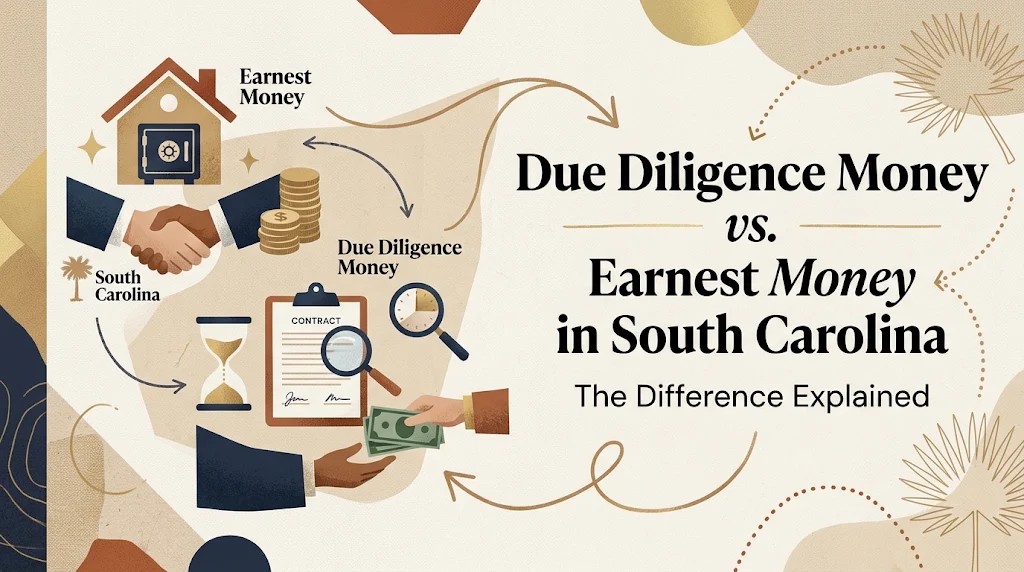
What Earnest Money Is
Earnest money is your good-faith deposit. It tells the seller you're serious. South Carolina law doesn't require it for a valid real estate contract, and it doesn't set an amount, but it's common practice. The deposit is typically held in an escrow account while the deal moves forward, not handed to the seller.
When You Can Lose It
Your contract sets the conditions for getting the deposit back or losing it. If a buyer defaults and doesn't complete the purchase, the deposit is usually forfeited to the seller, which compensates them for the time the home was off the market. That's the risk. Here's the plain advice: read the sections of your contract that cover deposits, deadlines, and cancellation before you sign, and ask your agent or attorney to explain anything that isn't clear.
What Due Diligence Means
Due diligence is your homework period. It's the time you use to inspect the home, review records and any HOA documents, and decide if you still want to buy. How long it lasts, what you can do during it, and what happens to your deposit if you cancel are all spelled out in your contract. If your contract includes any separate fee tied to that period, find out who gets paid and whether it is refundable before you sign.
Once you know your timeline, you can start touring homes in Greenville or Spartanburg with a clear idea of what you're signing.
Newer Homes and Builder Contracts
If you're touring new construction communities, ask for the builder's contract early. Builders write their own, so the deposit and cancellation terms may not match what you saw on a resale. Get them in writing and read them before you fall in love with a lot.
Questions to Ask Before You Send a Deposit
- Who holds the deposit, and will I get written confirmation?
- What dates control my right to cancel?
- Under what conditions would I lose the deposit?
- Is any fee refundable?
South Carolina closings go through an attorney, so your closing attorney is another resource for these answers. And if you're getting a loan, talk to your lender early about timing. Our Upstate home loan page is a good place to start.
Key Takeaways
- Earnest money is optional under South Carolina law, but common.
- Your contract, not a rule of thumb, decides when you get it back.
- Due diligence is your window to inspect and review. Know the dates.
- Ask who holds your deposit and get it in writing.
Frequently Asked Questions
Does South Carolina require earnest money?
No. State law doesn't require it for a valid real estate contract, but it's common practice and your offer will usually include it.
How much earnest money should I put down?
The law doesn't set an amount. You and the seller agree on it in the contract, and your agent can help you pick a number that fits your situation.
Where does my earnest money go?
It's typically held in an escrow account during the transaction. Your contract names who holds it, so confirm that and get a receipt.
Can I lose my earnest money?
Yes. Your contract sets the conditions. If a buyer defaults and doesn't complete the purchase, the deposit is usually forfeited to the seller.
About Greg Harrelson
CENTURY 21 Blackwell is proudly part of the Century 21 Harrelson Group family of offices led by Greg Harrelson, a powerhouse organization with more than 30 years of success across South Carolina. This partnership strengthens our reach while preserving what built our reputation: exceptional service, best-in-class marketing, and highly trained agents focused on protecting our clients' most important investments.
Greg Harrelson is a seasoned Realtor with more than 30 years of experience serving the Myrtle Beach and Grand Strand markets branching into North Carolina more recently. As the founder of Century 21 The Harrelson Group, Greg has built his career helping buyers, sellers, and investors achieve success in every corner of the coastal Carolina real estate market. His expertise spans residential homes, investment properties, land development, and coastal condos. Known for his deep local knowledge, innovative marketing strategies, and commitment to personal service, Greg consistently helps clients reach their real estate goals while navigating the ever-changing market with confidence and precision.