


You can't see radon. You can't smell it. And you won't know your house has it unless you test. That's the whole reason it deserves a few minutes of your attention before you buy or sell in the Upstate.
Here's what I tell clients. Radon testing isn't scary, it isn't expensive compared to the price of a house, and it's one of the few inspection items where a simple fix exists if the number comes back high.
What Radon Is and Why It Shows Up Here
Radon is a gas that forms when uranium breaks down naturally in soil and rock. It moves up through the ground and can seep into a home through slab cracks, crawl spaces, sump openings, and gaps around pipes. The Upstate sits on Piedmont geology, which includes granite and similar rock, so the question comes up often here.
The EPA treats radon as a serious health issue. It names long-term exposure as a leading cause of lung cancer in non-smokers. That's why the agency recommends fixing a home that tests at or above 4 picocuries per liter, and suggests considering a fix even at lower readings.
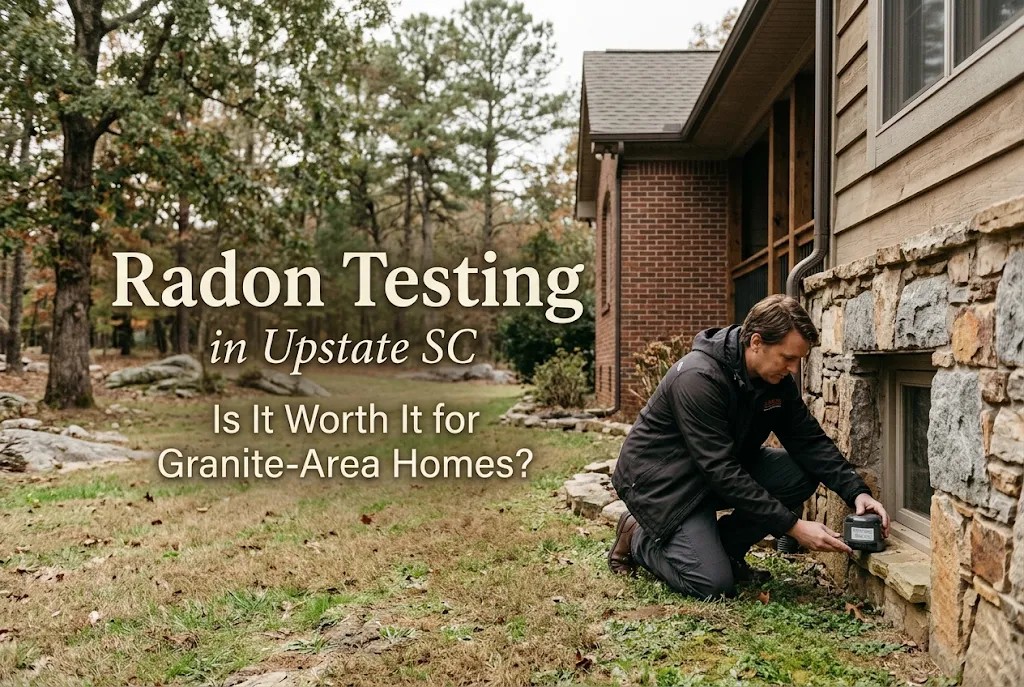
Why one house can test high and the neighbor tests low
Radon levels change from house to house, even on the same street. Soil makeup, how the home was built, and how air moves through it all matter. A zip code tells you very little. Only a test on your house tells you what's happening inside it.
Radon Testing When You're Buying
If you're buying in Greenville, Anderson, or anywhere else in the region, ask for a radon test during your inspection period. Most inspectors can run one, or they can bring in a specialist.
A standard short-term test runs for at least 48 hours. The house needs to stay closed up during that time. That means windows and exterior doors shut except for normal coming and going. Open windows can throw off the reading, and a good tester will tell you so.
Homes with basements and crawl spaces
Houses with basements or finished lower levels deserve extra attention, since the lowest living area is where radon tends to collect. The Upstate has plenty of hillside homes with walkout basements, so this isn't a rare scenario. Test the lowest level that people will actually use.
Radon Testing When You're Selling
If you're listing, think about testing before you go to market. Why? Because the alternative is finding out in the middle of a contract, with the clock running and a buyer already nervous.
A clean result becomes a selling point. A high result gives you time to get quotes, install a system, and retest on your schedule, not on a buyer's deadline. If you've lived in the home for years and never tested, this is a good reason to start.
What Happens If the Number Is High
This is the part people dread, and it's usually the easy part. The common fix is a sub-slab depressurization system. A contractor runs a pipe from beneath the foundation, through the house or up the exterior, and a small fan vents the gas above the roofline. It's quiet, and most homeowners forget it's there.
Ask your agent how repair requests are handled in the contract. In many deals, sellers and buyers work out who pays for mitigation, and getting it done and retested makes the home easier to close on. If you're comparing homes in Easley and nearby areas, factor a possible mitigation system into your negotiation, not your panic.
How to Choose a Tester
Look for a qualified professional who uses a continuous monitor or properly placed device and gives you a written report. Ask how they handle placement and what conditions the house has to be in during the test. Don't go with the cheapest option if the reading will drive a five-figure decision.
Key Takeaways
Radon is easy to test for and fixable when it's high. Whether you're buying or selling anywhere in the Upstate, test the house in front of you, because the neighbor's result means nothing about yours. Get it on the table early, and it becomes one more item you handled instead of a deal-breaker you didn't see coming.
Frequently Asked Questions
What radon level is considered too high?
The EPA's action level is 4 picocuries per liter. If your home tests at or above that number, the agency recommends fixing it. Many people also look at mitigation for readings between 2 and 4.
How long does a radon test take?
A short-term test usually runs 48 to 96 hours, depending on the device. Results then come back within a few days. Long-term tests run longer and show how levels shift over time.
Can I test for radon myself?
Yes, home test kits are sold at hardware stores. In a real estate deal, though, most buyers use a professional so the placement and report hold up in negotiation.
Does a radon system hurt resale value?
Not in my experience. A documented system with a passing retest tells buyers the issue was handled. It often calms the conversation instead of starting one.
About Greg Harrelson
CENTURY 21 Blackwell is proudly part of the Century 21 Harrelson Group family of offices led by Greg Harrelson, a powerhouse organization with more than 30 years of success across South Carolina. This partnership strengthens our reach while preserving what built our reputation: exceptional service, best-in-class marketing, and highly trained agents focused on protecting our clients' most important investments.
Greg Harrelson is a seasoned Realtor with more than 30 years of experience serving the Myrtle Beach and Grand Strand markets branching into North Carolina more recently. As the founder of Century 21 The Harrelson Group, Greg has built his career helping buyers, sellers, and investors achieve success in every corner of the coastal Carolina real estate market. His expertise spans residential homes, investment properties, land development, and coastal condos. Known for his deep local knowledge, innovative marketing strategies, and commitment to personal service, Greg consistently helps clients reach their real estate goals while navigating the ever-changing market with confidence and precision.