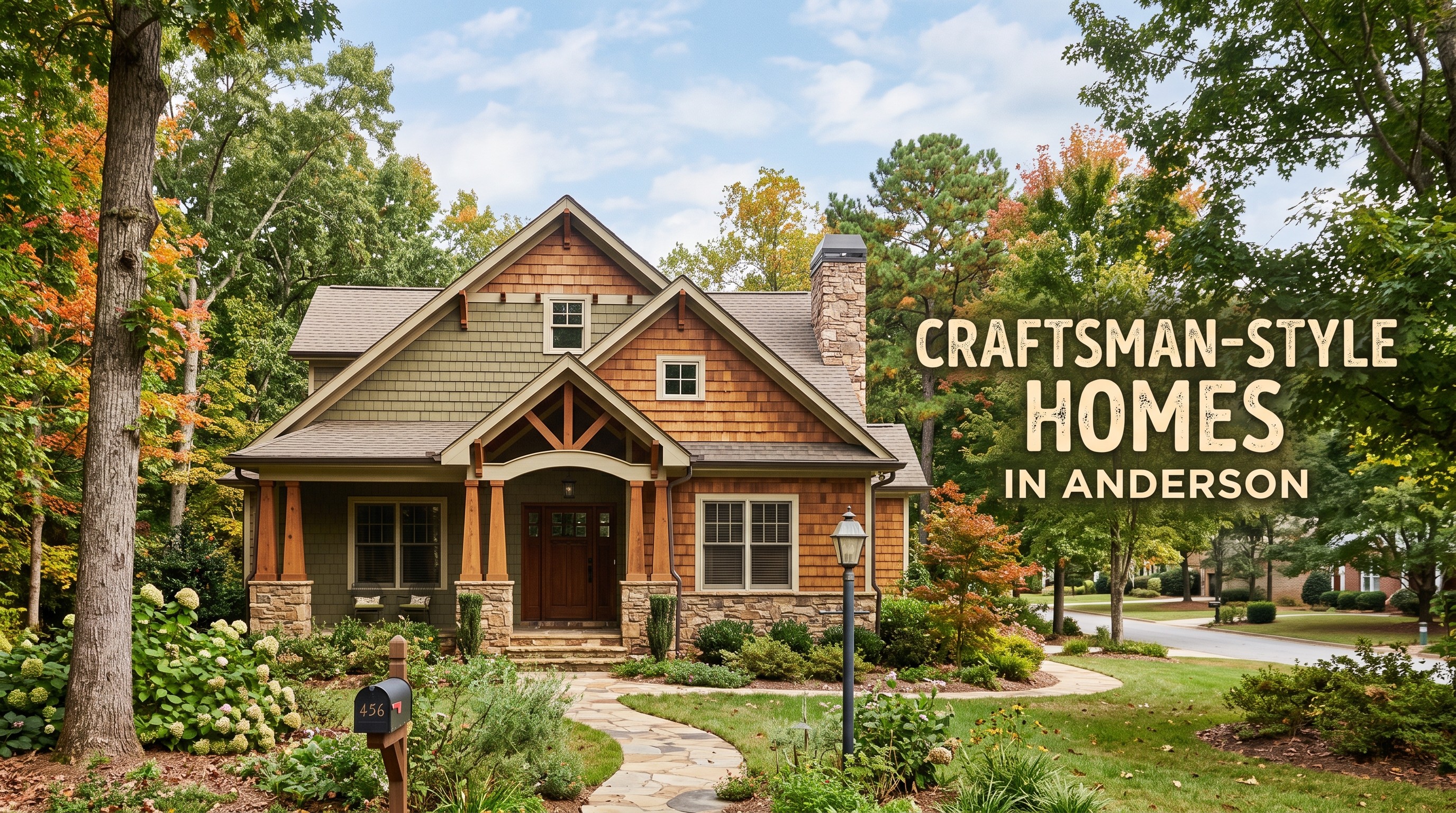
Craftsman-style homes have a specific appeal that some buyers respond to strongly. The exposed rafters, the wide front porches with tapered columns, the built-in cabinetry, the emphasis on natural materials — it's a distinctive American residential style that has held up for over a century. Anderson has a real inventory of craftsman-style homes worth knowing about if the style matches how you want to live.
What Makes a Home Craftsman
True craftsman-style homes have specific features that distinguish them from other American residential styles:
- Low-pitched gabled roofs with wide overhanging eaves, often with exposed rafter tails or decorative brackets
- Wide front porches supported by tapered or squared columns, often on stone or brick piers
- Prominent use of natural materials — wood siding, exposed beams, stone accents, brick chimneys
- Built-in cabinetry, bookcases, and seating that treat interior millwork as part of the architecture
- Multi-pane windows, often in bands, that provide natural light without breaking the horizontal emphasis of the design
- Interior floor plans that emphasize integrated living spaces over the strictly separated rooms of Victorian design
Why Buyers Love Craftsman Design
Craftsman homes deliver something specific that newer architectural styles don't always match:
- Character and craftsmanship. Built-in millwork, quality materials, and design decisions that reflect the era when homes were built to last.
- Front porch culture. Wide covered porches invite you outside without exposing you to weather. Neighbors interact more naturally.
- Human-scaled proportions. Craftsman homes feel warm rather than imposing. Rooms feel lived-in.
- Historic authenticity. Real craftsman homes, not reproductions, connect residents to a specific era of American residential design.
Where the Anderson Craftsman Inventory Sits
Anderson craftsman-style homes covers the current inventory. Concentrations tend to sit in specific parts of Anderson where the style was popular during original construction.
Historic Anderson neighborhoods, particularly older established areas near downtown, include original craftsman homes from the early 20th century.
Some newer construction communities have built homes in craftsman-inspired styles, particularly in higher-end developments where design coherence adds value.
Custom homes on individual lots sometimes go craftsman when the buyer specifically chose the style.
Original vs. Craftsman-Inspired
Not every home marketed as craftsman is a true original. The distinction matters for buyers.
Original craftsman homes, built roughly 1900 through 1930, have authentic materials, original woodwork, and design details that reflect the era. These homes carry historic character that reproductions can't fully replicate.
Craftsman-inspired newer homes borrow the design language but use modern materials, updated floor plans, and contemporary construction. These homes deliver the aesthetic without the historic-home maintenance issues.
Both categories have real buyers. Original craftsman homes appeal to buyers who want authentic character and are willing to accept older-home considerations. Craftsman-inspired newer homes work for buyers who love the aesthetic but want modern construction.
What to Check When Touring a Craftsman Home
Older craftsman homes need specific attention during inspection:
- Original woodwork condition. Interior millwork, built-ins, and trim carry significant value. Damage, prior renovations that removed original features, or replacement with non-authentic reproductions all affect value.
- Foundation and structural condition. Century-old homes have settled and shifted. Understand what has been done and what remains to address.
- Systems age. Roofs, HVAC, plumbing, and electrical often need updates in original craftsman homes. Budget accordingly.
- Historic district status. Some Anderson historic neighborhoods have design review requirements that affect what you can change. Verify what applies.
- Exterior maintenance needs. Wood siding, natural materials, and original details need ongoing maintenance that vinyl-sided newer homes don't require.
- Foundation and porch condition. Craftsman homes' distinctive front porches carry weight and weather. Check porch structural integrity and column condition specifically.
Craftsman Beyond Anderson
Greenville craftsman-style homes covers similar inventory in the Greenville area. Buyers who love the style often look across both markets, particularly since Greenville has stronger concentrations in some historic neighborhoods.
The trade-off is pricing. Anderson craftsman inventory typically runs less per square foot than equivalent Greenville craftsman inventory, particularly in the historic neighborhoods where original homes cluster.
Who's Actually Buying Craftsman in Anderson
The craftsman buyer profile is specific:
- Design-conscious buyers who value architectural character over floor plan modernization
- Renovation-oriented buyers who see value in restoring original woodwork and details
- Historic-home enthusiasts who specifically want authentic older homes rather than reproductions
- Downsizers from larger newer homes who want character in a smaller footprint
- Out-of-state buyers relocating from cities with strong craftsman traditions who want to keep that style in their new home
Where Craftsman Fits in the Broader Anderson Market
Craftsman is a niche within the broader Anderson real estate market. Not every buyer wants craftsman. Not every neighborhood has it. But for buyers who specifically respond to the style, Anderson delivers inventory that other Upstate markets don't match at similar prices.
The niche has enough consistent buyer demand to support values. Well-maintained craftsman homes hold their pricing power against comparable non-craftsman inventory in the same neighborhoods.
The Long View
Craftsman-style homes will remain a specific niche in Anderson real estate. Builders occasionally add craftsman-inspired new construction, but the true original craftsman inventory is essentially fixed. That fixed supply supports long-term value for well-maintained homes.
For buyers who specifically want craftsman-style homes, that dynamic makes early action worth considering. Waiting for the perfect craftsman home to hit the market can mean waiting a long time. When one comes up, it usually moves quickly to a buyer who has been watching for exactly that.
If craftsman-style is on your must-have list, reach out and we can put together a search focused specifically on the neighborhoods and inventory where craftsman homes actually exist.